Important questions. Thanks for these! While recently I have written mainly about this journey into the depths of existential solitude, I have not meant to exclude the other ways we are called to seek God. Whether we are Benedictines or others who make this the focus of our lives or not, we are each called to seek God. It seems to me that there are two main (and interrelated) pathways to doing this. The first is to seek God outside of ourselves; the second is to seek God within ourselves. I think all of us are called to undertake both of these ways of seeking God, though not in the same way monastics or eremites might do this. This is not a problem since every human journey towards fullness of meaningful life is also a life in search of God.
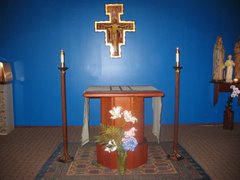
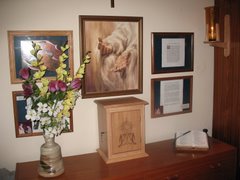
The first way or route to seeking God, it seems to me, is about being open and attentive to the world around us. We seek God in the ordinary events, places, activities, and people of our lives. We may also, therefore, seek God under other rubrics or names: truth, beauty, integrity, order, spontaneity, life, love, faithfulness, courage, and so many others. This extraordinary or "sacred ordinariness" is something I have written about many times here, and it is something my friend, Rachel Denton, Er Dio, wrote about when she said, [[The heartbeat of my hermitage is its sacred ordinariness. It is an experience, in silence and solitude, of total immersion in the humdrum of daily life. A hermit is one who has, perhaps, become so overwhelmed by the immensity of the privilege of sharing Jesus’ humanity that she chooses to spend her whole life contemplating the mystery and manifestation of that gift in the most simple and ordinary form of living. A hermit lives out the mystery of the Incarnation in her own body, her own blood. A hermit says, “Christ, from the beginning of time, and in the fullness of time, chose being Jesus, being human, as the best way of expressing the love of the Trinity.]] Waiting in the Tabernacle of the Hermitage

The second route or dimension of the search for God is the inner one, the path of existential solitude (for only we can make this journey into the depths of our own being, though again, we tend not to be able to do this alone). At the same time, I want to reiterate that even hermits, who undertake this journey in a more focused and exclusive way, do not do this by themselves. They have a spiritual director, a delegate or superior, and sometimes other hermits to assist them in assuring they do not lose their way or stray from their ordained path to fullness of life. At the same time, neither do hermits undertake this journey only for themselves. We do it because God, through the ministry of the Church, calls us to do it, yes, and we do it for the sake of the Church's proclamation of the Gospel and the salvation of the whole of God's creation. I want to repeat what I wrote recently because it affirms the universality of this need to engage with and explore existential solitude.
 |
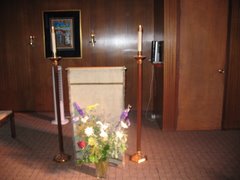
| Redwoods Abbey Altar during Tenebrae |

If we really understand this (and if those seeking to be hermits today truly understand it), I think it will make clear the eremitical journey is not an elitist one, but one made on behalf of others so they may have faith and hope rooted in the fact that, whether we discover God in the sacred ordinariness of our everyday lives, or in the challenging depths of even sin and death, the One Jesus called Abba comes to us in the unexpected and even the unacceptable place.


.jfif)
.jfif)





 Posts
Posts