Showing posts with label Christian nationalism. Show all posts

11 September 2025

Exalting the Cross: Another Look at the Theology of the Cross and its Timeliness

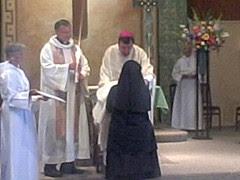
Yesterday, a bit late, but also just as it needed to be, a group of us from the parish got together for lunch at a local restaurant to celebrate my birthday (Sept 1st) and 18th anniversary of eremitical consecration (Sept 2nd). It was a terrific party with about 20 of us! Because it didn't happen on the long Labor Day weekend, one person noted it may have been a better occasion than had we tried to celebrate on my actual anniversaries. Given the Feast of the Exaltation of the Cross, I was not surprised that one of the guests present, wearing a Camino T-shirt, asked me how I understood the cross and what it reveals to us. (At the same time, this is exactly the kind of thing this person would ask about, given her interests and faith!!) Anyway, given the timeliness of the question, I thought I would reprise and enlarge on the answer I gave my friend yesterday afternoon. 

My essential answer was that the cross reveals God to us as the One who wills to be Emmanuel, God With Us, in every moment and mood of our lives, including sin, death, and even godless death. Paul says this in a couple of ways. Our God is revealed in Christ as the One who will allow nothing to separate us from his love (Rom 8). He is the God who, where sin abounds, will be certain his grace (that is, his powerful presence) abounds all the more (Rom 5). Or again, he is the God whose power is perfected in weakness (2 Cor 12:9). And finally, God was in Christ reconciling the world to himself (2 Cor 5:19). To know Christ crucified, and thus, to understand the Cross, is to know God who comes to us in the unexpected and even the unacceptable place and dwells with us in unimaginable mercy and love.

There is another way of thinking about the Cross as revelatory, and that refers to the ways the Cross makes Human Existence known and also real in space and time (the term revelation has both of these meanings). The Cross of Christ not only reveals the nature of God, it also reveals (makes known and real in space and time) authentic humanity. Here Christ is the paradigm of what it means to be fully and truly human, allowing God to be God With Us even in the depths of that which we ordinarily consider godless, namely, sin and death --- even, as Paul says, death on a cross. Moreover, Jesus does this for our sake, for the sake of our reconciliation with God, leading us to human wholeness and fullness of life. To live life as those called to allow God to journey with us in every moment and mood of our lives, and to do so for God's sake, and for the sake of God's creation, is the essence of authentic humanity. All of this is symbolized by the phrases "Self-emptying" or "dying to self", where both of these imply our own incompleteness without God and the distortion we become whenever we try to go it alone or become a law unto ourselves.

A third way of seeing the Cross as revelatory has to do with the fact that it epitomizes our capacity for sin and inhumanity. God did not will Jesus' suffering and death, though I personally have no doubt he knew what he did will would entail Jesus' passion and death at the hands of godless men. God gives us innumerable gifts, and we trivialize, profane, idolize, and otherwise pervert and destroy them. When God gives his only begotten Son to us, the Cross reveals what, all too often, we do with such a precious gift, often in the name of religion! 

All of these forms of revelation depend upon human obedience or disobedience to God. That is, in the cases of Divinity and authentic humanity, Jesus reveals these by remaining open (attentive and responsive) to the will of God being Emmanuel at every moment of his life. This includes his passion and godless death on a Cross. It is because of this openness that God can be the God he wills to be. Because of Jesus' obedience unto death, even death on a cross, there is no moment or mood, no height nor depth from which God's merciful, loving, powerful presence is excluded any longer.  (This is nothing less than the will to reconcile all of creation and forgive sin!)  Jesus' openness, attentiveness, and responsiveness to God's will to be Emmanuel is the mark of authentic humanity and the measure of what it means to be God's own counterpart here in the created world. Its antithesis is disobedience, the refusal to remain open, attentive, and truly responsive to God in all of the surprising and even apparently offensive ways God wills to be present to and with us. 

The tragic irony here is that it is the religious leadership of Jesus' day that pretended to know and understand God, and that manifested the most destructive disobedience to God. When coupled with a civic authority capable of executing those who threaten their autonomy, the result is the torture and death of Jesus, the truly obedient and revelatory One --- a refusal to allow God to be Emmanuel, the one who, again, comes to us in the unexpected and even the unacceptable place. (In light of Christ's obedience even unto death on a cross, even this scandalous death no longer signals godlessness or its characterization as accursed. Instead, it is the exhaustive symbol of God's paradoxical will, mercy, and love, for it is the source of Romans 8's profound affirmation that nothing can separate us from the love of God, not sin, not death, not anything at all.)

Today, we are faced with religious (not faithful) approaches to life in this world that are truly allergic to the Cross of Christ and to the way God's power is perfected in weakness in Jesus' obedience to the One he called Abba. One of these is the movement in the US that goes by the name of "Christian Nationalism," with its roots in the so-called "prosperity Gospel" and its distorted reading of Matthew's criticism of those who, with a "violent or aggressive faith," try to take the Kingdom of God by force. But the Cross of Christ repudiates any such religion as anti-Christian. Instead, the feast of the Exaltation or Triumph of the Cross gives us a profoundly paradoxical power most truly revealed (made manifest or known and made real in space and time) in a love that allows an infinitely merciful and loving God to act in (his) own ways on (his) own terms. (This is also one of the reasons weakness (asthenia, ασθενια), and our acceptance of our limitations is such a powerful means to the revelation of God's sovereignty. Not only do they help make us aware of those profound needs we yearn for, but they can allow us to be open to God acting on God's own terms in God's own time.) Jesus, of course, shows us the way here, and it is the way of the Cross, not that of Caesar or Constantine, or a Nationalist ideological movement set on power and (in)human conquest!

10 July 2025

Bishop Rojas Dispenses Catholics From Mass Attendance in Light of Potential ICE Raids

Notification from Bishop Rojas, Bishop of San Bernardino via Rev. James Martin, sj: [[in an extraordinary move, the bishop of San Bernardino has "dispensed" (freed a person) from the obligation to attend Masses on Sundays and Holy Days of Obligation if the person fears ICE. Bishop Rojas (wisely) says that he is guided by the desire to extend pastoral care to all people in his diocese, particularly those who "face fear and hardship." It is a vivid reminder that not even Catholic churches are considered safe places any longer. Where are the voices for "religious freedom" now?]]

It has been a while since I posted on the current administration and its tendency to violate the supremacy of Christ's Lordship and freedom of religion in this country, but the above notice is an important piece of loss of that freedom that must be commented on. A second piece has to do with attempts to overturn the Johnson Amendment by this administration, notably the IRS. I have not said a lot about the aberration known as "Christian Nationalism" in this blog, but perhaps it is time to raise that issue as well, since all of this is tied together and finds its central symbol in the administration's new "Office of Religion" as well as in the religious sensibilities of the MAGA crowd. A couple of weeks ago, someone in my hearing said, "I would just like to go off and be a hermit with all this terrible news!" Fortunately, a friend standing there laughed, nodded in my direction, and said, "Oh, I don't think being a hermit means being out of touch with what is happening in the world!" And I agreed. After all, it is hard to be a person of prayer or to engage with the Kingdom of God if you are out of touch with that "anti-kingdom" which opposes God and Christian Freedom and Charity at every turn.

I have always been grateful for the Johnson Amendment and what it makes possible in this country. I go to church to hear the Gospel of God in Christ, and to pray with my  Catholic family;  I leave the service commissioned to witness to that Gospel and the faith community it creates in our broken and often misguided world. One of the things that has been precious to me is the right to come around the altar with brothers and sisters who differ politically from one another, and share from the same loaf and cup. We say the creed together and pray the Lord's Prayer as members of a unique and global family, and are very clear that how ever we feel about various social and political issues, it is this creed and the identity celebrated in this prayer that supercedes all of that and allows us to disagree in love and mutual respect. It has also allowed us to go forth to minister the Gospel freely in good conscience, and to respect the rights of other Catholics to choose whom they will vote for, even when we heartily disagree with the wisdom of that choice! 

Yes, it has obligated us to discuss and debate with others as well, but it has made clear that we remain members of a larger and global family with our hearts and minds set on a larger picture and goal we know as the Kingdom or Reign of God. Whatever political choices we make will be made for the sake of that vision, that KINdom. It is a great gift to have a Church that is at once sophisticated in terms of social justice and political action, while at the same time, refusing to allow its worship and proclamation to be sullied by partisan politics and the taint of worldly power.  At least it has been a great gift to have such a Church in the US, in part because of the Johnson Amendment.

But now the IRS has indicated that pastors may speak about and even support political candidates from the pulpit. I experience this as a violation of the "hands off" nature of freedom of religion in our churches, and know that it will be divisive, especially as less wise or discreet pastors seek to influence their congregations, not with the Gospel, but with specific political stances. We all know that what is said from the pulpit or ambo by a pastor will carry weight and influence in this regard, especially with those who are less knowledgeable or confident in their own consciences. One reason we proclaim the Gospel clearly without speaking of political candidates is because this puts the onus of making intelligent and conscientiously informed choices on the hearer --- and after all, this is a central part of the Church's very task in forming the faithful as adult Christians. But allowing pastors, et al., to support specific candidates from the pulpit will short-circuit all of that. And yes, the bias it introduces can cut in two directions depending on whether one respects one's pastor in this matter or not. Whatever direction it pulls or pushes one, it can unnecessarily and tragically short-circuit the process of forming and informing a good conscience in light of the Gospel. Ironically, the Johnson Amendment helped protect freedom** of religion; it did not constrain it.

So-called "Christian" Nationalism does not respect a separation of Church and state. For that reason, Christian Nationalism respects neither the Church nor the state, and where it gains power, both Church and State will be damaged or destroyed. Christian Nationalism desires a theocracy and is actively working towards that form of government as I write. A democratic republic will no longer do. Neither will freedom of religion --- including the freedom to be Christian if that means something other than being a "Christian Nationalist". The incursions of the state into our worship services is simply one natural outworking of a nationalistic form of "Christianity". As horrific as it is to have Bishop Rojas needing to dispense the Sunday obligation for those threatened by ICE, it is more horrific to realize Religious Freedom itself is in jeopardy because of the present administration. Indeed, it has already been violated by the government. If ICE can enter any church looking for "illegal aliens" (apparently meaning those who are not white and appear to have been born elsewhere), then the sanctity of the global family we represent has been violated, and all of us have been harmed and our faith demeaned.

** Remember that for the Christian, freedom does not mean the power to do anything we like, but the power to be the persons God calls us to be. What looks like constraints on other forms of freedom (like vows of poverty, chastity, and obedience, for instance) for the Christian help open the way to truly be the person God calls one to be. In this case, the Johnson Amendment helps Christians to form, inform, and follow their consciences as they personally feel called by God to do. It allows for disagreement and independence, and a greater maturity in one's political choices. After all, the Church's job is not to determine what is right or wrong in terms of such choices, but to proclaim the Gospel in season and out in a way that empowers members to make the choice they feel best supports the Kingdom of God at any given point in their Christian (human) development.

05 March 2025

On Hermits and Involvement in Politics

[[Dear Sister O'Neal, are hermits supposed to be involved in politics? You have posted several times on the current political situation, using the excuse of Christianity to do it. You even applauded that disrespectful Episcopal bishop who insulted President Trump. I am not a Trumper, and I am not a hermit either, but I don't believe hermits are supposed to be involved in the things of this world in the way you are, are they? Have you discussed this with your bishop or director?]]

Preliminary Definitions:

In responding to your questions, it is important to be on the same page with several elements of c 603. You need not agree with my usage, but you must at least understand it. The first is the term "the world". In John's Gospel, the term has several meanings, including 1) the entire cosmos, 2) God's good creation here on earth, and 3) that which is resistant to Christ or that promises meaning and salvation apart from God in Christ. When c 603 speaks of "stricter separation from the world," it means, first and foremost, stricter separation from that which is resistant to Christ. This will include some very real separation from even God's good creation (which is better dealt with, I think, in the canon's "silence of solitude"), but this is very much a secondary meaning. Stricter separation from the world means, first of all, that I am required to live a life focused on God in whatever way God is present and to deal with potential obstacles to that in ways appropriate to my education, experience, and vocation.

The second central element that is important to understand is that eremitical life is lived for the sake of the salvation of others.  It is not merely about becoming holy or getting oneself to heaven (were that actually the ultimate goal of Christian life, which it is not). That would be a blasphemous perversion of the vocation! Hermits live their lives 1) for God's own sake --- that is for the sake of God's will to be Emmanuel -- and 2) for the sake of those God loves and all God holds as precious. Hermits live their lives so that all may be reconciled to God in Christ and the Kingdom of God may be realized in fullness. While a large part of this will be reflected in and expressed as solitary and intercessory prayer, it will not be limited to these. God's Kingdom, the new heaven and new earth with the risen Christ as Lord or King, is something Christians work toward. As scripture tells us, it is an inaugurated and often counter-cultural reality that requires some degree of involvement by all Christians. My own involvement tends to be much more limited than that of most folks; it often takes the form of theological reflection, a bit of teaching, and spiritual direction. It does not allow blindness or complete disengagement from our world's struggle against evil because, after all, this precise kind of engagement (not enmeshment!!) is the will of God for every Christian.

A Life Rooted in the Scriptures:

Finally, my life is a life of prayer rooted in God and our Scriptures. Because of this, I pray these lines as part of the Magnificat every evening: [[. . . He has shown strength with his arm; he has scattered the proud in the thoughts of their hearts; he has brought down the mighty from their thrones and exalted the lowly . . .]] Clearly, Luke, and presumably Mary, the Mother of Jesus, were very much aware of the political and religious situations of the time. Clearly, they saw the way the sovereignty of God --- what we often call the Kingdom of God or of heaven --- countered the political and religious powers that thought they were sovereign and stood in God's place. Luke and the early Christians praised God for this, even though "a power perfected in (the) weakness" of a Crucified Christ accomplished this victory radically differently than they had expected. 

Similarly, as I noted in an earlier article, I have been reflecting on Jesus' encounter with Pilate as part of my way of keeping centered on Christ. What this raises immediately for me is the conflict between truth and untruth that these two persons represent. Jesus does this in the name of God. That is, he stands in the power and presence of the God who is truth, and in doing so, he confronts Pilate with the very incarnation of truth, both divine and human. Pilate stands in the name of the supposedly divine Caesar; he, therefore, represents the incarnation of untruth revealed in this-worldly human power and arrogance. 

I think we often tend to hear Pilate's question, "What is truth?" in an innocent or even irrelevant sense --- as though Pilate is inviting an intellectual debate or discussion on the nature of truth while Jesus is on trial for his very life. But Pilate poses this question in a sneering way. From the Gospel's perspective, the question is meant to be provocative and prompt us to ask, "What is going on here?" (or to respond, "What is truth? You're looking at it!). In no way is it innocent or irrelevant! Pilate's contemptuous question is profound and revelatory. It defines the essence of the confrontation between Pilate and Jesus. It demonstrates someone who holds power and is empty and dismissive of truth; he is, therefore, epitomized by this question. Pilate is someone who, when confronted with authentic humanity that thus trusts in the sovereignty of God, can only diminish Jesus' emphasis on the truth ("It is you who say it!") and act to destroy that humanity, even though he does so while ostensibly washing his hands of the matter!! (In our present situation, I can only say, "Let those who have ears to hear, hear this!!") In other words, Jesus IS the very embodiment of Truth confronting an embodiment of untruth and worldly power. I believe every authentic Christian is called to do the same in whatever way they can. This is what it means to proclaim the Gospel of Jesus Christ.

I am absolutely not called to become enmeshed in this world's politics, nor is any hermit. However, to the extent I live in communion with God, I am certainly called upon to proclaim the Gospel with my life and in any other way my talents and training allow. I would argue that my vocation as a hermit gives me the space and time to engage with God and the Scriptures in a way that demands I confront untruth, carelessness, inhumanity, and idolatry when I perceive it. Ordinarily, this does not involve politics in any granular way; today, however, we are looking at a crisis that threatens our entire democracy and perhaps authentic Christianity as well! It threatens millions of lives in this country and around the world. It endangers the ability to pursue authentic religious belief and morality in Christian discipleship and prevents us from following God wherever God summons us. 

Please note where the accent in what I am saying here falls! Check out the posts that caused you to write me as well. Reread them. In each and all of these pieces, my focus is not on politics per se or on countering untruth in some merely abstract way; rather, it is on proclaiming the Gospel of God in Christ so that its light shines concretely in the darkness and untruth of a world God is gradually recreating and transfiguring and will one day bring to fullness. I believe this serves the Church and the larger world and allows people to have hope despite great difficulty. It is precisely because I am a hermit and theologian whose life centers on God in Christ that, in the current situation, I don't believe I can do anything else.