Showing posts with label c 603 and the purpose of my life. Show all posts

22 April 2025

We Are Pioneers! The Goal and Witness of Eremitic Life

 I have always been a fan of Star Trek and its spin off series. Some I have liked more than others, but all of them have engaged me on some level. I am finding Strange New Worlds especially wonderful, not only because of the exploration being done in each episode, but because of the rich characterizations, the struggle each player has to be their best selves, and the ethics of equality and compassion that permeate the show. In all of these aspects, Star Trek generally, and in Strange New Worlds specifically, reminds me of a world we have the potential to be as part of a universe we can hardly imagine yet.

As a hermit, I don't imagine I will ever explore outer space! But I, and other diocesan hermits, are excited by the prospect of exploring inner space, the realm of life with God, and with living on the frontiers of eremitical life with our canonical commitments. More, we do this as part of our ministry to and within the Church, precisely so the Church can be alive in the way she is called to be. This is also essential to the health and well-being of the world around us, and integral to God's own will for the whole of his creation. We are pioneers of sorts, and we struggle in the ways all pioneers struggle, first to live our lives with an integrity that is true to the solitary eremitical tradition we represent, and secondly, to be open to whatever new the Holy Spirit wills to do in and with our lives. That makes our lives a strange mixture of old and new, inner and externalized, traditional and novel, profoundly personal and expansively cosmic, all at the same time. Like many who have gone before me, and numbers of others journeying in the same way today, I think this is what it means to be a contemplative and to live in the present moment!! 

It is also what it means to live in and from the Risen Christ, who abides at once in heaven and on earth. He is the one in whom the interpenetration of these realities is made real. In all of the Scripture I have done in the past years, two themes are newly important for my understanding of the nature of eremitical life and the journey I have been called to make. The first is the affirmation that God is the One who, from the beginning, has willed to be Emmanuel, an image of God that affirms his desire to be with me (and the whole of his creation) in every moment and mood of my life. Emmanuel is the name in which heaven and earth are drawn together to make the whole of God's dwelling place. The second theme that affirms this same will of God is that Jesus is the new Temple. A temple is not merely a holy place set apart for God or for worship of God. It is the place in which heaven (God's realm) and earth (creation's realm) are quite literally drawn together. Jesus as the new Temple becomes the One in whom heaven and earth interpenetrate one another, and the renewed world becomes God's own once again. 

Into this incredibly weighty story I have been born and born anew, and what I also know now for the very first time, is that both I and this solitary eremitical vocation were made for times like these. It is something of a truism to say that eremitic life tends to reappear or flourish during difficult times. But here we are, just 42 years into the life of the canon 603 vocation, and our world faces crises on every front. The US is facing a Constitutional crisis and the endangering of our democratic society on numerous fronts; our people need to be able to hold onto hope, and religious freedom needs to be protected, especially from "Christian Nationalism" and the assault on religious freedom that represents.  At the same time, the Catholic Church has just lost Pope Francis, one of our strongest voices for human rights, social justice, the threat to our environment, as well as to the place of a synodal Church in establishing and maintaining a just and compassionate Church and world. We look to the election of a new Pope and the renewal of the Church's mission, especially in the face of growing fascism, oligarchies, "Christian" Nationalism, and factionalization throughout the Church and the World.

I have written on this blog for almost twenty years about the task to become the person God calls each of us to be. A vocation is a means by which we achieve this task and goal. An ecclesial vocation also means being part of those directly responsible for allowing the Church to be the Church God calls her to be. As a part of this task and goal, I have worked with a highly skilled spiritual director during this entire time, and together we have explored the ins and outs of my own journey to growth, healing, and union with God. It has been surprising, at times gratifying, at others exhilarating, and at other times (though especially the past nine years) extremely difficult. In the main, just as it is for every hermit, it has been a journey of love --- loving, being loved, learning to be loved, and learning to trust and love more fully in return. This has meant exploring the depths of myself, learning what it means to be true and, through the love and mercy of God and others, to be made true and whole.  

In all of this, our relationship with the creator God is so central to our lives, so constitutive of who we are, that we can say we ARE this relationship, and like any relationship, it is both demanding and fulfilling. This is the inner world the hermit explores, commits to allowing being enlarged and deepened even to the limits of her human weakness and the darkness of personal alienation and fragmentation. The desert Abbas and Ammas spoke of doing battle with demons, and the vivid pictures they sometimes painted reflected the awesomeness of this same inner world. It was sometimes terrifying, always challenging, and, so long as one persevered, inevitably exhilarating in the victory of love over personal woundedness and brokenness. This is true of contemporary hermits as well. This victory culminates in union with God and the certain sense that one's life is given to God so that He may be the Emmanuel He wills to be, even as he makes of us those we are called to be, too. 

No, this isn't the final frontier of a Star Trek program. But it is every bit as exciting an adventure, and of much greater moment! At a time when truth is generally neglected and betrayed, when personal truth is sacrificed for the sake of inhuman disvalues like greed and power, when Christianity itself is betrayed by a "prosperity gospel" with no room for the Cross or the authentic grace of God, when individualism replaces the commonality of brothers and sisters in Christ, hermits explore and witness to this deepest of truths, namely, to the extent we are truly human and live this with integrity we ARE a relationship with God in which we both fulfill the telos of our lives and participate in the fulfillment of the whole of God's creation. This is the source of all hope in our world, and it is the one thing hermits are called to witness to with their lives. As Strange New Worlds might describe this vocation, Ad astra per aspera: Through difficulties to the stars!!

10 April 2025

Followup on the Relation of Physical Solitude to Existential Solitude

[[Sister Laurel, I was really struck by your assertion that eremitical solitude involves but is not about physical solitude, that it is about the existential solitude of the journey to the center of our being, where we meet ourselves and God. I was also struck by the way that ties in with the hiddenness of the hermit vocation and how it is that whether you are with people or not, your real vocation is solitary and hidden. I don't mean any offense, but have you written about this before this last month, and if not, why not? (Maybe it would be better to ask you what made it possible for you to write in this way now!) 

Other hermits I have read or heard have stressed how someone is no hermit if they are known by others or spend time with them, or wear a habit, or use a recognizable title, and so forth. They stress the externals a lot, and for them, physical solitude is the key to determining whether someone is really a hermit or not. But you have sliced through all that in a couple of sentences in your last post. Is it your opinion that a hermit must be measured by the inner journey they undertake, rather than the degree of physical solitude they live? That's what I hear you saying. ]]

What excellent questions! Your first one about why I am writing this way now is probably not one I can answer to your satisfaction because it involves a personal experience that happened at the beginning of Lent, and I am not yet sure what I can or want to say about that. You'll need to be patient with me regarding that part of things. Still, I have tried to write about the essential hiddenness of this vocation and also to distinguish between physical solitude and a more existential solitude from fairly early on. I first used the term existential solitude around 2013, at least as part of a piece that includes that label. And earlier than that, I wrote about the quest for authentic selfhood, and the inner journey one is called to make, even if I failed to use the actual term, " existential solitude". As I looked over the articles with the label "essential hiddenness", however, the things I have been writing about this past month are present, but without the clarity of my recent posts. And that makes sense because sometimes we can only see things clearly or have the freedom to say what we need to once we have travelled beyond the struggle to a new place and perspective.

I don't want to undervalue the importance of physical solitude to the hermit vocation. The past year and a half, especially, and to a somewhat lesser degree the time since the pandemic, has been marked by very significant degrees of solitude of this type. To varying degrees, it is a prerequisite for the inner journey the hermit is called to make. Even so, physical solitude is not the reason for the vocation and must not be absolutized as some seem wont to do. As I noted in my last post, [[The eremitical vocation requires physical solitude, but it is not primarily about physical solitude, nor does it exist for the sake of physical solitude. Similarly, the hiddenness of eremitical life is not about external hiddenness, anonymity, etc., though it may benefit from these. Instead, it is about the hidden journey to the very heart of our being. This journey continues in one way or another, whether I am with others or not, and it is hidden from everyone, even those whose place in my life makes them a privileged sharer in this journey.]] Physical solitude can sharpen our existential solitude, but so can being with people. I think physical solitude, however, is the privileged servant of the existential solitary journey and is essential to authentic eremitism.

I understand what you mean when you write about reading and hearing other hermits making physical solitude the key to the eremitical vocation, though. I agree that some seem too taken with externals (this includes those who criticize these) and even seem unwilling to look at the inner journey as the heart of the vocation. I absolutely believe the eremitical vocation and the authenticity of the hermit herself can only be measured in terms of the inner journey they have undertaken. Many people have embraced the newish phenomenon called "cocooning." Many others are misanthropes and agoraphobics, while in many prisons, criminals are locked in their individual cells for 23 hours a day. All of these and many, many more live physical solitude and are NOT hermits. 

The examples could be greatly multiplied with scholars, artists, writers, the isolated elderly,  many chronically ill, and others who live and work alone. Some try to validate their relative isolation by calling themselves hermits. Some of these even embrace some degree of piety and prayer. A small percentage of these may discover a genuine call to eremitic life. Even so, what tends to be missing for the majority is the intense, serious, and sustained inner journey to the depths of one's being involving an engagement with existential solitude.

The Church professes and consecrates c 603 solitary hermits and has done so since Advent of 1983. Some argue that canonical standing is not necessary. I differ because I understand how difficult the inner journey I am speaking about actually is, and how much support it actually requires. Generally speaking, in the process of discernment and (initial) formation, those working with the candidate have a sense of the person being about this inner journey, or they do not admit them to profession or consecration. The outer signs of this vocation remind the hermit of the inner journey to union with God they are supposed to be about. These things remind the Church itself that it has such persons in its midst. At the same time, admission to profession and consecration (when these are legitimately pursued and granted to the hermit), says to the hermit in the midst of this journey that the Church recognizes she is called to this vocation, and helps empower her to stay the course! So does the supervision of the local ordinary and/or his delegate and the spiritual director.

Of itself, living entirely alone is not all that important. It might even represent a failure to live with others or to be adequately socialized (remember those misanthropes and criminals!). But living alone or perhaps with one or two others in a laura, 1) with the approval and assistance of representatives of the Church, 2) within a local faith community, 3) all for the sake of an inner journey to union with God in, 4) a divine vocation that is, 5) paradigmatic of the ultimate call of every person that exists or will ever exist, is incredibly important. The externals of this vocation (including physical solitude) point at once to its ecclesial nature and remind us of its essential hiddenness. Even so, it is the inner journey to the depths of one's being and an active seeking of union with God that is the very heart of the call and justification for everything else, especially every sacrifice the vocation requires from us. It seems to me that a life committed to this particular journey is the only thing that actually merits the name "hermit".

11 November 2024

Being a Work in Progress and Having no Regrets

 [[Dear Sister Laurel, I wondered if you have ever said you have devoted your life to canon 603 or wondered about the wisdom of that. I heard that somewhere. It was sort of as though you had wasted your life on a stupid canon law. You wrote not long ago about living as a lay hermit and then renewing your petition to become a consecrated hermit because you believed you had something to bring the Church. Was dedicating your life to c 603 part of that? If someone thinks spending time and energy on a stupid canon law is a waste, what would you say to them?]]

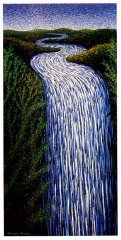
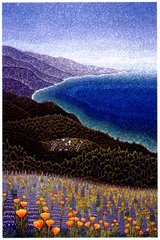
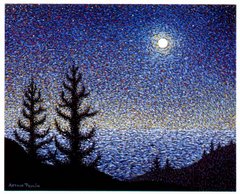
Thanks for your questions. No, I never said I devoted my life to c 603 as canon or felt called to do so. You see, it is not true. Yes, there is no doubt that over time this blog has taken on a focus and that focus is c 603 and the life this made canonical in the Church, but this blog is only one piece of my life, and it is important for whoever made the comments you heard to realize that. For instance, I do spiritual direction regularly, and my daily life is given over to prayer, some study, and Scripture. I also teach Scripture in my parish, and though we only meet once a week, it does take time to prep a class! Additionally, I spend time mentoring candidates for c 603 profession, and while I usually will not work with more than two candidates at a time, it still takes time and requires additional reflection and prayer. Finally, I do some recreational stuff. Since I am not playing violin due to a broken left wrist (not to worry; it happened several years ago now), I am learning to play cello instead and I also color with colored pencils (cf works in progress and completed in this article).

Yes, one focus of my study and reflection is c 603 itself, but I am also reading about consecrated life, discernment and formation of vocations to the consecrated life, and of course, more generally the nature of eremitical life itself. As I have noted before, a small group of c 603 hermits is reading Cornelius Wencel's book Eremitic Life together, and though we have all read it before (sometimes several times!), in looking at it together we are able to explore and share the various ways God has worked in us and called us to this vocation.  We all have different interests, different schedules, different gifts and limitations, but we all are grateful to God for this canon and desire to live it with and for God and for the Church. Having said all that, let me point out something far more important and maybe more pertinent, namely, that in concerning myself with c 603 here and elsewhere, I am concerning myself with lives, eremitical and non-eremitical lives that are precious to God, and to something that has the potential anyway, to positively touch many more people in the years to come, well into the future of the Church.

I had not the slightest inkling that a developing focus of my life would be c 603 itself, nor that I would ever work with and even mentor other c 603 candidates and hermits. I would certainly have told you that you were crazy if you had suggested these things to me. The same is true with virtual lauras. Of course, I had only had email for a few years when I was consecrated. Skype was, at least for me, in the future and ZOOM was in the far future. There was no way to have imagined, much less worked to implement such ideas!! In the days after consecration, Sister Nerina and I tried to form the Network of Diocesan Hermits; we succeeded to some extent, and in some ways, what is happening now is the natural outgrowth of that idea, surprising as that is to me. The reason I renewed my petition with the Diocese of Oakland before Bp John Cummins retired was because I knew I had something to offer the Church both because of disability and giftedness made significantly rich in a contemplative and eremitical context. I also thought this because of my theological education and work in hospital chaplaincy though I was not sure exactly how these would become important in an eremitical life.

Today, I simply marvel at what God is doing in and with my life. That is particularly true of my own personal work in spiritual direction and the way that has allowed God to bring so much together so it all makes a truly awesome sense. I really could not have done this simply with my own planning and energy or disability. And, like the picture to the left, while it is not precisely what I originally envisioned, nor, at various points was I happy with its progress (at other points, I loved what was happening), in the end I was happy with it and think perhaps that will be true when I hand my own life back to God for the final exhaustive and irrevocable time. 

I have not the slightest doubt that God has willed my being c 603, as well as my spending time and energy on it,  possibly even from when I was an infant and long before such a canon was a glimmer in the Church's eye. If someone were to suggest that c 603 is a waste of my life and I should move on to "something more spiritual" or whatever, I suppose (because this is the image that has popped into my mind just now), I would tell them what Harry Potter's "Marauder's map" told Professor Snape in The Prisoner of Azkaban, namely, that they "keep [their] abnormally large nose out of other peoples' business!" In a more Scriptural way, I might remind them not to judge lest they find themselves judged in the process.