16 September 2025

Once Again on Suffering and the Will of God

[[ Sister Laurel, Hi! You said that in vocations to chronic illness you absolutely do not mean that God wills our suffering. You probably know that there are hermits out there who insist they are called to suffer and that God actually wills and even sends their suffering. How can there be such different views of God's relation to suffering within the Church? I must admit, I prefer your view of things. I struggle with chronic illness myself and while I find myself asking God "Why?" a lot of times, I don't really think God wills my illness or the suffering that goes with it. I am looking forward to that new heaven and new earth you write about when God will be all in all and there will be no more suffering!!!]]

Hi there, and thanks for your comments and question. I am aware of no true hermits who believe that suffering is the will of God, though I have met an isolated individual or two who insist on this. I can understand why they have come to such a position. I suppose all of us who suffer with chronic illness and especially chronic pain, have been tempted to take the same theologically perverse path to try and make sense of something in our lives which really adds absurdity or senselessness. One person I am thinking of suffers from a trauma-induced inflammatory disease affecting spinal nerves, resulting in the entrapment and clumping of those same nerves. From what I have read (and can imagine) of the condition, the pain is truly excruciating. Fortunately (in some ways), the condition is becoming far more common than it once was, and docs are finding new approaches to help deal not only with the pain, but with the problems that occur when spinal fluid leaks out of the spinal canal and irritates other tissues and organ systems, etc. One of the most hopeful things mentioned was the use of potent meds that can cross the blood-brain barrier and help deal with the inflammation involved, and even with the clumping. (The blood-brain barrier has been the main obstacle to getting these kinds of meds to the appropriate area until recently.)

So, I can understand why someone with such a condition could decide it is God's will that they suffer, and even that God sends the suffering. Unfortunately, the God this gives us is not the God of Jesus Christ, nor the God of unconditional love or entirely unmerited mercy who takes on suffering in order to dwell with us and redeem our lives. I think that is the answer to your difficult question about how there can be such different positions regarding God's relation to suffering. The God who wills and sends suffering is not the God of Jesus Christ. My own position on this has changed over time. In the article you asked about, I believe I said that God willed the suffering of his Son. I treated this as the single exception in my theology. Today, I do not believe this. I believe instead that God willed Jesus' integrity, especially in allowing his Father to accompany him, to be God with us, Emmanuel, in everything Jesus lived, and in doing this, that Jesus would love both his Abba and the whole of creation faithfully and without condition or limit.

While I believe it was clear that doing so would lead to profound suffering, I think we must get used to drawing this distinction when we think of God or God's will. Certain terrible things can happen to us when we live God's will faithfully. We will routinely love those others hate, we will speak truth to power whenever necessary, we will model a countercultural life that will trigger feelings of guilt and insecurity in those who live otherwise, and in every way we can, we will act to foster true justice in our lives and society. These are the things God wills, not the reactions and tragic consequences of those who are offended by our lives and actions. To think that God wills these consequences is to say that the people who mocked, tortured, and executed Jesus were doing the will of God. Surely no Christian can say such a thing!!! Of course not! They were doing the will of Satan and of a distorted humankind under the power of sin. As sin and death and all of the anti-divine powers and principalities were focused and concentrated on and in Jesus that day, so too did the Christ-event become the focus of God's mercy and love. God's judgment was that he would be sovereign, and the actions and consequences of the actions of all the powers and principalities trying to stand against him would not stand!

Of course, we can learn through suffering. God can be victorious in and through suffering. But what we learn, I think, is always a function of appreciating God's powerful mercy and love that is the overweening reality even in terrible suffering. Suffering allows us to learn about our deepest selves as well, the strength, courage, beauty, and incredible giftedness that suffering tends to stifle and reveal. These things are rooted in God; they are alive in us because they have their origin in the eternal God who gifts them to us without ceasing. And these things are the will of God, not the struggle or suffering. This is the distinction we must keep drawing if we wish to make sense of the problem of suffering and the will of God (often called Theodicy).

11 September 2025

Exalting the Cross: Another Look at the Theology of the Cross and its Timeliness

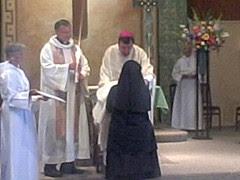
Yesterday, a bit late, but also just as it needed to be, a group of us from the parish got together for lunch at a local restaurant to celebrate my birthday (Sept 1st) and 18th anniversary of eremitical consecration (Sept 2nd). It was a terrific party with about 20 of us! Because it didn't happen on the long Labor Day weekend, one person noted it may have been a better occasion than had we tried to celebrate on my actual anniversaries. Given the Feast of the Exaltation of the Cross, I was not surprised that one of the guests present, wearing a Camino T-shirt, asked me how I understood the cross and what it reveals to us. (At the same time, this is exactly the kind of thing this person would ask about, given her interests and faith!!) Anyway, given the timeliness of the question, I thought I would reprise and enlarge on the answer I gave my friend yesterday afternoon. 

My essential answer was that the cross reveals God to us as the One who wills to be Emmanuel, God With Us, in every moment and mood of our lives, including sin, death, and even godless death. Paul says this in a couple of ways. Our God is revealed in Christ as the One who will allow nothing to separate us from his love (Rom 8). He is the God who, where sin abounds, will be certain his grace (that is, his powerful presence) abounds all the more (Rom 5). Or again, he is the God whose power is perfected in weakness (2 Cor 12:9). And finally, God was in Christ reconciling the world to himself (2 Cor 5:19). To know Christ crucified, and thus, to understand the Cross, is to know God who comes to us in the unexpected and even the unacceptable place and dwells with us in unimaginable mercy and love.

There is another way of thinking about the Cross as revelatory, and that refers to the ways the Cross makes Human Existence known and also real in space and time (the term revelation has both of these meanings). The Cross of Christ not only reveals the nature of God, it also reveals (makes known and real in space and time) authentic humanity. Here Christ is the paradigm of what it means to be fully and truly human, allowing God to be God With Us even in the depths of that which we ordinarily consider godless, namely, sin and death --- even, as Paul says, death on a cross. Moreover, Jesus does this for our sake, for the sake of our reconciliation with God, leading us to human wholeness and fullness of life. To live life as those called to allow God to journey with us in every moment and mood of our lives, and to do so for God's sake, and for the sake of God's creation, is the essence of authentic humanity. All of this is symbolized by the phrases "Self-emptying" or "dying to self", where both of these imply our own incompleteness without God and the distortion we become whenever we try to go it alone or become a law unto ourselves.

A third way of seeing the Cross as revelatory has to do with the fact that it epitomizes our capacity for sin and inhumanity. God did not will Jesus' suffering and death, though I personally have no doubt he knew what he did will would entail Jesus' passion and death at the hands of godless men. God gives us innumerable gifts, and we trivialize, profane, idolize, and otherwise pervert and destroy them. When God gives his only begotten Son to us, the Cross reveals what, all too often, we do with such a precious gift, often in the name of religion! 

All of these forms of revelation depend upon human obedience or disobedience to God. That is, in the cases of Divinity and authentic humanity, Jesus reveals these by remaining open (attentive and responsive) to the will of God being Emmanuel at every moment of his life. This includes his passion and godless death on a Cross. It is because of this openness that God can be the God he wills to be. Because of Jesus' obedience unto death, even death on a cross, there is no moment or mood, no height nor depth from which God's merciful, loving, powerful presence is excluded any longer.  (This is nothing less than the will to reconcile all of creation and forgive sin!)  Jesus' openness, attentiveness, and responsiveness to God's will to be Emmanuel is the mark of authentic humanity and the measure of what it means to be God's own counterpart here in the created world. Its antithesis is disobedience, the refusal to remain open, attentive, and truly responsive to God in all of the surprising and even apparently offensive ways God wills to be present to and with us. 

The tragic irony here is that it is the religious leadership of Jesus' day that pretended to know and understand God, and that manifested the most destructive disobedience to God. When coupled with a civic authority capable of executing those who threaten their autonomy, the result is the torture and death of Jesus, the truly obedient and revelatory One --- a refusal to allow God to be Emmanuel, the one who, again, comes to us in the unexpected and even the unacceptable place. (In light of Christ's obedience even unto death on a cross, even this scandalous death no longer signals godlessness or its characterization as accursed. Instead, it is the exhaustive symbol of God's paradoxical will, mercy, and love, for it is the source of Romans 8's profound affirmation that nothing can separate us from the love of God, not sin, not death, not anything at all.)

Today, we are faced with religious (not faithful) approaches to life in this world that are truly allergic to the Cross of Christ and to the way God's power is perfected in weakness in Jesus' obedience to the One he called Abba. One of these is the movement in the US that goes by the name of "Christian Nationalism," with its roots in the so-called "prosperity Gospel" and its distorted reading of Matthew's criticism of those who, with a "violent or aggressive faith," try to take the Kingdom of God by force. But the Cross of Christ repudiates any such religion as anti-Christian. Instead, the feast of the Exaltation or Triumph of the Cross gives us a profoundly paradoxical power most truly revealed (made manifest or known and made real in space and time) in a love that allows an infinitely merciful and loving God to act in (his) own ways on (his) own terms. (This is also one of the reasons weakness (asthenia, ασθενια), and our acceptance of our limitations is such a powerful means to the revelation of God's sovereignty. Not only do they help make us aware of those profound needs we yearn for, but they can allow us to be open to God acting on God's own terms in God's own time.) Jesus, of course, shows us the way here, and it is the way of the Cross, not that of Caesar or Constantine, or a Nationalist ideological movement set on power and (in)human conquest!

09 September 2025

Dioceses and c 603 Vocations: Minimizing Uncertainty and Risk in the Process of Discernment and Formation

In The Long Journey, I wrote about the journey to Union with God and something of the universality of that call. With c 603, it has sometimes been difficult for dioceses to adequately discern and assist in the formation of diocesan hermits. This prompted the following questions, which I promised I would return to: [[It seems to me that either a diocese has to be really patient and willing to take a risk with someone, or the person has to have made a long journey before contacting their diocese to request profession and consecration. The first problem with this is, what diocese has the patience to wait as long as needed to discern a solitary eremitical vocation with someone?]]

In my initial post, I quoted you, [[It seems to me that either a diocese has to be really patient and willing to take a risk with someone, or the person has to have made a long journey before contacting their diocese to request profession and consecration.]] and I responded: [[I believe both things are true. The person must have made a relatively long journey before contacting a diocese with the request to be professed under c 603 AND the diocese must be patient in a process of mutual discernment and formation that assists the person making their petition to truly know the way God is calling them, and to prepare for the necessary stages of commitment if they (both) find the person is called to c 603 eremitical life.]] Let me point out further that dioceses always take risks with vocations. No one comes in with a certified letter from God saying, "Consecrate her. She is called to be a c 603 hermit"! When I was consecrated, my diocese supplied a "Bishop's Decree of Approval of (my) Rule of Life". That decree expressed thanks to God for the gift of this vocation. At the same time, it included the following sentence. "I pray that this Rule of Life proves advantageous in living the eremitical life." So yes, there is always risk because vocations come from the Mystery we know as God, and discerning vocations is, as Sister Susan Blomstad, OSF, once noted, difficult and something of an art.

The risk that dioceses take in admitting someone to the profession and then to consecration as a diocesan hermit, however, can be minimized in ways that make the process less onerous for the diocese or its staff. In this blog, I have referenced a process of discernment and formation that focuses on the requirement that the hermit write a Rule of Life. This requirement, as I have explained a number of times, can be used to guide the formators and other diocesan staff in discerning the nature and quality of the vocation in front of them. Writing a Rule of Life is itself a formative process. To write about all of the elements of c 603, to describe a healthy eremitical life that embodies these elements and the whole spirit of c 603 in a contemporary setting, requires significant experience and reflection on that experience. Dioceses can schedule conversations at different points throughout this process, both to hear how God is working in this candidate's life and to determine if there are resources the hermit candidate could benefit from in her process of formation. 

At the same time, through this process, though no vow of obedience is involved, the candidate learns to work with diocesan personnel in ways that will help develop her sense of what such a vow might entail and what it may not. It can assist the candidate to develop a deeper sense of the ecclesial nature of this vocation. Contacts may be made with those special individuals who may accompany her in her vocation for many years to come. And of course, both the hermit and the diocese in question will come to understand c 603 much more fully and fruitfully, not simply as a law allowing the profession and consecration of solitary hermits, but as a rich, fertile template of solitary eremitical life, a source of guidance and inspiration for personal exploration in the hermit's lifelong journey** to union with God. The underlying focus in all of this work is the idea of this specific journey and the assurance that the hermit/candidate is committed to (or clearly moving toward) this above all things. (In the beginning years of a hermit's eremitical life, this commitment exists, but it may not yet be articulable in terms like "union with God".) None of this takes away all risk in professing and consecrating a diocesan hermit, but all of it can minimize risk and, down the line, allow for similar work and better discernment and formation with other candidates for c 603 profession and consecration.

The process referred to here can take some time, yes. There are different reasons for this. Sometimes candidates don't have sufficient experience of living in solitude, some are not contemplatives, some may find reflecting on c 603 and the way God calls them to embody it in their lives an extremely challenging task, while others may simply find writing this out in a Rule of Life very difficult. All of this takes time, and dioceses must understand that writing a Rule of Life is formative, challenging, and critical to the discernment of such a vocation. It is not the easiest, most concrete element of c 603, and therefore easily dispensed with via the instructions, "Now, all you need to do is go write a Rule of Life!" The diocese must allow the writing of a truly liveable Rule to take the time necessary for each candidate; they must also allow the task of writing the Rule to assist them (Diocesan personnel) with conversations regarding the discernment, formation, and writing processes at periodic points along the way. 

Mentors (other c 603 hermits with appropriate backgrounds) can assist the diocese and work with the diocesan team and candidate with the Rule and c 603, or, if there are insufficient diocesan staff to follow a candidate in the way that is needed, she may work with the candidate on the diocese's behalf. (In such cases, the mentor will report to diocesan personnel occasionally regarding how the process is proceeding.) What I am describing here is not onerous for either candidate or diocese, but it is critically important in discerning and forming such vocations. While such discerning and appropriately forming (or ensuring the formation of) such vocations takes time, I am not suggesting this process can or should be stretched out interminably. In my experience, it tends to become clear within two or three years (sometimes, though rarely, fewer) whether  or not one is working with someone with an authentic eremitical vocation. In other cases, uncertainty will be cleared up as the person engages or fails to engage with the process of formation. (This requires a significant degree of initiative and self-knowledge; it will be evident to formators.)

Often, the question of time is arbitrarily determined by reference to canon laws that fit religious living in community rather than solitude. Sometimes the addition of such time frames is meant to supplement what are perceived as deficiencies of c 603. Personally, I believe this is a significant mistake, especially in its misperception of the depth and breadth of c 603, but also in its complete failure to understand the uniqueness and flexibility of solitary eremitical life. The composition of a liveable Rule of Life truly rooted in the candidate's lived experience will take time. Of course it will!! The diocesan conversations accompanying such a process and contributing to its fruitfulness will allow discernment to take place without arbitrary time limits or time frames. Dioceses need to trust this! 

At the same time, should a candidate fail to adequately engage in the process, a diocese might well decide to suspend it for the time being. If the candidate had been doing well, the diocesan staff will want to understand what has happened. Depending on the circumstances, dioceses may or may not be open to restarting the process once the hermit candidate is in a better position to truly engage the discernment/formation process. Yes, all of this takes patience, skill, wisdom, prayer, and courage. It does not, however, ask for anything diocesan formation, vocation, or similar personnel should not have in abundance, particularly when dealing with such a significant and individual vocation!!


**Sister Rachel Denton, Er Dio, prefers the term pilgrimage here, and I understand her preference, not only because of her own specific experience with pilgrimage, but especially in light of Vatican II and its reflection on the People of God as a pilgrim people. I am just not yet personally comfortable enough with the term to use it easily myself, so, for the time being, I will continue to use the less specific "journey" here as I read about and reflect more on "pilgrimage" and all it implies. Readers, of course, should feel free to change the language and think of the c 603 vocation in terms of lifelong pilgrimage if that is more helpful!!

06 September 2025

The Vocation to Chronic Illness (Reprise)

I received some questions about the notion of "chronic illness as vocation", and I am aware that there have been a number of visits to the article here in the blog about Eremitism as a vocation for the chronically ill and disabled. While I will write those who emailed me with questions, I thought I should also write a bit more about this idea here, not only because the Review For Religious article on Eremitism which was reprised here was a relatively brief introduction to the idea, but also because as positively provocative as the phrase "vocation to chronic illness" is, it is also easily misunderstood.

What a Vocation to Chronic Illness is NOT

First, therefore, let me say something about what a "vocation to chronic illness" does NOT mean!! In no way do I mean to suggest that God wills our suffering, much less that he calls us to this, especially in the forms of chronic illness or disability! We need to make sense of suffering, and we need to take seriously the sovereignty of God, but we cannot take these two pieces of the human puzzle, facilely slide them together as though they are related as effect and cause, and conclude that God wills suffering. In fact, I don't think we can speak of the suffering human beings endure as positively willed by God in any way, shape, or form with the single exception of Christ's own exhaustive participation in our human condition. (The permissive will of God is another matter, and, except for agreeing that it is real, I am not addressing that here.)

Our Essential Vocation: Authentic Humanity

The conjunction of human and divine often strikes us as paradoxical: expressions of brokenness, sin, alienation, weakness, hatred, untruth, and distortion stand in conjunction with wholeness, goodness, unity, power (authority), love, truth, and beauty themselves. But, to be less abstract, the human-divine equation, the community or dialogical event we are each called to be often looks to be composed of incredible contradictions: our sinfulness becomes the place where God's mercy/justice is exercised most fully; our weakness and brokenness the place where God's own strength and wholeness (holiness) is most clearly revealed; our fundamental untruth and distortion the place where God's own truth verifies and hallows us, authoring us in Christ as his own parables to speak the Gospel to a hungry world.

There are few images of human sinfulness and brokenness so vivid as that of illness, and especially of chronic illness or disability. It is not the case that the ill person is a worse sinner than others who are well or relatively well. Neither is it the case that illness is the punishment for sin, especially personal sin. Still, it IS the case that the chronically ill bear in their own bodies the brokenness, estrangement from God, and alienation from the ground of all wholeness, holiness, and truth, which are symptoms of the condition of human sinfulness. What is expressed in our bodies, minds, and souls is the visible reminder of the universal human condition. Chronic illness itself, then, is symbolic of one side of the truth of human existence, namely, that we exist estranged from ourselves, from others, and from our God. We are alienated from that which grounds us, establishes us as a unity, and marks us as infinitely precious and our lives as richly meaningful and fecund. We live our lives in contradiction to what we are TRULY called to be.

We sense this instinctively, and this is the reason, I believe, personal sin has so often been associated with illness as its punishment (rather than simply as consequence or symptom). We know that this state (estrangement symbolized by illness) is not as things SHOULD be, not as we are meant to exist, not appropriate to persons gifted in their capacity for dreaming and effecting those dreams beyond anything else known in creation. Chronic illness, in particular, is an expression of what SHOULD NOT BE. It is a metaphor for the reality of (the state of) sin; of itself, it is paradigmatic of ONE PART of the human condition, that of brokenness, alienation, and degradation. Of course, there is another part, another side to things for the Christian, especially, and it is this which transforms chronic illness into a context for the visible and vivid victory of God's love in our lives.

The Image of sinfulness transformed

Authentic humanity is modeled for us and mediated to us by Christ. And above all, it is a picture of a life which implicates God in every moment and mood of this existence. More, it is a life which is an expression of the deep victories and individual healing and unity God's grace occasions when it is allowed to reign. Whether to the heights of union with God, or the depths of godless sin and death, Christ's life is an expression of that openness and responsiveness to God which constitutes truly human being, and the supreme example of what it means for God's creative sovereignty to triumph over human sinfulness. Paul expresses the paradox in this way: "My grace is sufficient for you, my power is made perfect in weakness." Jesus' entire life is an expression of the response to the vocation to allow this truth to be realized in human history in a way that makes it a possibility for all of us. It is an image of the unseen (and sometimes unfelt) God whose presence transforms human sinfulness into abundant and eternal life and wholeness. It is, in brief, what we ourselves are called to, what we yearn most deeply for, and to what those with chronic illness and disability in particular can make manifest with a unique vividness and poignancy.

During the Christmas season, there is another figure who particularly captures our attention in her own capacity to embody the paradox which Paul affirms. Mary, in her own way, is an exemplar of the dynamic of God's power, which is made perfect in conjunction with human weakness and even barrenness [especially when coupled with great potentiality and faithfulness]. The result is a fruitfulness beyond all imagining, a truly miraculous and awesome humanity, which, precisely in its lowliness, can, through the power of the Holy Spirit, spill over with the majesty of God's own life in our world. This too is what we ourselves are called to, and what those with chronic illness and disability can especially reveal with special poignancy and vividness.

What a Vocation to Chronic Illness Actually IS:

First of all, then, a vocation to chronic illness is a call by God to live an authentically human life. It is a vocation to ESSENTIAL wellness and wholeness. This will mean it is a human life which mirrors Jesus' own, as well as that of Mary, and the other Saints, in allowing God to be God-with-us (Emmanuel). Concretely, this means living a life which manifests the fact of God's love for us, and the intrinsic inestimable worth of such a life despite the ever-present values of a world which defines worth (and happiness!) in terms of productivity, earning power, wealth, health, and superficial beauty.

After all, the Gospel of Jesus Christ is the good news that there is NOTHING we can do to earn God's love, and nothing we NEED DO except allow it! God loves us with an everlasting love, and he does so, as Ezekiel tells us, for the sake of his own self, for the sake of his own "holy Name". It is further, therefore, the very good news that with God being for us, nothing and no one can prevail against us. God has entered into our human estate and done so definitively. Objectively, there is no dark corner, no place at all from whence God is absent --- for Jesus has implicated God even into the realms of sin and sinful or godless death. In fact, these become the privileged places that reveal God's face to us, the places where he is definitively present. I personally believe we have to say the same, therefore, of illness, which is ordinarily so clearly a metaphor for human brokenness, alienation, and godlessness. For the Christian, chronic illness in particular can become a metaphor for the triumph of God's love in the face of such brokenness. It can become a sacrament of God's presence in a world that needs such sacraments so very badly.

The vocation to chronic illness or disability is, like all Christian vocations, a call not to remain alone and self-sufficient, but instead to rest securely in God and in the esteem in which he holds us so surely. Like all Christian vocations, it is a call to holiness, that is to ESSENTIAL WHOLENESS and perfection in and of God's own power, God's own "Godness". This requires that we accept an entirely different set of values by which we live our lives from those put forward so often by our consumer-driven, production-defined world. It is a call to find meaning in a life lived simply with and for God, and to carry our convictions about this to a world that is so frantically in search of such meaning.

And, it means to learn to accept the suffering that comes our way as best we can so that He may "make up what was lacking" in the sufferings of Christ and one day be all in all. (Let me be clear that in no way is Paul suggesting Jesus' death was inadequate or did not definitively implicate God into the world of sinful godlessness; however, Paul is also clear that God's victory is not yet total; God is not yet all-in-all. Each of us has a part to play in the extension of Jesus' victory into the concrete and very personal parts of our own stories, where God ALSO wills to be triumphant. While Jesus's victory makes God present here in principle, because these realms are personal, we must also allow him in to them. Even so, we do so IN CHRIST, and in the power of the Holy Spirit, so this victory is an extension of Christ's, not our own in some falsely autonomous sense.)

Christians, above all, do not suffer alone, nor are they ultimately dehumanized by their suffering. On the contrary, suffering, as awful as it still can be, now has the capacity to humanize. This is not because of some power suffering has of itself. Rather, it is because suffering opens us to rely on someone larger and more powerful than ourselves, and to allow meaning to come to us as gift rather than achievement. It can open us in particular ways to the power and presence of God because it truly strips us bare of all pretensions and false sense of self. At the same time then, suffering can humanize because ours is a God who ultimately brings good out of evil, life out of death and barrenness, and meaning out of meaninglessness. This is, after all, the good news of the life, death, and resurrection of Christ. If those with chronic illness can live up to their calls to allow these simple truths to be realized in their own lives and become clear to others, they will, in large part, have accepted and fulfilled their vocations.

Sister Laurel, Whom Does it Hurt? (Reprise)

 [[Dear Sister Laurel, why does it bother you so much if someone who is Catholic wants to live like a hermit and is not consecrated by the Church wants to call themselves a Catholic Hermit? I'm sure some people don't know that the term is a technical one or that canon law applies to the use of the term Catholic in this sort of thing. And so what? Why not let people just do as they wish? Who does it hurt anyway? I think you are hung up on this and need to let it go --- after all, really what does it matter in the grand scheme of things except for those who, like you, seem to be hung up on minutiae? (I'm betting you won't post this question but thanks for answering it if you do!)]]


Thanks for your questions. Almost everything I write about on this blog, whether it has to do with the commitments made by the hermit, the canon(s) governing her life, approaches to writing a Rule of Life, the rights, obligations, and expectations associated with her vocation, the nature and significance of ecclesial vocations like this one, the nature of authentic humanity and the witness value of the hermit's life, the hope she is called to mediate to those who live lives marginalized by chronic illness and disability, the discernment and formation associated with the vocation, or the importance of elders and mentors in her life (and other topics) --- all of this speaks either explicitly or implicitly to the meaning and importance of the much more than technical term Catholic Hermit. That said, some posts will deal with your questions as central to understanding this specific eremitical vocation. These will most often be found under the labels:  ecclesial vocation(s),  silence of solitude as charism,  and rights and obligations of canon 603 vocations (and variations thereof). Since I cannot reprise everything written in the past 14 years of blogging on these topics, I would suggest you read or reread some of those posts.

Let me point out that it may well be that in our country and even in our world today the truth doesn't much matter and individualism is the way of life most value. Similarly, it may well be that liberty has edged out genuine freedom in such a world and generosity been supplanted by a "me first", "win at any cost" philosophy and corresponding set of values. Similarly, our world seems to have forgotten that what some decry as "socialism" today was identified in the New Testament's Acts of the Apostles as the only true shape of  community in the new Family (or Kingdom) of God in Christ.  (cf Acts 2:44-45) Christianity has never truly been the most popular or pervasive way of living in our world --- even when most folks went by the name "Christian"; still, Christianity is built on truth and this truth leads to a responsible freedom marked by generosity and humble (lovingly truthful) service to others. Countercultural as that may be, the place which stands right at the point of sharpest conflict with the values of the contemporary world is the life of the canonical (consecrated) hermit.

The hermit's life is both most easily misunderstood and most easily distorted in living. The freedom of the hermit can slide into a selfish libertinism, its individuality can devolve into a "me first" individualism, and its lack of an active apostolic ministry can be mistaken quite easily for selfishness and a refusal to serve others. Those who neither understand the nature of the life, nor the Church's role in ensuring that these distortions do not occur, will ask the kinds of questions you pose in your query. They are not the folks I generally write about -- though their ignorance of this calling can be problematical.  Others who are equally ignorant of the distinctions which stand between world and Kingdom of God will valorize their own selfish individualism with the name "hermit" and some of these will, even when initial ignorance has been corrected, insist on calling themselves "Catholic Hermits" despite never having been called by the Church to live this life in her name, and despite being unprepared and sometimes unwilling to accept the rights and obligations incumbent upon someone petitioning the Church for admission to public profession and consecration. It is these I call counterfeit or even fraudulent for they have taken ignorance and raised it to the level of lie.

Whom Does it Hurt?

Whom does it hurt? First of all it hurts the vocation itself. There is no more stark example of the truth of the way God relates to human beings than when a hermit stands face to face with God in the solitude of her cell and praises God for her life, her call to holiness, the challenge to love ever more deeply, and consents to be a witness to a God who desires to be everything for us because (he) values us beyond all imagining. It is even more striking because she says this is true no matter how poor, how broken or wounded, how sinful or shamed, and how seemingly unproductive her life is in a world marked by consumerism and an exaggerated focus on productivity --- a world which very much values the opposite of all of these challenging realities (brokenness, woundedness, etc.) and considers the hermit to be "nothing" and "a waste of skin". In Christ, the hermit stands before God consenting to be the imago dei she was made to be, entirely transparent to God's truth, beauty, and love, and says with her life that this is the common call of every person. Quite a precious witness! For someone to call themselves a Catholic Hermit when the Church herself has not discerned or admitted her to a public eremitical commitment is to strip away the humble commitment to the truth which is meant to be part of the vocation's foundation and to insert self-definition and self-centeredness in its place. Those who look to this person as an example of the Church's vision of eremitical life may find that, rather than a "Catholic Hermit," they are faced instead with the validation of many of the same distortions and stereotypes that have plagued eremitical life throughout the centuries. They will likely find, if they scratch below the surface, a core of worldliness, deep hunger and fear covered with a veneer of piety.

What they will not find is a person who humbly accepts her poverty before God insofar as this means accepting the vocation to which one is truly called. Lay (non-canonical) eremitical life is profoundly meaningful and important in the life of the church; it should be honestly embraced in that way. A secondary result can be that the Church herself (in individual dioceses) will refuse to consider professing diocesan hermits at all; the vocation is a rare one with, relatively speaking, very few authentic examples; fraudulent "hermits" who represent distortions, stereotypes, and caricatures (as well as sometimes being nutcases and liars) unfortunately can serve to cast doubt on the entire vocation leading to dioceses refusing to give those seeking profession any real hearing at all.

Secondly, it hurts those who most need the witness of this specific vocation, namely those who for whatever reason find themselves unable to compete with the world on its own terms: the chronically ill, disabled, and otherwise marginalized who may believe the world's hype that wealth is measured in terms of goods and social status, able-bodiedness, youth, productivity, and so forth.  Hermits say to these people that they are valued beyond all reckoning by a God who knows them inside out. Hermits say to these people that real wealth is measured in terms of love and that one of the most precious symbols of Christianity is that of treasure contained in clay pots, while real strength is perfected and most fully revealed in weakness. To attempt to witness to the truth of the Gospel by living a lie and building it into the foundation of one's eremitical life destroys the capacity of the "hermit" to witness effectively to these truths. To proclaim the fundamental truth that in Christianity real treasure is contained in clay pots is made impossible if one refuses to be the pot one has been made by the potter to be (a lay hermit, for instance) but claims instead to be something else (e.g., a consecrated Catholic Hermit).

Thirdly, it hurts the one doing the lying or misrepresentation, especially if she actually comes to believe her own lies. In this way, her capacity for truth, humility, generosity, and gratitude is all equally injured --- and thus, too, her own authenticity as a human being. We cannot image God as we are called if we cannot accept ourselves or the vocation to which he calls us. And finally, it hurts the Church herself, which is responsible for all that goes on "in her name" and for commissioning those who live eremitical life in this way.

As part of this injury to the Church, it may hurt anyone who is influenced by the fraudulent "Catholic Hermit" in her lies and misrepresentations. Sometimes this happens because the person follows the directions the counterfeit gives to "become a Catholic Hermit" and then, after spending time following this advice and building hopes on a false dream or pathway to realize their dream, is confronted by their parish or diocese with the truth of the matter. Terrible damage can be done in this way, just as it is done to those who are scandalized by the disedifying example of "hermits" who embody all the worst stereotypes associated with eremitical life, whether canonical or non-canonical. Unfortunately, the individual fraudulent "Catholic Hermit" is ordinarily not held nearly as responsible as the Church is in such cases, so the damage or injury can be far-reaching and relatively ungovernable.

Summary:

I am bothered by all of this because I see the value in eremitical life, most particularly as it stands as a witness against the distorted notions of humanity and community so prevalent in today's world. I am bothered by this because I am committed to live this vocation well for the sake of others,  but especially for the sake of God and God's Church, which is the steward of this vocation. I care so much because I have come to know how important this vocation is --- especially as a countercultural witness to the nature of authentic human existence and all the things the world puts up as values today. Finally, I care because God has called me to care, and to embody this caring in my own living, witnessing, teaching, mentoring, direction, and prayer. I care because the truth matters and because God and God's Church care even as they commissioned me to do so as well. 

You may consider this a personal "hang-up" of mine. That's not a problem, and you are free to your opinion, but if you wish me to "let it go," I would note that I am responding to your questions here, and your questions prompt me to think about and even research it further --- not the best way to get me to let go of something! You also used the term minutia, and I would ask you to consider what portions of my response deal with minutia; I don't see anything in all of this that is not significant in many ways for many, many people, and the witness of the Church as a whole. My answer to the question, [[Whom does it hurt?]] would have to be anyone such dishonesty or fraud touches, even if they are not aware of it at the time. The Church is to minister truly and to assist others to live the truth of their deepest selves in Christ. That is made much more difficult when fraud and dishonesty are enacted or purported to be enacted in the name of that same Church. In a world hungry for truth, no one, I would argue, is untouched by this.

05 September 2025

Just for fun!!

02 September 2025

A Few Thoughts on Praying Always

[[Sister Laurel, what does it mean to pray always? Are hermits supposed to be a model of this? If so, how can every person be called to pray always? Thank you!]]

Great questions and ones I have not written much about, unfortunately. Thanks for asking them!! I actually believe that the essence of the eremitical vocation is to pray always, and even more, to become a person who represents God's own prayer in our world. This, of course, does not mean saying prayers always, but rather being focused on, and actively allowing God to be God at every moment, especially within us. I have written here many times that we are constituted as dialogical beings, meaning, by our very nature, we are related and responsive to God who is a constitutive part of us. St Catherine of Genoa said it this way, "My deepest me is God".

Regular prayer is part of learning to pray always; the essence of prayer is allowing God to work within us and, by extension, in our world. We choose to spend dedicated portions of our day in focused prayer, but in this and in other ways, the essence of prayer is about the pervasiveness of God in our lives and our response to that. Brother David Steindl-Rast identifies gratitude as the heart of prayer. There is a wonderful Desert Abba story about praying always. It involves two different very approaches to this reality with the second provided by Abba Lucius as a "word" of wisdom to the "Euchite" monks who seek him out. It goes as follows: 

“Some of the monks who are called Euchites went to Enaton to see Abba Lucius. The old man asked them, ‘What is your manual work?’ They said, ‘We do not touch manual work, but as the Apostle says, we pray without ceasing.’ The old man asked them if they did not eat, and they replied they did. So he said to them, ‘When you are eating, who prays for you then?’ Again, he asked them if they did not sleep and they replied they did. And he said to them, ‘When you are asleep, who prays for you then?’ They could not find any answer to give him.

He said to them, ‘Forgive me, but you do not act as you speak. I will show you how, while doing my manual work, I pray without interruption. I sit down with God, soaking my reeds and plaiting my ropes, and I say, “God, have mercy on me; according to your great goodness and according to the multitude of your mercies, save me from my sins.” ‘So he asked them if this was not prayer ,and they replied it was. Then he said to them, ‘So when I have spent the whole day working and praying, making thirteen pieces of money more or less, I put two pieces of money outside the door and I pay for my food with the rest of the money. He who takes the two pieces of money prays for me when I am eating and when I am sleeping; so, by the grace of God, I fulfil the precept to pray without ceasing.’

The Euchites were a group whose approach to "praying always" and to spiritual life itself was literalist and dualistic. What this means in the present context is that they took Jesus' admonition to pray always not just seriously but narrowly, simplistically, and in a way that caused them to exclude supposed "non-spiritual" activities like work (though not eating or sleeping!) from being the medium of prayer. In other words, only some aspects of their daily living could be considered spiritual or be transformed into prayer, the place where God was active in their lives. What Lucius pointed out was that this approach to "praying always" led to failure and even hypocrisy because what was considered prayer (or the truly spiritual) only involved limited aspects of the human person's life. He at least provided for others so that prayer continued for him while he ate and slept! What was true of the Euchite monks was that all they did, apart from necessary eating and sleeping, was pray, but this was not at all what Christianity means by praying always. 

What was also true about Abba Lucius' lesson was that praying always meant finding ways to allow God's activity to pervade one's life, and also to draw others into that prayer with our generosity and trust. Even when Abba Lucius treats prayer in terms of saying literal prayers, he opens prayer to the larger world around him, creating a community of persons who commend one another to God. God's presence and activity are allowed to pervade Lucius' world, and thus, he prays always. There is a similarly challenging story in John Climacus' Ladder of Divine Ascent (26th step). He writes: It can happen when we are at prayer, some brothers come to see us. Then we have to choose either to interrupt our prayer or to sadden our brother by refusing to answer him. But to love is greater than prayer. Prayer is one virtue amongst others, whereas love contains them all. It is important to understand, I think, that the Desert Abbas and Ammas regarded relationships as particularly important. At the same time, their emphasis on the priority of love allows them to develop a theology of prayer that is less narrow than that of the Euchites.

Prayer meant being open to God's presence and activity. Formal prayer periods are not the only times the Desert Abbas and Ammas did that.  They were present to God, yes, and they were present for others, both in the desert and also in the Church for which they lived such austerity and solitude. Saints throughout the ages have observed that the essence of prayer involves loving well and living one's life in gratitude. To pray always then, is not about constantly saying prayers, treating some things as sacred and other things as profane, or artifically divvying our lives up into the religious and the secular. To pray always is about recognizing God's presence and action in everything and living as those who are grateful for that presence. When we do that, we become persons in and through whom God is allowed to be at work in every way possible for the sake of God's Kingdom (reign or sovereignty). It is not too much to say that as we grow in this dynamic process, we become God's own prayer in this world. 

Absolutely, I believe hermits are called on to be paradigms of the journey toward Union with the God we know best as Emmanuel, God with us. However,  as I have written recently, I also believe every person is called to some form of this specific journey as the very goal and nature of what it means to be genuinely human. The way the journey unfolds and appears, the vocational paths it takes, for example, will differ from person to person, but it remains a universal vocation to which everyone is called.

01 September 2025

More on Discernment and the Long Journey to Union with God

[[Sister Laurel, if the eremitical vocation is about the journey to union with God, how is it that someone can know they are called to this when they are relatively young? Did you know this was what you were called to when you read c 603 for the first time? It seems to me that either a diocese has to be really patient and willing to take a risk with someone, or the person has to have made a long journey before contacting their diocese to request profession and consecration. The first problem with this is, what diocese has the patience to wait as long as needed to discern a solitary eremitical vocation with someone? The second problem is how does a person subordinate everything else in their life for the journey you have described?. . . ]]

Thanks for your questions and for the comments I have not included above. There are several bits of wisdom that speak to these, so let me mention them here. The first is that eremitical life, but especially solitary eremitical life, I think, is generally seen as a second half of life vocation. In the history of the vocation, whether Christian hermits or those from other traditions (those is China or other parts of Asia, for instance), the hermit life is embraced after one has lived a full life, and often, raised families, had a career, perhaps struggled in a variety of ways, and come to know themselves and their own deepest yearnings and potentials more clearly. A specific (and privileged) form of this kind of pattern involves the movement from active ministry to contemplative life, and then to a life of even greater solitude as one comes to be aware that God is calling them to union with Godself. There is a sense in such lives that one has met life head-on and lived each stage of it as fully and as well as one could, and now, there is both the freedom and the yearning for an adventure into even greater love and wisdom as one says yes to a more direct and demanding relationship with the greatest Mystery that is God.

Some, I think, will discover this call earlier than most, and among these will be those who suffer from chronic illness or, perhaps, forms of trauma that raise the questions of the possibility of meaningful existence and personal wholeness and holiness with existential urgency. Karl Jung once noted that some people with certain kinds of experiences -- like the ones mentioned -- are wiser than their years and become suited to ask the profound questions some folks only ask at the end of their lives. I do believe that the urgency with which I encountered and posed the questions of being and meaning in my own life was a sign that I was called, first, to do theology and then, to solitary eremitical life earlier than most. I believe one of the reasons many c 603 hermits I know or know of have chronic illnesses is precisely because these conditions raise certain existential questions and longings with a particular vividness and urgency. The result can be a serious existential search for the Face of God and all that a relationship with God promises in terms of fullness of life, holiness, and meaningfulness. In either situation, the eremitical journey towards union with God requires a "long" and profound background of solitary seeking, struggle, discernment, and formation.  The general insight that this vocation is a "second half of life" vocation holds true in either situation.

The second bit of wisdom that must be recognized is that solitude in eremitical life is never merely, or even mostly, about physical isolation. In fact, eremitical (and monastic) solitude is the redemption of isolation that is achieved in deep relationship, first with God, then with oneself, and finally with others. Eremitical solitude is about being alone with and for the sake of God, one's truest self, and the needs of the Church and God's entire creation. The Camaldolese identify this vocation with "the privilege of love," and recognize that at the heart of all human life, longing, and struggle, what is most profoundly true and meant to be fully realized in any life is the following motto re life with God: "Ego vobis, vos mihi". I am yours, and you are mine. Once one comes to understand the truth of this saying, eremitical solitude can never be defined in terms of isolation, misanthropy, or a selfish and individualistic quest for personal piety and an alienating "holiness". (Real holiness is, of course, something vastly different!) And of course, the journey to this awareness also takes time.

If dioceses take these two bits of traditional wisdom seriously, it will help in truly discerning c 603 vocations and their stages of readiness for profession and consecration. However, yes, you are entirely correct that more is needed from dioceses that wish to implement c 603 wisely.  You said, [[It seems to me that either a diocese has to be really patient and willing to take a risk with someone, or the person has to have made a long journey before contacting their diocese to request profession and consecration.]] I believe both things are true. The person must have made a relatively long journey before contacting a diocese with the request to be professed under c 603 AND the diocese must be patient in a process of mutual discernment and formation that assists the person making their petition to truly know the way God is calling them, and to prepare for the necessary stages of commitment if they (both) find the person is called to c 603 eremitical life.

C 603 provides no timelines. Nor does it need to. What it does provide is a list of constituent elements the person must be living and the requirement that they write a Rule of Life rooted in their own experience and sense of the way God is working in their life. The process of writing such a Rule demonstrating one's understanding and existential knowledge of these constituent elements, a Rule that is in touch with and reflects the Holy Spirit and the way she speaks to the person each and every day, and the way the person lives her life as part of a long and diverse eremitical tradition and now proposes and petitions to be allowed to do so in an ecclesial vocation, takes time, experience, research, conversations with mentors and diocesan staff, and so forth. Dioceses, as I have written before, often treat the writing of the Rule as the simplest requirement in the canon. Not so. It is a formative process from which the maturing hermit and the diocese will learn about this vocation and the candidate for profession. It is a process which can guide discernment and formation both, and, so long as it is clear the candidate is growing and maturing in this vocation, it takes as long as it takes. There is no need for arbitrary canonical time frames, limits, or requirements. This is one place the wisdom that life, in this case eremitical life, is about the journey, not the destination, carries real weight.

Now, for your other questions. Because of what I have already written, I don't know if a young person can truly know they are called to be a hermit. Maybe it would be more accurate to say that I doubt young people can be clearly aware of such a calling. The journey requires a certain kind of foundation if it is to be truly discerned. Thus, again, it is generally understood to be a second half of life vocation. When I first read c 603 (a few months after the new Code had been published), I had a sense that my entire life could make sense within the framework outlined in the canon. That meant giftedness, limitations, illness, education, background in theology and religious life, etc., etc. Over time, this translated into a sense that I could live the truth of my deepest self in communion with God in this specific way, but that awareness and an ability to articulate what had begun as a relatively vague sense of meaningfulness took time to develop. 

It also took the assistance of my spiritual director, delegate, and vocation personnel. Mutual discernment is not only important because this vocation is an ecclesial one that belongs to the Church before it belongs to the individual whom God (through God's Church) calls to profession and consecration, but because it is only over time that one can see more clearly what begins as a more or less inchoate sense that one might well be called, for example, to be a hermit. Conversations, mutual prayer, the way experienced formators can and do challenge us to grow as human beings and thus, too, to come to greater and deeper clarity regarding the way God is working in our life, are absolutely essential in one's coming to clarity about something so profoundly mysterious as a divine vocation.  I don't know anyone who simply receives the equivalent of a text message out of the blue from God saying, "I want you to be a hermit"!! I should also say that I would be unlikely to trust the person's sense of self or vocation if that were the way it supposedly came to them anyway!

Your last question is a challenging one, and it also underscores the reason eremitical vocations require time for discernment and formation. You asked, [[how does a person subordinate everything else in their life for the journey you have described?]] I am struck, because of your question, both by the extraordinary nature of the journey to union with God I have described, and also how completely ordinary and normal it is. You see, I am aware that in describing a call to active ministry (and this could certainly include marriage and raising a family) which can develop into a call to contemplative life with greater degrees of solitude, and finally, to a call to even greater solitude and union with God, I might also be describing what happens with some people as they move from serving God and others in the more usual ways this happens in every life, to what happens once the children are grown, or perhaps after retirement from  a career when there is greater leisure to pursue one's relationship with God and to live greater solitude, and then too, when one reaches old age and not only begins losing friends and loved ones to death, but is marked with increasing frailty and illness and the questions of being and meaning are very urgent indeed!!

Every person God has created is called to union with God. Every single person is called to develop a contemplative prayer life where one can, in Christ, truly rest in God and, as a result, can witness to the Risen Christ and God's merciful, loving will to be Emmanuel. From a Christian perspective, this intimacy with God is the heart of what it means to be truly human. Some relatively few persons will live the dynamics of this call to authentic humanity in paradigmatic ways as contemplative religious, and even fewer will do so as hermits, but it would be a critical error to believe that only some are called to divine intimacy and union with God. Here is where it becomes absolutely critical that we understand that every calling, every sphere or dimension of human life, every circumstance, can reveal God to us and provide ways of relating to God. We are used to divvying reality up into the sacred and the profane, as though God can be found in the sacred but not the secular or profane. This way of dividing reality and limiting God is precisely what God overcame in the Christ Event and the incarnation of the Word.

So, while I accept that a vocation focused on the journey to union with God is an extraordinary thing, I also recognize that it is the most profoundly human journey every person is called to make. Wherever human beings seek out love or express and extend love to others, whenever they seek to know and express or act in truth, or do something similar with beauty or meaning or existence, whenever they attempt to explore and even push the limits of these things, they are involved in the journey monastics identify as "seeking God".  What contemplatives, including hermits, say to others is that there is a ground and source of all of this seeking and sharing and celebrating we human beings do in the arts, sciences, relationships, and human activity of every sort, which we know as God. We try to say "feel free to seek as deeply and expansively as you feel called to, because the existence of God makes that possible as the very essence of what it means to be human." When this is the case, subordinating everything to make the journey to union with God in whatever way God speaks most clearly to one is the most natural thing in the world!

I hope you will accept this as the beginning of a response to your questions, especially the latter two. I need to think about them a bit more and try to pull together my thoughts in a way that might be more helpful. I still need to respond to your questions regarding dioceses taking risks and requiring patience. As always, if this response raises more questions or is unclear in some way, please get back to me, and I will try to improve upon things!!

28 August 2025

Discerning an Eremitical Vocation: From Lone Pious Person to Solitary Hermit under Canon 603

 It has been several years since I have written about this topic in a dedicated way, and I think there is no doubt that I can improve on what I have written in the past. I would like to make a start on that here. Recently, a Vicar from another Diocese wrote me about consecrating a c 603 hermit there, and one of the questions he asked was what missteps I have seen dioceses make over the years. It was a very fine question, and I wrote about six major missteps with some subtopics as well. One of those missteps was "professing a lone pious individual rather than a hermit". While I don't think it is always easy to tell the difference, one of the best ways depends upon the person having negotiated a couple of stages in their spiritual lives before contacting a diocese with a petition to be professed as a diocesan hermit.

The first stage involves the cultivation of a strong prayer life within one's usual parish involvement. This prayer life will likely mainly be communal with strong sacramental participation, though it will also include a significant degree of solitude and private prayer. Most people will find this is challenging and plenty sufficient for their own journey with and to God within their own vocational state. Some persons, at some point, however, will desire greater solitude, as well as greater intimacy with God, and will move to become more clearly contemplative in their prayer and lives more generally. At this point, some will find their yearning for God, and for knowing themselves continues to deepen and their thirst for solitude intensifies. They will find ways to accommodate these needs and yearnings. Some (relatively few) of these last persons are likely to discover they are called to be hermits and, given time, will be most able to fulfill the constitutive elements of c 603, in the Roman Catholic Church, including writing a liveable Rule rooted in their own experience.

Once the person perceives a sense that perhaps they are called to live as a hermit in some way, they will need to take a close look at c 603 and what it claims as integral pieces or dimensions of the solitary eremitical vocation. Over time, the person will build her life around God in a more focused and primary way and embody these elements consistently. They will come to define not only c 603, but her own life. She will come to think of herself as a hermit and will need to make choices about how she is best able to live this vocation. Will it be as a solitary hermit? What about in a laura or lavra, and if so, where will this be? Will it be as part of a community of hermits -- that is, as part of a group of those living eremitical life in a juridical community? During all of this time, the hermit's discernment and formation continue. Does she need a stronger background in Scripture? How about theology? What about praying the Divine Office? Is there a local monastic community that she can join for liturgy who would teach this? Does she need to take some classes, even if online for this or other dimensions of monastic life? Does she have a way to support herself within a hermitage situation? If not, what training or education does she need to do this? A strong candidate for canon 603 life, for instance, will tend to discern and find ways to meet these needs on her own initiative -- which, of course, does not preclude getting assistance as needed!

After a period of some time, the hermit (or candidate) will be in a position to write a liveable Rule of Life. She will know herself well, will have a good sense of how God works in her life, and will have developed the skills necessary to embrace an eremitical life for the whole of her life. In all of this process of preparation and discernment, real growth is occurring, first as a Christian for whom Christ is central, then as a contemplative, and finally as an eremite. The preparatory journey begins with a lone pious person responding more deeply to God as a Catholic Christian, but then moves forward in a way that deepens the person's sense of ecclesiality, especially the ecclesiality of this eremitic vocation lived out in the silence of solitude. The Art of Seeking the Face of God, Guidelines for the Formation of Women Contemplatives, says it this way: 

Deepening one's proper charismatic tradition must be placed in context and interpreted in light of sentire cum ecclesia, in harmony with the sensus fidelium and through intelligent discernment of the signs of the times. . . . In this ecclesial perspective, every aspect of formation will be put in practice according to the original inspiration of one's institute [or, in this case, solitary eremitical life codified in c 603] . . .In this respect, in vocational accompaniment, starting with initial formation, a sincere feeling of heartfelt belonging to the Church should be cultivated: "the path of consecrated life is the path of inclusion in the Church [. . .]. Thus, we are talking about an ecclesial inclusion with ecclesial categories, with an ecclesial spiritual life [. . .]. There is no room for anything else.

 Sometimes today, we find dioceses professing persons under c 603 who do not feel called to be hermits. They are individualists seeking to use the canon as a stopgap means simply to get professed or to start a community, etc. Some of these individuals are lone, pious people who have not made the transition to an eremitic life, or even to a strong contemplative life, and have not subsequently discerned an eremitical vocation. Their dioceses, for whatever reason, have not taken seriously the charism of the solitary eremitical life. They have not regarded, much less required, the profound inner journey a hermit makes in seeking the face of God or their own truest self in the silence of solitude. Neither have they required the commensurate experience needed by the solitary hermit to engage in such a journey in a lifelong public ecclesial commitment. To fail in this way is a betrayal of the gift God has entrusted to the Church in calling people to become desert dwellers in the consecrated state. Nonetheless, the move from lone pious individual, to contemplative, to hermit discerning an ecclesial vocation are the main stages of development anyone seeking to become a c 603 hermit must negotiate in a sound process of discernment and formation. At the heart of each stage is an ever-deepening search for and response to God. This inner contemplative journey, made for God's sake as well as for the sake of the hermit's own wholeness, the holiness of the Church, and the salvation of others, is the raison d'être of the eremitical life and the only reason embracing the silence of solitude in the way the hermit's life requires, makes sense in a Christian context.

20 August 2025

On the Question of Civic Activism and Eremitical Solitude

[[Sister Laurel, I wondered how it is you encourage civic activism if you are living solitude. How can you be engaged in this if you are called to be a hermit? The two things just seem to me to be incompatible and I wonder what you say to others who feel called to solitude but not to be engaged in the concerns of our country or the world around them?]]

Thanks very much for these questions. From something I read recently, I know that hermits and solitaries are asking the same questions. Some want to withdraw into solitude and not be engaged with the larger world or the politics of this country. Some likely feel differently, and more as I do. So let me tell you how I approach the issue. There are two main and interrelated pieces to my thinking. The first is the way I regard and think about my responsibility to citizenship in this country. The second is the commitment I have made to God and to God's Church and world to live in and towards the silence of solitude under c 603. Both of these, as you can see, involve significant commitments and sets of obligations.

I am a citizen of the United States. The freedom I have to practice my faith, to live as I am called by God, to be able to do so in relative security, and to pursue my prayer life, writing, limited teaching of Scripture, etc., are all due to rights the Constitution of the United States has granted me. I fulfill the responsibilities of a United States citizen, including paying taxes, voting, staying informed about current events and issues, and speaking out when I believe it is right to do so in good conscience. I sign petitions, write postcards (sometimes), and very occasionally, I will blog about something that seems really critical to me. I don't consider myself an activist, but neither do I take my citizenship for granted. In recent politics, some issues are very concerning to me and I will definitely speak out on those, not least, the gutting of the rule of law (which includes the way immigrants are being treated and the President's tendency to authoritarianism), moves that endanger religious freedom (like gutting the Johnson Amendment, setting up a US President as an "anointed leader", or creating an office for religion in the White House and fostering so-called "Christian" Nationalism on the way to some form of  "theocracy"). As a Catholic Christian, I am beholden to this nation for extending the rights it does to me, and I extend my gratitude by exercising those rights intelligently and faithfully.

The second set of commitments is related to the fact that the Church called me to profession and consecration as a solitary hermit under c 603. My vocation is an ecclesial one, not only because it originates in the patrimony of the Church and her eremitical tradition, but because it makes me responsible for contributing to the Church's own holiness and ministry. Thus, I try to live my vocation well and faithfully. The silence of solitude is a central element and can even be considered the charism of this vocation; I understand this element of the vocation -- including the ways it differs from most people's sense of what it means and requires of a hermit. Initially, what is especially surprising to some people is that the silence of solitude, coupled with stricter separation from the world, does not make the hermit a recluse. Moreover, it is not another name for isolation. Instead, it allows the hermit to be prudently and responsibly engaged with the larger world outside her hermitage, but (and this is really critical) without becoming enmeshed in it! In my experience, eremitical solitude is the redemption of isolation; it is also a form of freedom from enmeshment. As I understand it, eremitical solitude is a rare form of community. One lives it with God in the context of the local Church, precisely so one can live it for God's own glorification and for the sake of others' wholeness and holiness. (This includes, by the way, living our lives responsibly for the sake of the eremitical vocation itself; because it is a gift of God to the Church and larger world, hermits do what they can to ensure the gift continues to be available in the way it is needed.)

I recognize that I need greater and lesser degrees of reclusion at various points in my life, but even when I  am more fully reclusive, I depend upon others and do what I do for the sake of others, first God and God's Church, but also for this country, and the whole of God's creation. I am struck by the fact that the Church has only allowed two congregations to have recluses, the Camaldolese and the Carthusians. As I have noted before, the recluse depends mightily on his/her congregation, not only for material support, but for spiritual nourishment and more general fraternal and sororal understanding as well. For the non-recluse, for the more usual diocesan hermit, the dependence we have on those around us is at least as great. At the same time, while people may not understand how the hermit contributes to their own well-being or the well-being and holiness of the Church, the Church is clear about the matter, and it is something hermits take seriously. 

All of this (and I have not even mentioned the Church's teaching on social justice!) indicates a real, though often missed, interrelationship between the hermit and her Church, country, and larger world. Not least, it does so because the hermit's vows commit her to cherish all that is cherished by God. (This is an explicit obligation in my own vow formula, but I don't know any hermits who would reject it as part of their ecclesial obligation.) None of this requires that I become an activist in the sense many people mean that word, but it does mean that I must do what is appropriate to my own commitments to God, my country, and the Church. At this point in the United States' history, I see things that endanger the very freedom I have been granted to pursue my vocation faithfully. To neglect doing what I can within the legitimate (civil, canonical, and personal) constraints of my life to assure the continuing ability of every person to pursue their God-given vocation would be no less faithless and irresponsible than abandoning my prayer life and my engagement with Scripture or the Sacraments, for example. 

If I were to push this answer further, I would need to discuss the innumerable and consistent choices Jesus made for the Kingdom of God in the face of empire and culture, the way he asserted and allowed the revelation of God's sovereignty in everything he said and did, even though it got him crucified. After all, I am his disciple! I would need to discuss the Church's teaching on social justice, the Biblical admonitions to love our neighbor as ourselves, the call to make neighbors of the alien and friends of neighbors, and so forth. Eremitical solitude does not allow misanthropy or quietism. It is a commitment to love, first God and then all that God loves in the way God loves it. After all, eremitism is about a commitment to journey with God through the whole of one's life to greater and greater union with God. This is the essence of the Christian notion of authentic humanity. How can one do that while completely turning one's back on the very things God loves and is acting to love into wholeness? So, engagement, yes. Enmeshment, no. That's how I (begin to) think about these things.

What I say to other hermits (i.e., consecrated hermits with canonical vows, and thus, public ecclesial commitments that are binding in law and recognized in civil law as well) is to consider these points and act in good conscience. I cannot say that what I choose is the right thing for every hermit discerning what God is calling them to, but I can say that it is what God calls me to for several substantive reasons. Neither I nor other hermits can live our lives with integrity and compromise our eremitical vocations. At the same time, the meanings of the constitutive elements of the c 603 vocation are more flexible and often richer than stereotypes or common misconceptions allow for. For those hermits who are not bound by legitimate public (canonical) commitments beyond those of baptism (i.e., non-canonical or lay hermits), I would urge them to consider not just the points I have raised, but their baptismal promises, and, again, that they act in good conscience.