[[Dear Sister O'Neal, I thought your reference to forms of "personal noisiness" in your post on the destructiveness of physical solitude was intriguing. You said, [[ The personal "noisiness" (physical, emotional, and spiritual) of your isolation is NOT what canon 603 is talking about when it refers to the silence of solitude.]] Could you please say more about this? I am used to thinking of external and inner silence and solitude but I have never thought in terms of "personal noisiness" as being contrary to the solitude of a hermit. Makes sense though.]]
I have written here before about human beings as language events and I may once have referred to times in our lives when we are screams of anguish rather than articulate words. I have also written in the past about not only the Word becoming flesh, but flesh becoming word in Christ. (When this occurs a person becomes authentically human and a living embodiment of the Gospel of God.) When I wrote the comment you cited I was thinking about someone I experience or perceive as a scream of anguish and often, one of outright despair. A person who has reached such a place in their lives seems to me to be "noisy" rather in the way Pigpen carries a ubiquitous cloud of dust around himself. Their pain and whatever else is part of the anguished "scream" they are oozes out of them no matter what they do. Even sitting silently in prayer or other pious practices may be about or at least involve calling attention to themselves and their needs. The problem with a scream is that it cannot be tolerated by others for long; it calls attention to one's pain and anguish and people will initially try to assist the anguished person in some way but it also pushes people away --- not only because they cannot communicate with the one in pain to determine what is needed, but because it leaves them truly helpless to resolve this in any meaningful way.
 When I write, therefore, about "the silence of solitude" I am speaking first of all of the physical environment of the hermitage. The normal "air" a hermit breathes is first of all that of the physical silence of being alone. But it is far more than this as well. On another level it involves being silent with God, listening to and for God, learning to attune oneself to the voice of God both within one's heart and in the various other ways that voice comes to one in solitude.
Scripture, Eucharist, silent prayer, spiritual direction, friends and parishioners at Mass and those special times when the hermit socializes or recreates with these important people in her life --- all of these are ways God speaks to the hermit in her solitude; the silence of solitude here refers to the absence of distractions from this dialogue between oneself and God as well as to one's commitment to refrain from unnecessary distractions (some recreation is necessary to the vitality of the dialogue). On a final level then, the silence of solitude refers to what is created within the hermit, or better put perhaps, it refers to the person (hermit) who is created by the dialogue with God in the hermitage. This is what I referred to when I spoke of shalom, or the wholeness, peace, and joy that is the fruit of an eremitical life. Much of the "noisiness" of human yearning and striving is silenced; so is the scream of self-centeredness and the inability to listen to or hear others. One is at peace with God and with oneself; one is at home with God wherever one goes.
In the past I have also said that the silence of solitude is the environment, the goal, and the charism of eremitical life. What I have just described in the above paragraph is what I mean by environment and goal. When a person is made whole in solitude, when their life breathes (sings!) a resultant sense of peace and the security, joy, and rich meaning of communion with God, then that life is also a gift to the Church and world. This gift (charisma) is what canon 603 calls the silence of solitude; it contrasts radically with the personal noisiness that is linked to the alienation and brokenness of sin. It reminds us all of the completeness we are called to in God. But this is not achieved in the hermit's cell for one not called to eremitical solitude. Instead the personal disintegration which is already present is exacerbated and the scream of anguish one was (if in fact that was the case!) becomes either more explicit or more strident, more expressive of neediness and greater self-centeredness, as well as becoming even less edifying for others. In such a case flesh (sinful existence) remains scream and never rises to the level of Word (graced and articulate existence); that is, one never effectively proclaims the Gospel with one's very life nor reaches the goal of the silence of solitude (the silent dialogical reality we are in union with God) either. Instead the false self and one's own woundedness remain the center of one's life and the content of one's putative 'message'.
I hope this serves as a beginning to explaining my reference to "personal noisiness."
03 September 2014
"Personal Noisiness" and the Silence of Solitude


30 August 2014
Physical Solitude as Destructive
 [[Sister Laurel, how do what you have called the central or non-negotiable elements of canon 603 rule out people from living an eremitical life? Everyone is supposed to pray assiduously, live more or less penitential lives and I think everyone needs silence and solitude as a regular part of their spiritual lives. Wouldn't you agree? So what is it about canon 603 that helps a diocese determine someone is NOT called to be a hermit? Am I making sense? Also sometimes people say that solitude is dangerous for people. Have you ever seen a case where a person is harmed by living in physical solitude? What happened?]]
Yes, I think this is a sensible and very good question. While all the elements of the canon would suffer in one who was not really called to the life the one that comes to mind first and foremost for me is "the silence of solitude." I have treated it here as the environment, the goal, and the charism or gift of the eremitical life to the Church and world. I have also noted that it is the unique element of canon 603 which is not the same as silence AND solitude and also distinguishes this life from that of most Christians and most other religious as well. Just as I believe the silence of solitude is the environment, goal, and gift of eremitical life, I believe it is a key piece of discerning whether or not one is called to eremitical solitude. Perhaps you have watched the downward spiral of someone who is living a form of relative reclusion and who has become isolated from his/her family, friends, and from his/her local parish. Often such persons become depressed, angry, bitter, self-centered and anguish over the meaning of their lives; they may try to compensate in ways that are clearly self-destructive and/or lash out at others. Some turn to constant (or very significant) distraction (TV, shopping, etc) while others use religion to justify their isolation and wrap their efforts at self-justification as well as self-destruction, bitterness, and pain in pious language. One expression of this is to consider themselves (or actually attempt to become!) hermits.
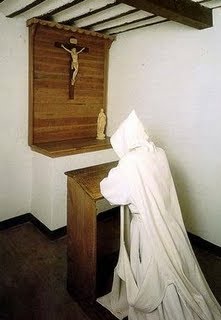 Whatever else is true about their situation it seems undeniable that such a person is NOT called to be a hermit, does not thrive in physical solitude and gives no evidence of living what canon 603 calls "the silence of solitude." In its own way it is terrifying and very sad to watch what isolation does to an individual who is not really called to eremitical solitude or actual reclusion. There is plenty of documentation on this including from prisons where such isolation is enforced and leads to serious mental and emotional consequences. At the very least we see it is ordinarily destructive of personhood and can be deeply damaging psychologically.
Regarding your questions about whether I have ever seen such a situation and what this looked like, the initial answer is yes. Over the past several years (about 7), but especially over the past 3 years, I have watched such a downward spiral occur in someone who wished and attempted to live as a hermit. Besides the signs and symptoms mentioned above, this person's image of God is appalling and has become more so in response to the difficulties of his/her now-even-stricter isolation; in trying to make sense of his/her experiences s/he has come to believe that God directly tests him/her with tragedies and persecution, causes him/her to suffer chronic, even unremitting pain, supposedly demands s/he cut him/herself off from friends, family, clergy, et al (which, at least as s/he reports it, always seems to happen in a way which is traumatic for all involved) and seems to encourage him/her to cultivate a judgmental attitude toward others whose souls s/he contends s/he can read. Tendencies to an unhealthy spirituality and self-centeredness in which this person considers herself to be directly inspired by God while everyone else is moved by the devil, where s/he is right and everyone else is wrong, where s/he is unhappy and feels persecuted when concern is expressed, etc, have hardened as s/he holds onto these "certainties" as the only things remaining to him/her to make any kind of sense of his/her life.
It is, for me at least, both saddening and incredibly frustrating. I want somehow to shake this person and say, "Wake up! When everyone else disagrees with you, when every parish finds certain regular occurrences disruptive and divisive while you contend these are of God, consider you may have gotten it wrong!! You would not be the first nor will you be the last! When the fruits of these occurrences are negative for everyone else and seem to lead to increased isolation and unhappiness for you, please at least consider they are are NOT of God!! When physical solitude is a source of misery and desperation rather than joy and profound hope, when it leads to a "me vs the world" perspective (and I am not referring to 'world' in the sense canon 603 or monastic life uses it in the phrase 'fuga Mundi'!!) rather than to finding oneself belonging profoundly (e.g., in Christ or in one's shared humanity which is grounded in God)--- even when apart from others, consider that what you are living is not right for you. God wants you to be complete and fulfilled in him; more, he wills it! He sent his Son so that you might have abundant life, that you might know his profound love and experience true peace and communion -- even and perhaps especially in your daily struggles! Eremitical solitude can be destructive; it is not the way for you! The personal "noisiness" (physical, emotional, and spiritual) of your isolation is NOT what canon 603 is talking about when it refers to the silence of solitude. Please, at least consider these points!" But of course, she will never hear any of that.
 One of the things this ongoing situation has under-scored for me is the wisdom of canon 603's choice of "the silence of solitude" rather than "silence and solitude" as a defining element of the life. It also underscores for me the fact that eremitical solitude is a relational or dialogical reality which has nothing to do with personal isolation or self-centeredness. (Obviously there is a significant degree of physical solitude but this is other-centered, first God and then other people and the whole of creation.) Especially too it says that "the silence of solitude" is about an inner wholeness and peace (shalom) that comes from resting in God so that one may be and give oneself in concrete ways for the love of others. One lives in this way because it is edifying both to oneself as authentically human, and to others who catch the scent of God that is linked to this gift of the Holy Spirit.
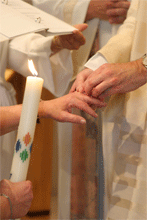 A hermit, as I have said many times here, is NOT simply a lone person living an isolated life; neither is eremitical solitude one long vacation nor an escape from personal problems or the demands of life in relationship. In Christianity a hermit lives alone with God in the heart of the Church for the sake of others and she tailors her physical solitude so that her needs (and obligations) for community and all that implies are met. Moreover, not everyone CAN or SHOULD become a hermit any more than anyone can or should become a Mother or a psychiatrist or parish priest or spiritual director. Most people do not come to human wholeness or holiness in extended solitude; further, since extended solitude always breaks down but builds up only in rare cases, embracing it as a vocation can be harmful for one not truly called to it. As I have also written before, the Church recognizes the truth of this by professing very few hermits under canon 603 and by canonically establishing only a handful of communities which allow for either eremitical life or actual reclusion. (Only the Camaldolese and the Carthusians may allow reclusion.) In all of these cases the hermits or recluses are closely supervised and made accountable to legitimate superiors. Medical and psychological evaluations are generally required for candidates and are certainly sought in the presence of unusual or questionable and concerning characteristics.
Please note that the situation I described is unusual in some ways and generally extreme. In every case however, whether extreme or not, a diocese will use the characteristics of canon 603, but particularly "the silence of solitude" understood as Carthusians and other hermits do to measure or discern the nature and quality of the vocation in front of them. They will not use the canon to baptize mere eccentricity or illness and they will look for deep peace, joy, and convincing senses of meaning and belonging which have grown in eremitical solitude over at least several years. Similarly they will look for personal maturity, spiritual authenticity and the ability to commit oneself, persevere in that commitment, and love deeply and concretely. Perhaps I can say something in another post about the other central characteristics of canon 603 and the way they are used to discern when someone does NOT have a vocation to diocesan eremitical life. Assiduous prayer and penance and a life lived for the salvation of others, for instance, can certainly assist the diocese in this way.
06 August 2014
On Spiritual Direction and Mystical Experiences
[[ Dear Sister. Are spiritual directors familiar with mystical experiences today? Is it possible that a directee would have experiences that were really from God but that the director doubts? ]]
 If a client has experiences s/he calls mystical and is sure are of God I may or may not agree. If I have doubts about these experiences being of God I am apt to kind of bracket them off in my mind, hold them in prayer, and wait for the fruits of such experiences to become evident. (I will also do some personal work to be sure there are no personal reasons which bias my perceptions in this matter.) Occasionally I will tell a person the reasons I doubt these experiences are of God or indicate what they remind me more of, but usually I will not do this. In either case I will temporize and try to assist the person to attend to what changes in them along with the shifting way they view the world and God as a result of these experiences.
The focus cannot remain on the experiences themselves in any case; it must shift to God and to what God reveals of himself in these ways. The person experiencing whatever it is must move from this original focus to wisdom. They must integrate whatever they have been given and grow in "grace and stature" as persons in Christ --- as the saying goes. Nor does this happen all at once. Again, if an experience is of God then it will be given for a reason and one will judge matters according to the fruits of the experience, both immediate and more mediate. Can I be mistaken? Of course. Similarly there are probably people doing direction today who are ignorant of such things or even closed to them. Still, if we continue to focus on the fruits of experiences and work hard to stay out of the Spirit's way in our work with a client, our own initially mistaken opinion will not make a lot of difference.
 However, I don't personally know any working directors who are not regular pray-ers; this means they have ordinarily had occasional mystical or peak experiences themselves. Beyond this most have had some advanced education in spirituality or theology and many in psychology or pastoral counseling as well. All the directors I know have also worked with people who have had genuine mystical experiences --- though these tend not to be particularly unusual or frequent. They ARE personally striking and ALWAYS life changing however! Most of us have heard God speak to us from time to time and may have experienced ecstasy. Occasionally there might be something we identify as a vision. Many of us have moments of profound intellectual insight which may be tied to some kind of imagery. What tends to be true of all of these experiences is that the person will return to them again and again to continue to allow it to nourish them and become a source of real wisdom. Each experience is a doorway to the infinite, a way of being taken hold of by mystery. Each experience allows us to enter this realm again and again. Thus, this is another reason they are not usually frequent and certainly not predictable.
Are Directors More Secular and Skeptical of Mystical Experiences Today?
[[Since you do direction today would you say that SD's are more secularized or less open to mystical experiences today?]]
 Because we believe as we do, because we are scientists and theologians, parents and pastors, philosophers and physicians, directors and psychologists, Sisters and Brothers in Christ, etc, we have met the truly new (kainotes) time and again. We have been taken hold of by Mystery but we no longer can mistake that for mysteries --- problems which must be solved. We no longer believe in a God of the gaps who is pushed out of reality by new scientific discoveries, for instance. Instead we meet Mystery in the everyday events and activities of ordinary life. With every new scientific discovery, every new insight in whatever field, every glimpse of the ordinary, we also can and often become aware of a pervasive dimension of depth, meaningfulness, intelligibility, futurity, and genuine newness we call God or Mystery. Mystery breaks in on us in the ordinariness of life and spiritual directors know this VERY well. The secularity we embrace is that of the Incarnation, a secularity which is eschatological and sacred. My own sense therefore says we are believers who attend to the truly credible (and the truly awesome) without falling into naive credulity.
The bottom line here is that it is true that spiritual directors today do not accept as authentic (or at least are skeptical about) some phenomenon that were once automatically seen as Divine. But this does not mean a rejection of the truly mystical or even the miraculous. Mystery and miracles are real. Miracles reveal the deepest order of the cosmos as does Mystery. We expect this deep dimension of reality to be experienced by every person who opens herself to it and, of course, we are open to such experiences ourselves. Still, to reiterate one last time, the authenticity of any experience can only be measured by its fruits: do these experiences build community, do they increase a person's capacity to love in real and concrete terms; is one made more generous, self-sacrificing, hopeful, whole, and happy through them? If so, then we are dealing with something that is truly of God; otherwise judgment must be withheld until the fruits (including the bad fruits of division, selfishness, isolation, etc) become clear.
03 August 2014
Followup to Questions about the Value vs the Utility of Eremitical Vocations
 Dear Sister your last post on the diocesan eremitical vocation was very positive compared to what I wrote you about [two weeks ago]. (cf, On Maintaining the Distinction between Utility and Value) I am guessing you would disagree with this [included] take on your vocation as well. Could you comment? I believe the immediate context is that this person has petitioned her diocese for canonical status and had not received a response yet (this was written several years ago and she wrote them [her diocese] a couple of months prior to this post). S/he says the vocation need not be credible and is for "good-for-nothings".
 I say that because it is sometimes hard to wait for a diocese's response to one's initial request to be considered in this way. However, presumably this difficulty stems from the fact that one really understands that the diocesan eremitical vocation is a significant one and genuinely believes one is called to it by God. It is awfully hard to believe someone who felt the vocation is worthy only of "good-for-nothings" would desire canonical standing or seek to live such an ecclesial vocation. For that matter it is hard to understand why the Church would esteem or VALUE such a vocation enough to recognize and govern it canonically or in this way link it to public rights and obligations as a witness to the work of the Holy Spirit. In fact, the difficulty in getting oneself professed is ordinarily a sign of the value and esteem with which the Church regards this vocation. Only in a handful of situations has it been tied to members of the hierarchy's denigration of the vocation. It does seem to me that this person is speaking of being treated by her diocese like a "good-for-nothing" because they are not responding to her query quickly enough to suit her or because she is "only" a lay hermit. It's a bit hard to tell from this passage if she believes canonical vocations are esteemed while lay eremitical vocations are not. For that reason I checked the post and found the following passage which clarifies a bit more what she is actually saying. She continues:
[[It is the life and work of a slave to a servant. There is no need to rise up in ire, to take offense, to counter that there is worth and value and to try to make the world, even the Catholic world see and understand and validate the vocation. There is no reason to "fight" for status, canonical or non-canonical, either one. There is no need for a support team to encourage sticking with trying to be made "credible" in the eyes of anyone on earth. What is the point? This is not part of the vocation, for the vocation itself is hidden in God through dying into nothingness. The status is thus as a non-entity which is no status at all. And this is a positive.]]
I may have answered a similar question several years ago and what I wrote just a few days ago on the distinction between utility and value and the importance of maintaining that certainly reiterated my disagreement with the exaggerated conclusions arrived at in the cited post. First, canonical standing is not about status in the common sense of prestige or social privilege. As I have written many times here, it is about standing in law as well as in the consecrated state of life, both of which are linked to public rights and obligations the Church entrusts to the person; the person assumes these in the act of professing vows and accepting consecration in the hands of her Bishop. Since it is both a new and an ancient vocation which had effectively died out in the Western Church, it is appropriate that diocesan hermits make this vocation known --- not least so it can be understood and witness in ways which are important to the Church and world. In other words, it is an important way of living and the Church recognizes that by linking it to profession and consecration. Lay eremitical vocations are also of great value; their counter-cultural nature coupled with the fact that they witness generally to the call of all the Baptized to assiduous prayer and genuine holiness is striking.
 Secondly, while I agree that perseverance and patience are both necessary, one must recognize that canonical standing IS part of the vocation of the solitary consecrated hermit and is not extraneous to it. When one enters the consecrated state of life that state of life is constituted by the rights and obligations one embraces and is entrusted with. Thus, as I have noted before, while one can never change the fact that one has been consecrated, while consecration per se can never be dispensed, one can leave the consecrated state of life. Unless one decides one is not truly called to this one petitions for admission to vows and participates in a mutual discernment process because one feels called by God to embrace an ecclesial vocation. It is true that if a diocese has never professed a diocesan hermit before, or if they have not had suitable candidates they will seek to be very sure the person petitioning has clear signs of maturity and sufficient experience of eremitical solitude to be professed. The process can be a long one and, again, requires perseverance but generally people (candidate and diocesan curia) work together in a way which is relatively transparent even as it tests the candidate and her patience, her sense of eremitical call whether or not canonical standing is in her future, her ability to deal with uncertainty in solitude, etc.
It is also true, however, that diocesan personnel can certainly receive a petition from someone they almost immediately and clearly feel is not suited to this life and does not have such a vocation. In such cases the diocese may seek to find a pastoral and sensitive way to share their conclusion; this too can take time and give the impression that they are not being completely transparent or are dragging their feet. Sometimes a diocese will say, "Continue living as you are living now" in order that the fruits of that way of living can become more evident in time. In such cases they are usually open to reconsidering a petition in several years. Sometimes they will say pretty immediately, "We believe you should be more involved in your parish," or, "this does not seem to us to be the best way of using your God-given gifts," or even, "eremitical solitude seems to be unhealthy for you!" I suppose one way of rationalizing such rejections is to tell oneself the diocese does not understand or value the eremitical vocation but generally my experience is that dioceses DO value this vocation and seek to profess those with clear vocations who are both healthy, genuinely happy, and show signs that eremitical solitude is the context in which they have most clearly matured spiritually and personally.
 Thirdly, while the vocation is one of essential "hiddenness from the eyes of men" neither Canon 603 nor the CCC speak of dying into nothingness. Of course there is a significant dimension of dying to self (meaning the false or ego self!) but one does NOT become a non-entity in the process; one embraces anew the incredibly significant status of daughter or son of God in Christ (and brother or sister to all others) just as one did in Baptism and therefore comes to represent a vocation which has significant value for men and women living in the 21 C! Not least hermits proclaim the Gospel of Jesus Christ and the life and meaning which he brings to even the least and most lonely of us. It is a rich life, a joy filled one of profound (and incredibly paradoxical) relatedness to all of creation which would be meaningful simply because God calls one to it! Even so, it is significant to others and MUST be credible to others (no matter how paradoxical or counter cultural such credibility is) because it is a proclamation of the Gospel and the redemption connected with that. The God it witnesses to must be the God of Jesus Christ who redeems the most death-dealing or isolating circumstances human beings know.
I have known (usually -- though not only -- through their writing) several so-called hermits that were either no such thing or, at best, were pretty disedifying examples of the vocation. While all of us struggle at times to live our lives well and with integrity, and while none of us are likely paragons (Merton warns about believing hermits should be perfect examples of their vocation), there are those who justify isolation or an inability (or refusal!) to take part in normal society because of mental illness, spiritual and personal eccentricity (or outright weirdness!), misanthropy, judgmentalism, individualism, self-centeredness, etc, by applying the term "hermit." But in some of these cases the impression they give in adopting the term is that solitude is really nothing more than isolation, that the only real joy found in the eremitical life is that of suffering and struggle, that the spirituality appropriate to such a vocation is some sort of pseudo-mystical misery willed by a sadistic God who may reward such pain with occasional "consolations", and that attempts to find or worship God in the ordinary world of time and space is "unspiritual". As far as I can see there is nothing of the good news of Jesus Christ in any of this and nothing credible much less exemplary therefore in such lives.
 I am sorry when persons are not admitted to profession as a diocesan hermit or even to an extended period of discern-ment with their diocese; I know the pain it occasions. But at the same time I am sorrier still when those with no true vocation call themselves hermits (much less Catholic Hermits) and give scandal by living a life which is far from healthy and thus, even farther from being Christian or genuinely eremitical. Because diocesan eremitical life is an ecclesial vocation this means it must witness to the Gospel of God in Christ in the name of the Church. Standing in law, credibility, even "approval" by the hierarchy of the Church and those who benefit from the witness given are a necessary part of this vocation and its accountability to God and God's Church --- essential hiddenness notwithstanding. After all, credibility is part of ANY Christian vocation; we live our lives in response to this call so that others "may believe in Him whom you have sent." (John 6:30) If our lives and vocations lack credibility in the profound sense of imaging God's redemption, especially in the midst of suffering, then they are not Christian; they are not of God. It seems to me, that the pious language of "being nothing" aside, only one who fails to understand the true nature, value, and responsibility of such calls could suggest otherwise.
27 July 2014
Lauras: On hermits and Community
 [[ Dear Sister, I have one question. Why are colonies of hermits called lauras. How can hermits live in colonies and still be hermits?]]
Thanks, good questions. The term laura comes from the Latin word for pathways or paths. A colony of hermits usually consists of individual hermitages, each fairly isolated from the others whether architecturally, by geography, etc. These individual hermitages are linked to one another by paths (including by cloisters) and as well to the central Church or chapel. I think it is particularly telling that such colonies are named after the external reality which links all the hermits and makes of each hermitage or "cell" an integral part of a local church or living organism. This makes clear that hermits are always part of a larger body; their lives are lives of communion, first with God and through God with one another and the whole of Creation. No hermit is ever truly alone. They are always alone with God for others --- and quite often, with others as well. Certainly they live their vocations in the heart of the Church.
In colonies, of course, the lion's share of the hermit's life is spent alone with God. Hermits in lauras come together for Mass, for occasional meals and some celebrations of the Liturgy of the Hours. They may also join once a week or so in a long walk or other recreation. As I have written here a number of times solitude, including eremitical solitude does not refer simply to physical isolation from others, but to a form of communion with God lived for the sake of others in the heart of the Church. This means it is supported solitude which contributes to life in the Church. While it is not the same as cenobitical life in community, and while it means aloneness with God, neither is it in conflict with some degree of community.
The Camaldolese, for instance refer to it as "living together alone." For the diocesan or "solitary" hermit who does not ordinarily have other hermits to live in a colony with, her primary community will be her parish and though she spends the majority of her time alone with God, she may also see folks at Mass several times a week, meet with a couple of clients during the week, and interact briefly with folks at the grocery store, drug store, etc. What defines her life however is aloneness with God lived for the sake of others in the heart of the Church and this remains true whether she sees one person in a month or several people in a week, or whether her only companions during this time are the people she reads, or the Communion of Saints and pilgrim ecclesial community in which she prays as an integral part.
I hope this is helpful.
17 July 2014
With Open Hearts and Empty Hands: Living from our truest Home
 The Son of Man has no place to lay his head. We heard that reminder just a couple of weeks ago. It is a poignant reminder of the degree of exile and self-emptying required by the Christ Event and also, a poignant reminder of the situation of so many poor among us.
But for many of the rich this is also a poignant reminder of the situation in which they find themselves --- though I admit this is often harder to see clearly. After all, they have homes -- often several in various regions and climates -- and they do not want for warmth (or coolness) or food or medical care, or even a way to bury their dead as so many do today. Many may even be unaware that their own prosperity is often only achieved by taking away the little that the poor actually do have. Still, despite superficial comfort and security they have no way to lay down the burden of securing themselves, making themselves acceptable or successful, filling the deep emptinesses in their lives, or laying aside what has become their fruitless quest for something that nourishes their souls. Deep down they are hungry and insecure and that insecurity drives their own ambition for wealth and comfort. And so they continue the struggle to become richer at the expense of others, to shore up their own wealth and power bases, to legislate on their own behalf, and to administer the law in ways which are to their own advantage.
It is among this group of socially, and materially advantaged folks that the Pharisees in Friday's Gospel pericope stand as representatives. Having forgotten that 1) the Sabbath is created for man, not man for the Sabbath, and 2) that Law is meant to serve love and make mercy possible, the "sacrifice" they require, of course, is not their own; it is the oppressive sacrifice that leaves people hungry and homeless in a number of ways, but not least by depriving them of a place in God's own People and all that means.
"The Son of Man has nowhere to lay his head" is a description which should resonate universally with the experience of every single person, the materially and socially rich and the materially and socially poor. After all, every person has known to some degree or another the same lack of peace and freedom, the same inability to lay down and truly rest that comes not only with the insecurity of poverty and enervation, but also with the insecurity of wealth and ambition. Many, whether materially rich or poor will have known the lack of peace that comes from feeling unloved and unlovable, from being different and perhaps disliked or even distrusted, from never ever feeling like they have belonged or can belong. Grief, our inability to really be in ultimate control of our lives and the struggle to hope in spite of loss, tragedy, cruelty and even the simple shortsightedness of others know no financial or material barriers. Illness, tragedy, death, and the yearnings and anguish they bring strike everyone in this life. In other words we all know the insecurity of sin and separation from God and the yearning for something else.
The Other Side of the Human Story:
 But there is another side to the story of the Son of Man. Friday's Gospel also shows Jesus and his disciples tramping through grain fields talking, laughing, and --- like all the poor allowed in Jewish Law to glean from the margins of others' fields, taking what they need for the moment --- never mind that it is the Sabbath --- or perhaps precisely because it IS the Sabbath! For it seems to me that, Pharisees aside, this picture from Matthew's Gospel is precisely a picture of Sabbath rest in God's good creation.
Yes, it is also a portrait of Jesus' unique authority as mediator of the New Law and its higher ethic, but in my lectio today I mainly hear the notes of joy and self-confidence, the echoes of a freedom and sense of easy celebration Jesus and his disciples demonstrate in being together. The Son of Man has nowhere "to lay his head" and he and his disciples may be poor men alienated in some cases from their families and at odds with the civil and religious leadership of the day, but in this moment they are also at rest. They belong to God and to one another and we have the sense though they are hungry and homeless on one level, most profoundly they are more truly at home and want for nothing essential. They are genuinely free and so we see them simply and joyfully being themselves together in the power of God's love and the presence of the Lord of the Sabbath.
One of the realities which hermits are meant to live and witness to is called "the silence of solitude". It is a rich symbol that points above all to the peace that comes from Communion with God alone. The silence it speaks of is not merely the absence of external noise though it includes that. More importantly it is a silence which reflects a kind of inner quies that exists in the midst of the storm --- any personal storm, tragedy, loss, grief, etc --- when one is secure in God. This silence of solitude is the quies that comes from being secure in God's love; it allows one to feel "at home" wherever one goes. It is that essential well-being or shalom which is a function of the state of one's heart, not of external place or changing circumstances, the same, "being-at-homeness" that Jesus and his disciples manifest in tomorrow's Gospel.
A Personal Note:
 |
| (Not Stillsong Hermitage!!!) |
But in my own story too there is something deeper than the sense of disruption, violation, grief, or the loss of place I am experiencing. For I too have found what rich and poor alike hunger for, what rich and poor alike really need most fundamentally. Because I know the God who loves me with an everlasting love, at the core of my life there is, in the midst of the storm, "the silence of solitude" and --- though not without some real challenge in the days and months ahead --- I will rest there in the company of God and glean what good and nourishment I can from and despite my surroundings.
The Real Point: Living from our Truest Home

Rich or poor, hermit or not, I think this is the challenge and struggle which faces each of us. We experience, sometimes more painfully and cruelly than others, what it means to have no place to lay our heads in this world, but we are invited in every case to know the deeper hospitality of God's own heart and to rest there. My prayer is that each of us, no matter the storms, tragedies, or other significant changes that also come our way, can find and reflect in our own lives something of the freedom and easy celebration that comes from being those who know Jesus as the Lord of the Sabbath first hand. I pray that I and all of us can find (or remain in) the sense of "quies", shalom, or "at-homeness" which allows us to walk through our world as pilgrims with both open hearts and empty hands --- just as Jesus and his first disciples did in Matthew's Gospel lection.
11 July 2014
Radical Individualism vs Eremitical Life
[[Dear Sister Laurel, what is the difference between a radical individualist and a hermit according to Catholic teaching?]]

23 May 2014
What does it mean to say a vocation is normative, canonical, or ecclesial? What does it matter?
[[Dear Sister Laurel, when you say that a hermit with public vows has embraced a "normative (canonical)" and ecclesial vocation do you mean that all other hermits measure their lives according to these people? What does it mean to call a vocation ecclesial? Why does it matter? Is this important to the person in the pew? Also, if you live your life "in the name of the Church" does this mean that when you speak out here you do so on behalf of the Church or as some sort of official spokesperson?]]
I have written about these topics a lot -- though not so much recently --- so I really encourage you to look them up in the topics or labels list at the bottom of this post as well as to the right. In any case this answer will reprise a lot of what those posts already contain. (The need to repeat this kind of thing as questions occur is one of the deficiencies of a blog format.) Still, your questions are also a little different than what I have answered in the past, especially in wondering about what it means to say a vocation is an ecclesial one or what it means to say "in the name of the Church" so I am glad to look at these things again. That is especially true when some question the need for canonical standing with regard to eremitical life --- as one person wrote to me yesterday morning.
Normative Vocations:
When I say that a hermit has embraced a normative (canonical) vocation through public profession I mean that her vocation is governed and measured by the canon defining her life. In my case and the case of other diocesan hermits it is mainly canon 603. While one hopes that anyone professed accordingly lives her life in an exemplary way it is first of all the life described by the canon, and so, the canon itself which is normative; that is, the canon tells us what the Church herself understands, establishes, and codifies as "eremitical life" for the benefit of her own life and the salvation of all. A person admitted to a public commitment to live under this canon has committed to living this specific understanding of the eremitical life and is publicly responsible for doing so in recognizable, fruitful, and faithful ways. She does so in order that the life and holiness of the Church may be augmented and may serve to witness to others in terms of eremitism itself. You might say that a diocesan hermit is responsible for enfleshing or incarnating this canon and the form of life it describes for the healing and inspiration of her local Church, the universal Church, and the world at large. Only in this sense does the hermit herself become "normative" of the eremitical life. (The diocesan hermit is so-called because she is publicly professed and consecrated by God in the hands of the diocesan Bishop and is bound to this specific diocese unless another Bishop agrees to receive her and supervise her vowed life in his diocese).
 Canon 603 has a number of non-negotiable elements to it. It describes a vowed life (603.2 specifies a publicly vowed life) of stricter separation from the world, the silence of solitude, assiduous prayer and penance according to a Rule the hermit writes herself and which is lived FOR the salvation of the world. All of this is undertaken in law and under the supervision of the diocesan Bishop who is the hermit's legitimate superior (superior in law). In other words this c. 603 hermit lives a solitary eremitical life of poverty, chastity, and obedience according to the canonical specifications of the Catholic Church so that others might hear the Gospel of Christ in a particularly vivid way through her life of desert spirituality. She is not a misanthrope, a failure at life or relationships, nor is her solitary life a selfish or self-centered one. The requirement that this life be a loving one lived for the sake of others is no less significant than the requirements of assiduous prayer, stricter separation from the world, or the silence of solitude.
Because she does this in the heart of the Church and for others the canon stands between them and her as a kind of signpost and point of entry. It tells her fellow Catholics (and all others as well) what her life as a Catholic hermit is about (the term Catholic here implies one who is publicly and thus, normatively committed to this life; it specifically means a life lived in the name of the Church; in other words, it is a right (with commensurate responsibilities) granted BY THE CHURCH, not one which is self-adopted). The faithful can read the canon and question the hermit about what it means for her life; the canon gives the faithful in particular the right to specific expectations with regard to this hermit. This is not the case when one's commitment is private. Similarly it constantly summons the hermit to faithfulness to a specific and normative vision of eremitical life as the Catholic Church understands and codifies it. Both the hermit and the Church itself are mutually responsible for the faithful living out of this vocation. Both are publicly committed to this. If the hermit continues to allow her life to be shaped by God in the heart of the Church in this particular way and if her superiors work with her to ensure the same then this eremitical life will be truly edifying --- meaning it will build up the Church and the Kingdom of God.
Non-Canonical Hermits, authenticity vs counterfeits:
Many people live as hermits but not in a way which is normative and sometimes not even in a way the Church would consider authentic. I have a friend whose brother lives in the Pacific Northwest in a small secluded cabin. He has lived there for at least thirty years that I know of. He is a hermit who lives a significant physical solitude, but he is not a hermit in the sense the Church uses the term. Further he is a Catholic but he is emphatically NOT a Catholic hermit and to think of him as one could be disedifying. If you look at other posts on this blog you will find the story of Tom Leppard an eccentric and curmudgeonly misanthrope who lived as a hermit on the Isle of Skye in significant physical solitude, deprivation, and psychological isolation for a number of years. Tom also fails to meet the criterion of those called "hermit" set forth by the Church. Recently a "hermit" in Maine was arrested for stealing. He was indeed a hermit in the common sense of the term, but he would have thought canon 603 the description of an entirely alien landscape and certainly could not have lived as a hermit in the name of the Church. These examples could easily be multiplied many times over. A quick search of the internet will uncover other equally eccentric and frankly alarming examples of counterfeit eremitical life.
Not all authentic hermits are canonical of course. Lay hermits who will always represent the lion's share of the eremitical population may well live most of the non-negotiable elements of canon 603 and do so in exemplary ways (I know several who are wonderful examples of eremitical life) but they live their commitments to this way of life privately, neither publicly called, publicly committed or commissioned, nor accepting the public rights, obligations, nor the expectations associated with canonical standing. This is not a deficiency but it is still a significant difference which those considering one form of eremitical life or another need to be aware of. The faithful in general also need to be aware of the differences here not least so their own expectations can be appropriate ones. While our private commitments should be serious and something we live with integrity, members of the Church have no real right to complain or question if they do not see signs that this is occurring in an exemplary way. In my own life, while members of the church will be concerned for me if I am having problems living my eremitical commitments with integrity, these concerns can actually be taken to my legitimate superiors with the justifiable expectation that the situation will be rectified in all necessary ways. Not so with private commitments.
Ecclesial vocations:
I think you may already see that a normative (canonical) vocation and an ecclesial vocation are closely related even overlapping ideas. Still, we do mean one thing I have not yet explicitly mentioned here. An ecclesial vocation is one mediated to the person by the Church. One cannot claim such a vocation on one's own. Such vocations are mutually discerned. The person whose vocation is mutually discerned is then called forth from the midst of the assembly to respond publicly to this vocation and commit her life to it. Her vows are received in the name of the Church and the rights and obligations attached to this state are mediated to her as well (things like the right to be known as a diocesan or Catholic hermit, the right to wear a religious habit or prayer garment publicly, the right to use the title Sister (etc) along with all the obligations attached to these and the expectations associated with them, etc. are included here). The very state itself with all the graces attached are mediated by the Church. When I spoke above of the mutual responsibility of hermits and superiors for making sure the life is lived well I was also referring to the ecclesial nature of the vocation.
 On the ground canonical standing also means that the Church has vetted these folks over some period of time and, as well as possible, found them sane, spiritually well-grounded, theologically sound, and committed to living this life for the sake of others. They are not seeking a sinecure nor a place to live a life of idleness. Again, they are not misanthropes, failures at life, eccentrics, or self-centered and self-pitying misfits. They understand the vocation, have significant positive reasons for pursuing it and are deemed to have been called by God through the ministry of God's Church to do so. They live disciplined lives of prayer and penance according to a Rule they have written. The Rule by which they live their lives and the vows they have made have been approved by canonists and others to be sure they represent a healthy and sound version of vowed eremitical life which can truly serve as a witness to others. As a piece of this their lives and efforts are also supervised and supported as they meet regularly with a spiritual director and/or diocesan delegate as well as less frequently with their Bishop. In other words, an ecclesial vocation is one in which the person and the Church more generally --- especially through the agency of the local ordinary or other superiors --- are publicly and mutually committed in an effort to be faithful to this vocation which is a gift of the Holy Spirit.
Why Does this Matter? Is It Important to the Person in the Pew?
 I hope you can see that all of this does matter to the person in the pew. In fact all of the requirements and vetting is done so that the Church as a whole is able to see and respond to the work of the Holy Spirit in her midst. The key word in all of this is CREDIBILITY. The Church understands the eremitical life as a great gift of the Holy Spirit but she also knows that it has become associated with all sorts of stereotypes and nutcases as well as authentic hermits. As I have noted, our world is fraught with individualism, narcissism, the aggrandizement of victim status, misanthropy and self-centeredness --- all of which have been confused with authentic eremitical life and the words "solitary" and (more problematically) "solitude". The silence of solitude has been confused with the silence of emptiness, lack, and personal deficiency whereas it is really the silence of communion and fullness. Canonical Hermits are specifically called to witness to the vast differences between a solitary life lived in communion with God and for the salvation of the world and these perversions , distortions, or counterfeit versions of authentic eremitical, and indeed, authentic human existence.
I believe that is terribly important to the rest of the assembly (ecclesia) and especially to anyone struggling to make sense of lives where they or others they love are now alone, feel their lives have ceased to have meaning because of loss (job, money, status), bereavement, or illness, etc. I believe it is the gift of the Holy Spirit to the Church and world peopled with the marginalized, prisoners, the poor, sick, and suffering who are in search of a peace the world cannot give. And of course, it is because I believe this vocation IS a gift of the Holy Spirit to Church and World that I am sensitive to its normative and public character. In other words, it is because this vocation is a gift of the Holy Spirit and is lived for the sake of others that emphasis on such things as normativeness, canonical standing, or ecclesiality are important. If the vocation meant nothing and was not a gift of the Spirit to the Church and world, if it was really nothing more than an expression of a selfish or misanthropic individualism whether a relatively pious form or not, then indeed, why should we care about such things?!?! Why indeed, should we codify it, invest it with rights and obligations, or encourage others to seek it?
Living Eremitical Life in the Name of the Church
No, when I write here I do not do so as an official, a spokesperson for the Church. However I do write as one commissioned and one who does live diocesan eremitical life in her name. In other words I am responsible for being a solitary Catholic Hermit in the sense the Church uses that term. I and others like me are, that is, charged with representing a living eremitical tradition in the Church and we are, as noted above, publicly and legally bound to do that with faithfulness in a way which adds to the tradition (especially in its dialogue with contemporary culture I think) and to the holiness of the Church herself. Anyone claiming the title "Catholic Hermit" should be able to say the same or they are actually breaking faith with the Church herself. Because by education I am a theologian I am also called in a charismatic way to reflect on the vocation itself more systematically than many others living the life. Still, every diocesan hermit I know reflects on the life c 603 outlines precisely as part of living it with integrity. Moreover, almost all those I know regard the importance of working with their Bishops to ensure the health and beauty of this gift of the Spirit. All of this is a normal part of living the life in the name of the Church as "Catholic hermits."
(By the way, the Church is very careful about folks calling institutions, forms of life, etc "Catholic" and actually forbids this in law unless the right is granted by the appropriate authority.) You see to call oneself a Catholic priest, a Catholic Sister, a Catholic hermit, a Catholic lay person, etc, is another way of saying, "I have been publicly commissioned (publicly ordained, professed, and/or consecrated --- including baptismal consecration) to live this life in the name of the Church." It is another dimension of a normativity whose purpose is really a profoundly pastoral one. Canonical standing nurtures and governs the vocational gifts of the Holy Spirit to the entire Church; it also helps prevent faithlessness, hypocrisy, and even outright fraud. After all, in a vocation as rare, little known, and unusual as authentic eremitical solitude, especially given the stereotypes that exist and the individualistic tendencies in our culture, it would not be hard for some to misrepresent the vocation or call themselves "Catholic Hermits" when they are really no such thing.
08 April 2013
On the Reservation of Eucharist by Hermits
[[Dear Sister Laurel, I saw a "privately professed and consecrated" hermit's video on YouTube. Is it true that non-canonical hermits can have tabernacles and reserve the Eucharist in their own places and that Bishops have allowed it? . . . Can I get permission as a lay hermit or can I move where it is allowed? ]] (Redacted: often-asked questions were omitted)
 I would be VERY surprised to hear that ANY Bishop(s) has or have allowed non-canonical hermits to do this; to be perfectly frank, I think this person may have some (or all) of her facts wrong or even be simply making something up to justify (or obscure) what the Church would consider a seriously illicit matter. It is unusual in the extreme to allow any individual to reserve Eucharist in his/her own home; when this happens, it is done as an extension of canon 934 for canonical hermits and consecrated virgins ONLY because of the nature of their vocations and standing in law.
Even so, it is not done automatically. One's own Bishop MUST give permission according to the requirements of canon law and with appropriate supervision. In the situations you refer to I think one would have to ask why a Bishop would allow this for a lay person if he is also unwilling to admit them to profession as a canon 603 hermit, where they assume the necessary legal and moral rights and obligations associated with such permission. (By the way, if the person has freely chosen not to become a canonical hermit, then they have also chosen to forego the rights and obligations or responsibilities associated with this standing in law, and this will include the possibility of reservation of Eucharist in their own hermitage.) Once again, we are faced with the reality that canonical standing under canon 603 is associated with rights AND obligations, which hermits and Bishops honor. In light of this, I have to say that this lay hermit's assertions simply do not compute for me.
Further, in such practice, there is tension between the Church's theology of the reserved Eucharist and the necessary connection with the ACT of consecration, which must be adequately preserved or honored. What I mean by this is that we are aware of Christ becoming present in the proclaimed Word, in the praying assembly (who also give themselves to God and are in turn consecrated by God to be freely broken and poured out for others), and in the presiding priest, as well as in the consecration of bread and wine during Mass. The Presence of Christ is always a living, dynamic reality realized in relationship and in the community's celebration of the Gospel. With the disciples on the road to Emmaus, we recognize Christ in the breaking of the bread because he becomes truly present in the breaking of the bread and all that it implies.
Certain cautions are taken by the church to be sure this does not happen when the extensions (to CV's and Canonical hermits) mentioned above are made: 1) Mass is ordinarily said at least occasionally at the place of reservation (Canon law prefers twice monthly), or 2) when this is not possible (and it is often not) reserved hosts are regularly refreshed after a Eucharistic celebration with the parish community so that the integral connection to Mass itself and the local community of faith is clearly maintained. (We speak of the Real Presence remaining so long as the elements retain the "sensible qualities" of bread and wine and are unadulterated; in a similar way perhaps (just a thought) we have to think of the Real Presence remaining only so long as there is a living or vital connection with the celebration of Mass itself); this practice also helps maintain the hermit's connection with the specific commission given at the end of Mass, 3) only those who are answerable in law to ecclesiastical superiors (those who have responded to the call to ecclesial vocations) are allowed to reserve the Eucharist and must to do so according to the requirements of canon law (cc 934-941). Otherwise, it is simply too easy for people to slip into superstitious, individualistic devotional, or otherwise irreverent practices, not to mention bad or distorted theologies of the Eucharist and Eucharistic spirituality.Personally, I would discourage you from even thinking about looking for a Bishop who allows such things as a lay hermit reserving Eucharist in her own home --- not least because I honestly doubt they exist any more than Bishops exist who allow lay persons generally to take Eucharist home with them for reservation no matter how personally reverent or pious these persons are. (Remember that even for EEMs bringing Eucharist to those who are sick, guidelines generally prohibit or strongly discourage stops between the Mass and the home being visited, as well as they tend to prohibit taking the Eucharist home with one. Unless one is doing so for a sick family member, this would ordinarily be a violation of the trust placed in one when one was commissioned as a minister to the sick and could itself rise to the level of sacrilege. Such actions tend to break or trivialize the integral connection with the communal celebration of the Eucharist and the commission to go forth, which concludes the Mass.)
Moving to another diocese seems an even worse idea to me and is certainly something I would discourage. You would do far better developing a strong and sound Eucharistic spirituality within the limits that apply to you in the Church. Remember too that lay hermits generally are self-described, and there is nothing preventing any person living alone from calling themselves a lay hermit. While I do not necessarily mean that you fall into that category, you must realize that there is nothing at all that assures the Church of the nature and quality of what is purported to be an eremitical life, the silence of solitude which is characteristic of such a life, the soundness of the spirituality, theology, prayer life, etc of a privately dedicated self-described hermit.
This might well be problematical sometimes, even with diocesan hermits, but at least with canonical hermits, there is a Rule of Life they are legally as well as morally responsible for honoring, and that necessarily entails regular meetings with directors and delegates as well as their Bishop. The canonical hermit is publicly responsible for living out her canonical commitments and the tensions between physical solitude and community, which are part of the life; her canonical commitments reflect, specify, and nurture her ecclesiality. While no one can see into the hermitage (that is, Religious in community are more aware of the lives of those living with them than friends and neighbors of hermits), regular contact with those helping supervise her life serves to help ensure she is responsive or obedient to these commitments with a care which is edifying to the whole church.
04 April 2013
Difficult Questions When Dioceses Decline to Profess
[[Sister Laurel, I desire with all my heart to give my life and love to God and God's Church as a diocesan hermit, but my diocese will not agree to profess me. I am certain being a canonical hermit is the will of God but the diocese doesn't want me. Why would they reject me and my desire this way? It wouldn't really hurt anyone or anything to let me make vows and live alone in my hermitage. I am so devastated and confused!!]] (Used by specific request.)
Hi there,
I know, to some extent, how badly you may desire this, and I also know (again to some limited extent) how it feels to be told that there will be no profession. I cannot presume to know the specific reasons your diocese decided not to admit you to profession and consecration as a diocesan hermit, but the general reason presumably has to do with their discernment that you do not have this particular vocation, at least not at this time. I do not know what you were told specifically, but if questions remain regarding the reasons for this decision, I would certainly suggest you ask whomever you dealt with at your chancery for details of their determination. This can help you come to terms with the decision and the meaning it has for you personally. Despite what I just said about their decision's presumable reason, some reasons will reflect on you personally or your vocation itself, while others may not do so at all.
For instance, if your diocese does not have diocesan hermits, it may be they are not open to professing anyone at this point. The same could be true if they have professed individuals in the past and run into problems with those hermits. Such reasons would not reflect on you particularly and might not really challenge your own discernment in this matter. On the other hand, and also not reflecting too much on your own discernment here, it may be that there is something lacking in your formation or preparation which you can remedy. For instance, perhaps you need more time living as a lay hermit as a period of discernment, or greater grounding in the vows, theology of eremitical life, etc. Perhaps you have not worked regularly with a competent spiritual director long enough or need other initially formative experience still (formation is life-long but there is a degree which must be achieved before one's diocese will be able to see you as someone truly called to a life of the silence of solitude, much less a good candidate for profession). All of these kinds of things are remediable; they are also essential elements of the life itself so going about taking care of them is important to living an eremitical life --- whether you are to eventually be professed or not.
Some decisions are more personally oriented but are still not rejections of you yourself. For instance, the diocese might want to see you doing personal or inner work they feel is necessary before you or anyone can be publicly professed. And too, there is the very real possibility that your diocese simply has determined you yourself are not truly called in this way by God for any number of reasons, despite your own conviction otherwise. Such a determination would require you to try to get your own mind and heart around the decision and move on in whatever way you can do that. If you should decide to request an explanation, you should be sure you are prepared to hear the true basis for the decision, but knowing the reasons for the decision can assist you in further discernment regarding precisely where and to what God is calling you.
 I strongly encourage you to NOT see this decision as a personal rejection of your life and your love, as you put it. The diocese has not rejected you, but instead they have determined this particular vocational path is not where God is calling you at this point in time. In ecclesial vocations an individual alone CANNOT discern such a vocation with certainty. We can feel very sure ourselves, but until and unless the Church mediates this call to us, we cannot say with any certainty that we have this calling. This is different from a call to marriage, for instance, which is up to the individual persons to discern, or from other lay vocations where the individual does the same. An ecclesial vocation gives the person the right and responsibility to live this out in the name of the Church. It is a public vocation with mutual rights and responsibilities, not a private one which the Church simply recognizes in some way but then leaves completely alone as a private undertaking.
Another part of this that is not too well understood by most Catholics, then, is that the Church is responsible for protecting and nurturing the eremitical vocation itself, not just the individual's call. The vocation itself is entrusted to her, and not only to an individual. Related to this is the fact that hermits do not live their lives for themselves alone. Even in their essential hiddenness the hermit's life impacts others, is meant for the salvation of others and the praise of God. For these reasons too the Church has to be sure that the persons they admit to public profession are truly called to this by God. In fact, everyone in the Church has a right to certain expectations of those who are publicly professed and/or consecrated.
This is especially true of the hermit's parish and diocese by the way -- even though the vocation is an essentially hidden one. After all, it is still one where the person must proclaim the Gospel with her life. (Hermits do interact with their parishes and dioceses, but I suspect that even if the only time fellow parishioners see us is at Sunday Mass, they will be able to tell whether we live and love our vocations and the God who is their source.) We cannot live out vocations we are not called to, and we certainly cannot do so whole-heartedly or joyfully --- much as we might desire to do so --- for living them out well and joyfully is a function of grace, not simply a matter of our own will and effort. For all these reasons the Church must be convinced the person has such a call and shows the capacity to live it out with integrity and faithfulness in a way which gives evidence that God is clearly at work in her, making whole and sanctifying.
Perhaps God is calling you to lay eremitical life. It is and has been a significant vocation now and through history -- and is in every way a gift to the Church and world. The desert Abbas and Ammas are the lay forerunners of most of the hermits that have ever lived in the Church. (Religious hermits are a clear minority in this history, and diocesan hermits are hardly 30 years old.) Another possibility is that perhaps God desires you to use this period of solitude as a transitional one in which you can do some of the personal work we all ordinarily have trouble finding time and space for. Moving through an extended period of solitude to greater wholeness and apostolic activity is a quite usual and significant part of desert spirituality; it would not be surprising for this to be the case and it could be truly edifying for the Church as a whole. What is without doubt is that God is calling you to follow him. He does not reject us or our love. He does not spurn any offer to give ourselves to and for him. Even when the Church makes mistakes in her own discernment (though I am not suggesting this either is or is not the case here), God continues to call us to greater generosity and faithfulness, and also greater creativity and perseverance. Vocational paths change, the call to full and authentic humanity in union with God does not.
I hope some of this helps more than it adds to your pain. I wish you the best in coming to terms with this decision and what it means for you in the future. I also hope your continuing work with your spiritual director supports and assists you in this whole process of transition and continuing discernment.
28 March 2013
Discerning Canon 603 Life as a Gift of God
 [[Sister O'Neal, thank you for answering my questions on profession when one does not really want it. The lay hermit I was speaking of said that while she didn't believe this was what [Jesus] was calling her to, she would turn in her paperwork and then if it really seemed to be wrong for her, "I can always decline the kind offer of canonical approval, can't I?" It sounds to me like this hermit doesn't understand what is being offered to her or why. Does this happen a lot? Are there hermits out there who feel this way about their vocation? I wonder if a person could really embrace a life of solitude if they did.]]
You are right about the lack of understanding here. To begin with it is very unlikely anyone is "offering to profess" this person given the level of ambivalence and even potential disingenuousness she admits to. In short though, she does not feel called and nothing can be done in the absence of a sincere heart-felt sense of being called. As I have noted before admission to profession is not so much an offer or invitation the Bishop makes (especially not in order to "approve of someone") as it is the way he extends the rights, obligations, essential freedom, and call to the covenantal life of an ecclesial vocation to the person he is also convinced is called by God to this. When the Church admits to profession she mediates this divine call to the person in a formal, definitive, and solemn way and receives the person's definitive response in a way which establishes a sacred covenant marked by vows, structured legally (canonically and by Rule), and supported by all of the relationships the Church recognizes as essential to living such a covenant well and fruitfully. The language of "approval" hardly begins to convey this rich content and has only very limited utility in such a situation; I tend to avoid it while those stressing the supposed status (in the inaccurate sense of prestige) of canonical standing (standing in law) tend to use and misuse it exclusively.
IF a Bishop invited a person to "turn in her paperwork" he has more likely invited her to let him and others take a look at her Rule or Plan of Life, and perhaps, to participate in a serious and mutual discernment process. (No other paperwork is required at this point; in time Sacramental certificates, declarations of nullity if applicable, etc, indicating a person is free to be professed will be required when it seems the person is a suitable candidate --- though the declaration of nullity would be sought immediately because its lack is an impediment to profession and discernment hardly makes sense with such an impediment in place.) During this process, should she (or anyone in such a position) come to be convinced she is NOT called by God to this, she (or anyone in such a position) has a responsibility to notify the chancery and withdraw from the process. I would therefore be very surprised to learn that a situation like the one you referred to EVER really happens and more surprised to hear there is ANY diocesan hermit who feels this way about his/her vocation. (A hermit who decides she has made a mistake in accepting admission to perpetual profession will, after serious consultation, ask to be dispensed from her vows. If the vows are temporary she can (again after serious consultation) either seek a dispensation or decide to continue the discernment appropriate to such vows until they lapse and it is time to apply (petition) for perpetual profession.)
Your next to last question is the most important, and the most interesting one because it raises the prospect of living a life which is contrary to what one truly feels called to when that life is a rare way to achieve human wholeness and holiness anyway. It raises the question of integrity and what it really means to be called by God and to respond to that call with one's whole self. It raises questions about embittered "hermits" who are icons of isolation and misanthropy, but are nothing like hermits in real life --- at least nothing like the hermits who are truly citizens of the Kingdom of God living the incredibly joyful and fulfilling "silence of solitude." For now your questions underscore the kinds of things chanceries watch out for when people come seeking to be hermits under canon 603.
 I think the bottom line must be that the person recognizes canon 603 as a gift of God to the Church and is awed and excited by the sincere sense that she might just be one of the persons who are publicly called and commissioned to live this gift. She will have found that through the grace of God eremitical solitude brings her to a wholeness and holiness she could not achieve as well in other contexts. She will be in love with God but also deeply in love with those he also loves as he loves the hermit.
The silence of solitude she lives will be rich and filled with relationships: first with God, but through God with her parish, friends, other hermits around the world, and those in the diocese more generally. If she has a blog there will be friends from there as well though there may be very little contact. For some very few hermits there will be a call to reclusion; for one of these her love for others will be mediated only through her love for and relationship with God. Every genuine hermit is open to this possibility and to growing towards it. Again though, what one will note in such hermits and all canon 603 hermits is a sense of awe, responsibility, and great joy at being called to live publicly committed lives which continue the tradition of the Desert Fathers and Mothers in the contemporary Church. It really is an awesome thing to be called to love and serve God and others in this way.
Post script: Sorry, I didn't answer your last question explicitly so let me come back to that. Would someone be able to embrace a life of [eremitical] solitude if they felt they were not really called to it by God [or felt this call deep within themselves]? I can't see how. One wonders how people live any life if they feel profoundly that God has not called them to it. I would imagine a sense of resignation and quiet desperation would accompany much of such a life. But with solitude where the heart of the vocation is communion with God, and where often or for much of the time the only relationship one experiences directly is that one has with God it would be very much more problematical to try and live such a life.
This would be complicated by the fact that God calls us to serve others with our lives and such a person would also be missing the way God is calling them in particular to serve others. The examples I have seen of those trying to live in such a way (and I have seen at least a couple) turn God into a source of monstrous theology and make of their own lives one of unrelenting suffering and victimhood. These are dressed up in pious language of course, but the combination is pathological on every level and the result is extremely sad and destructive, to say the least.





 Posts
Posts