[[Sister O'Neal, thank you for answering my questions on profession when one does not really want it. The lay hermit I was speaking of said that while she didn't believe this was what [Jesus] was calling her to, she would turn in her paperwork and then if it really seemed to be wrong for her, "I can always decline the kind offer of canonical approval, can't I?" It sounds to me like this hermit doesn't understand what is being offered to her or why. Does this happen a lot? Are there hermits out there who feel this way about their vocation? I wonder if a person could really embrace a life of solitude if they did.]]
You are right about the lack of understanding here. To begin with it is very unlikely anyone is "offering to profess" this person given the level of ambivalence and even potential disingenuousness she admits to. In short though, she does not feel called and nothing can be done in the absence of a sincere heart-felt sense of being called. As I have noted before admission to profession is not so much an offer or invitation the Bishop makes (especially not in order to "approve of someone") as it is the way he extends the rights, obligations, essential freedom, and call to the covenantal life of an ecclesial vocation to the person he is also convinced is called by God to this. When the Church admits to profession she mediates this divine call to the person in a formal, definitive, and solemn way and receives the person's definitive response in a way which establishes a sacred covenant marked by vows, structured legally (canonically and by Rule), and supported by all of the relationships the Church recognizes as essential to living such a covenant well and fruitfully. The language of "approval" hardly begins to convey this rich content and has only very limited utility in such a situation; I tend to avoid it while those stressing the supposed status (in the inaccurate sense of prestige) of canonical standing (standing in law) tend to use and misuse it exclusively.
 IF a Bishop invited a person to "turn in her paperwork" he has more likely invited her to let him and others take a look at her Rule or Plan of Life, and perhaps, to participate in a serious and mutual discernment process. (No other paperwork is required at this point; in time Sacramental certificates, declarations of nullity if applicable, etc, indicating a person is free to be professed will be required when it seems the person is a suitable candidate --- though the declaration of nullity would be sought immediately because its lack is an impediment to profession and discernment hardly makes sense with such an impediment in place.) During this process, should she (or anyone in such a position) come to be convinced she is NOT called by God to this, she (or anyone in such a position) has a responsibility to notify the chancery and withdraw from the process. I would therefore be very surprised to learn that a situation like the one you referred to EVER really happens and more surprised to hear there is ANY diocesan hermit who feels this way about his/her vocation. (A hermit who decides she has made a mistake in accepting admission to perpetual profession will, after serious consultation, ask to be dispensed from her vows. If the vows are temporary she can (again after serious consultation) either seek a dispensation or decide to continue the discernment appropriate to such vows until they lapse and it is time to apply (petition) for perpetual profession.)
Your next to last question is the most important, and the most interesting one because it raises the prospect of living a life which is contrary to what one truly feels called to when that life is a rare way to achieve human wholeness and holiness anyway. It raises the question of integrity and what it really means to be called by God and to respond to that call with one's whole self. It raises questions about embittered "hermits" who are icons of isolation and misanthropy, but are nothing like hermits in real life --- at least nothing like the hermits who are truly citizens of the Kingdom of God living the incredibly joyful and fulfilling "silence of solitude." For now your questions underscore the kinds of things chanceries watch out for when people come seeking to be hermits under canon 603.
 I think the bottom line must be that the person recognizes canon 603 as a gift of God to the Church and is awed and excited by the sincere sense that she might just be one of the persons who are publicly called and commissioned to live this gift. She will have found that through the grace of God eremitical solitude brings her to a wholeness and holiness she could not achieve as well in other contexts. She will be in love with God but also deeply in love with those he also loves as he loves the hermit.
The silence of solitude she lives will be rich and filled with relationships: first with God, but through God with her parish, friends, other hermits around the world, and those in the diocese more generally. If she has a blog there will be friends from there as well though there may be very little contact. For some very few hermits there will be a call to reclusion; for one of these her love for others will be mediated only through her love for and relationship with God. Every genuine hermit is open to this possibility and to growing towards it. Again though, what one will note in such hermits and all canon 603 hermits is a sense of awe, responsibility, and great joy at being called to live publicly committed lives which continue the tradition of the Desert Fathers and Mothers in the contemporary Church. It really is an awesome thing to be called to love and serve God and others in this way.
Post script: Sorry, I didn't answer your last question explicitly so let me come back to that. Would someone be able to embrace a life of [eremitical] solitude if they felt they were not really called to it by God [or felt this call deep within themselves]? I can't see how. One wonders how people live any life if they feel profoundly that God has not called them to it. I would imagine a sense of resignation and quiet desperation would accompany much of such a life. But with solitude where the heart of the vocation is communion with God, and where often or for much of the time the only relationship one experiences directly is that one has with God it would be very much more problematical to try and live such a life.
This would be complicated by the fact that God calls us to serve others with our lives and such a person would also be missing the way God is calling them in particular to serve others. The examples I have seen of those trying to live in such a way (and I have seen at least a couple) turn God into a source of monstrous theology and make of their own lives one of unrelenting suffering and victimhood. These are dressed up in pious language of course, but the combination is pathological on every level and the result is extremely sad and destructive, to say the least.
28 March 2013
Discerning Canon 603 Life as a Gift of God


08 March 2013
Followup Question: Resistant to Canon 603 in one's Heart of Hearts
[[Hi Sister Laurel, I am shocked that anyone who feels the way the person does in the post about Bishops requesting they become a canon 603 hermit would even consider such a thing. But aren't there stories about superiors asking people to do things like this despite their not wanting to? True, they don't happen so much anymore but I know I have heard some. What would happen if the person became convinced that God was calling her to this because her Bishop asked her to accept profession?]] (cf, Sickened by being Called)
 Hi there yourself! Of course it is very unlikely today that a Bishop would do as you describe. Most dioceses have at least a handful of people who really desire to be professed in this way and a Bishop would be far more likely to discern a true vocation from among these before he would turn to someone who speaks about the vocation itself in such negative terms or who truly feels sickened by the thought of being professed in this way and personally having such a vocation. To be frank, were a Bishop to act in this way it would be a slap in the face of those who deeply desire such profession and have presented themselves in good faith for discernment with the diocese only to be deemed unsuited for an extended discernment process or for admission to profession itself.
It would be insulting to those dioceses who have professed candidates in good faith or to diocesan hermits who both love their vocation and are committed to canon 603 as a legitimate and significant instance of the development of such. Further, it would not be the healthiest thing for the person being professed and could well lead to a failed vocation, compromised conscience judgments, and thus too, to actual sin. Finally, it would set a terribly destructive precedent regarding how discernment takes place, how we gauge the presence of a vocation, how the Holy Spirit works in these matters, how we conceive of authentic obedience or the theology of grace, and a number of other issues including the question of the validity and edifying quality of such a "commitment" or the vows used to embrace it. So let's be clear that on any number of grounds, spiritual, theological, pastoral, and canonical, Bishops and their curia would generally find such an arrangement completely inappropriate and even offensive.
A Change of Mind and Heart?
 But your question shifts things a bit. What if the person truly became convinced she should do this because of the Bishop's desire to profess her? In such a case SOME of the problems would drop away or at least be diminished. For instance, we would not need to be as concerned about the validity of the vows, of creating a disedifying situation for the diocese, nor so much about potentially creating or colluding in a situation where the individual could be compromising or violating her own conscience judgments. But to really be sure of the truth of her conviction, other things would also have to change. The individual would need to accept whole-heartedly that the vocation was the work of the Holy Spirit in the Church; she would need to esteem it and its developing nature. She would need to reject the idea that any variations present generally indicate an abuse of the canon and come to clarity that variability from diocese to diocese may well indicate the result of the Church's response to the Holy Spirit.
She would need a correlative change of heart as well. She would really need to be convinced that this was the way God was calling her personally to achieve human wholeness and holiness. She could not only not be "sickened" by the vocation but would probably need to evidence some personal enthusiasm for and imagination regarding its place in and possibilities for fruitfully addressing the contemporary church and world. In other words she would need to appreciate the gift or charismatic nature of the vocation both personally and generally. Flowing from this she would likely need to demonstrate a sense of responsibility, gratitude, joy, and freedom at being called to this. Finally, she would absolutely need to give every evidence that she believed all of this in her heart of hearts and was truly desirous of committing her whole self for the rest of her life to God in this way and to the vocation itself as an inspired way of serving the Church and the world. In other words, she would need to give evidence that petitioning for admittance to profession as a diocesan hermit was an act of profound discernment and obedience, not simply a matter of doing what someone else thought was a good idea --- even if that person is the Bishop of the diocese.
Discernment and Obedience in the Past and Now

Today we recognize that discernment is a complex or at least demanding process of hearkening (listening and responding) to the presence and will of God; in ecclesial vocations (Religious life, ordination, consecrated virginity, diocesan eremitical life) it is truly a mutual process where the Bishop and his staff listen carefully to the candidate, to those who know the candidate well including psychologists, physicians, pastors, directors, to their own minds and hearts, to God and his Church (tradition and history) while the candidate listens carefully to God, to her own mind and heart, to the Church (especially on the tradition and history of her proposed vocation), and to those she is working with at the chancery. Obedience too is not a simple matter of merely "doing what one is told". Because it is a serious form of hearkening to the voice of God one needs to truly honor all the ways that voice comes to us. In a profession of vows there must be a sense that every person actively involved in coming to this has listened attentively and is responding to the voice of God in this situation. Otherwise the result will not be edifying (it will not build up the Church in love --- much less the Kingdom!) and may even become a scandal.
06 March 2013
Called to Canon 603 and yet "sickened" by Canon 603 eremitical life?
[[Hi Sister Laurel, are hermits called to profession by their parishes or Bishops? I guess I am asking if a person could feel adverse to becoming a canon 603 hermit but be called to it by parish, diocese, or Bishop? I heard someone calling herself [name omitted] suggest this. She doesn't think canonical status is a good thing and says she is even sickened by it. She says she believes it will not and should not last as an option because of all the abuses by Bishops and hermits, but also that she would be willing to accept it if her Bishop said he wanted this. Her point is that there are graces for the church and for the hermit which come from public profession so she is open to these graces.]] (redacted)
If I understand your first question, the answer is no, this is not the way things work with regard to this (or any!) vocation and especially not ecclesial vocations. While a diocesan hermit is called forth from her faith community by representatives of the Church on behalf of God and the entire Church during the Rite of Religious Profession, and while both hermit candidate and Church are involved in a serious mutual discernment process up through this point (and beyond it if the vows being made are temporary), this is not like a community discerning that perhaps someone from their midst should serve as deacon and then assisting and supporting them in going through the training and formal discernment process, for instance. Still, please note that even in such cases the person must themselves truly discern the vocation and the Church still may or may not concur. This means they must see its value, believe profoundly it is a gift of the Holy Spirit given to the Church and world, and also feel certain in their heart of hearts that God is calling them personally to this. Only when this is the case is it really possible for the Church hierarchy to truly discern the truth of this for this diocese and at this point in time.
Remember that when we are called to a vocation and especially to an ecclesial vocation like Religious life, ordination, or consecrated virginity we take on not only our own personal vocations but a place in the living tradition of that vocation itself. I honestly don't see how someone who actually felt "sickened" by the vocation itself, who thought it would and should die out, or who was merely undertaking it because they were asked to do so could represent it authentically. Surely we could not say this was the Holy Spirit's work in their lives because they simply have no love for any of this, not for the vocation, not for the way the Holy Spirit is working through this specific vocation, not for those others who do feel so called, and not for the unique gift the vocation represents and which those representing it are called to live with heart, mind, body, and soul.
 The underlying question here is the nature of true obedience which is at the heart of all genuine discernment. While all of those vowed to obedience will be asked to do things from time to time they may not fully agree with, they simply cannot go against their heart of hearts and still be truly obedient to the will of God in their own lives. Obedience is not merely about "doing what one is told"; it is about listening intently to the voice of God in one's life and acting on that. A major part of that is surely listening to one's own deepest convictions. More, doing what one is told and simply disregarding or denying the contrary voice of one's own heart is not authentic discernment either although it has sometimes been mistaken for this. In the case you have described, presuming the person is actually in honest dialogue with the Bishop (or diocese) about this, both the Bishop (or his representatives) and the candidate are called to listen intently together to determine the will of God in this diocese and in the life of this person.
On the graces attached to public profession:
Yes, there are graces attached to public profession. But these are not something that can be externalized, concretized, or reified, and then piled into a basket to be showered on the candidate (or others) like rice after a wedding. The graces are not extrinsic to the actual call/response itself. In other words if the Church is not mediating a true call and the hermit is not responding to one the profession will not be the grace-filled event it is meant to be. Grace always has to do with the powerful presence of God and in the act of public profession this powerful presence is unleashed in the heart of the hermit and in the life of the Church as well. Thus, we see the hermit becoming more herself, experiencing a freedom she may have only opaquely sensed was possible, and otherwise bearing fruit in many different ways in her own life, the life of the parish and diocese, with regard to this vocation, etc.
In the ecclesial and personal act of profession the person commits her entire self to God and therefore, to her vocation, to the church in Christ, and as a result God is able to work in her life in ways which are not generally possible apart from such a commitment. Another way of saying this is that in making a whole-hearted commitment, the person opens herself to the active and powerful presence of God in ways she has longed and been called to do. Of course this will bear fruit. But what a different picture of profession stems from the situation described in your question! The idea that a person who did not truly feel called, is sickened by the vocation itself, is acting on someone else's desires and not those of her own heart simply does not comport with the idea of authentic profession; it will hardly be a grace-filled occasion in the way one truly called experiences it or the way a Church depending upon authentic discernment of the will of God at every level experiences it.

Abuses by Bishops and Hermits:
As a reader of this blog you are probably aware I have no great sympathy for actual misuses and abuses of canon 603. I have written about several that have occurred over the last three decades as well as tendencies which can lead to actual abuses or misuses. I have also written about the consequences of such misuse or abuse. Still, it is not the case that this is common. Far more often we are merely dealing with a learning curve with both Bishops and hermits coming to greater experiential understanding not only about the eremitical vocation but to its shape and significance for the contemporary Church and society at large. Canon 603, as I have written, balances non-negotiable or essential elements which have been present throughout the history of eremitical life with a Rule written by the hermit herself which allows her to shape these elements faithfully but personally according to her own authentic discernment of God's call in her life. This is PART of the nature of the call itself and a piece of what public profession requires of the hermit, how ever she determines she is meant to do this.
The variations we see in canon 603 hermits (age limits, habits or none, titles or no titles, vows or other sacred bonds, location of hermitage, horarium, differences in ministries apart from prayer alone, level of participation in parish life, and a number of other things) are mainly a function of the healthy interplay of these two dimensions of the canon as hermits, their Bishops, delegates, pastors, Vicars, and others discern what the Holy Spirit is calling them and the Church to in regard to canon 603. Remember that there are very few rules or laws in place about the use of canon 603 beyond the content of the canon itself. There is no sense that this is changing and I think that is a good thing. However, general experience and prudence figures into all of this in significant degrees. Thus, for instance, we generally find this is a second half of life vocation and though there is no rule about this, the Church will assess the wisdom of professing younger vocations as solitary hermits on a case by case basis. (Ordinarily they do better to try their vocations in an eremitical or monastic community.) Errors may occur in this and in other things, but this does not necessarily mean anything has been misused or abused, much less that variation means abuse is rampant.
 It is when the actual nature of the life defined in the canon, or the essential elements themselves are disregarded that we get actual abuses. So, a canon meant to govern solitary eremitical vocations should not legitimately be used to create communities and skip the canonical process already established for that; a life of full-time ministry outside the hermitage with contemplative prayer on Saturdays should not use canon 603 simply because there is no other canon available to profess individuals; persons who have been unsuited to religious life, or who have failed in other life endeavors, nor those who live alone ought not automatically be assumed to be called to canon 603 profession much less be admitted to this. While individuals may seek to use the canon in these and other illegitimate ways, at the level of the chancery itself my own sense is that in the main canonists and Bishops do not often allow these persons to be professed and Vicars or Vocation personnel do not entertain such petitions. Exceptions are problematical, no doubt, and they must be addressed, but they are still exceptions.
Bottom Line:
I don't personally believe any Bishop would actually ask a person who felt the way this person says she feels about canon 603 eremitical life to even consider becoming a diocesan hermit --- at least not if she is honest with him. Clearly there are a number of significant reasons for this. It may be that speaking this way allows someone to temporize and thus deal in increasingly effective ways with some sort of disappointment that she is not called to this or deal with the fact that her diocese will actually not profess her. But whatever the reason, I think her expectations and approach are, at best, unrealistic and misleading regarding the nature of vocation, discernment, obedience, public profession and the graces and import of public profession within the church.
26 October 2012
Appreciating the Charism of Diocesan Eremitical Life
 [[Dear Sister, I can see why Bishops might choose to profess an individual who is not really a hermit and ask questions like, "Besides, who will it hurt?" Isn't it more important to deal pastorally with the individual than to be concerned with an abstract idea of a vocation? If a person wants to serve God and do it as a "hermit", why shouldn't he be allowed to do this? I really don't see who it would hurt. After all hermits don't minister to people and are shut away from contact. Isn't this up to Bishops to decide?]]
Thanks for your questions. I am linking this post to another one on the charism of the diocesan hermit and the relation of the life to the exaggerated individualism and narcissism of our culture. I don't want to repeat everything I have already said there so please click on the title of this post to be taken to that one for further reading.
The Charism of Solitary Eremitical Life
In attempting to clarify why I am not speaking about a mere abstraction but rather concrete circumstances where the eremitical vocation is particularly effective and redemptive perhaps I should restate what the charism or gift quality of the solitary diocesan hermit is to her parish, diocese, and the church and world at large. I tend to point to the canon 603 essential element, "the silence of solitude" as that unique gift. There are a couple of reasons for that. First, we in the first world live in a culture of exaggerated individualism and narcissism. While people living in community combat this problem by their accent on community life and its importance in authentic humanity, hermits participate in this "battle" in their own way, namely by living a life of "the silence of solitude." Eremitical solitude is not about living alone, but living alone WITH God and FOR others. It emphasizes and reveals that human beings are not made to live individualistic or narcissistic lives but instead are completed by God and called to give their lives FOR others. Eremitical solitude is a paradoxical reality and a gift to a world disintegrating under the influence of individualism, narcissism, and a notion of freedom which really means the license to do anything one wants without regard to (or for) others.
Secondly, we live in a world where people live longer, where consumerism and productivity are the major markers of the supposed meaningfulness and value of one's life. Often then people in such a culture have lost (or never had) a sense of the meaningfulness of their lives apart from work, family, etc. Some are bereaved, some are chronically ill, some are isolated elderly, some are prisoners, etc. Hermits do not buy into the consumerist, productivity-as-measure-of value perspectives. At the same time they are physically as isolated as any of the people mentioned above. What is different is that they say with their lives that meaningfulness is a function of one's relation to God and that they are infinitely precious because God holds them to be precious. Through the grace of God the hermit's life takes physical isolation and transforms it into solitude ---- a communal or dialogical reality measured in terms of relationship with God. The experience of eremitical solitude is the experience of meaning, completion, and authentic humanity which is capable of giving to others. Not least, hermits say to people that the redemption of isolation is possible and that even those who cannot compete as consumers or "producers" can live incredibly meaningful and generous lives which contribute to the well-being of society.
Thirdly we live in a world of unrelenting, ubiquitous noise. People not only don't know what silence is, they fear it, think it unnatural, and avoid it at all costs. Most people believe that silence means turning off the TV while listening to an iPod or something similar. Businesses deal with noise by overlaying it with another layer of noise; office buildings pipe in music meant to soothe and distract from silence but also to distract from the constant noise. The problem with this, however, is that unless we have silence in our lives we never learn to truly listen --- especially to the voice of God in our hearts. Articulate speech requires silence, music requires silence if it is not to be mere noise, and human beings require silence if they are to come to the full articulation of selfhood. Hermits attest to the fullness of silence and the silence of solitude.
As I have written before, [[As a hermit I am not silent (or solitary) for instance, because woundedness and pain have rendered me mute and cut off from others, but because silence and solitude are the accompaniment and context for profound speech and articulateness. Silence is part of the music of being loved completely by God; it is a piece of allowing the separate notes of one's life to sound fully, but also to be connected to one another so that noise is transformed into a composition worthy of being heard and powerful and true enough to be inspiring to others. It is an empowered silence and solitude, the silence of solitude, which finds its source in God's love and reflects relatedness to God and others at its very core. Something similar could be said of all of the elements which comprise the life described in Canon 603. The eremitical life, especially in its freedom, is one of relatedness and love in all of its dimensions.]]
 Hermits know all of this because, by the grace of God, they live it daily. They live the physical solitude of eremitical life without significant distraction. They live the silence of others' absence, for instance, and discover it leads to a world of amazing presence --- the presence of God in the ordinary and in their own hearts. They say with their own lives that each person is infinitely valuable, that life is hopeful, no matter the stage or conditions which mark or mar it. Thus, hermits commit to living their vowed lives of stricter separation from the world, assiduous prayer and penance, and the silence of solitude under the supervision of the diocesan Bishop and those he appoints as delegates precisely as a significant gift (charisma) God has given to his Church and world. Unless one sees the gift this life is, they will not appreciate it or live it with integrity.
Professing Individuals Who are not Hermits and Will not live Eremitical Life
However, if one DOES understand the gift this life is, they will not profess those who are not called to live this precise gift. Everyone can learn to tolerate and many even to love silence, but very few are called on to live the gift of eremitical "silence of solitude." To profess those who are not called to this is to short-circuit their own true vocations --- the paths they are summoned to embrace to become fully and authentically human. Eremitical solitude is especially dangerous here since so few are called to authentic humanity in this way. Those who may be newly bereaved, or yet significantly psychologically wounded, or chronically ill and still needing to deal effectively with this reality will find that eremitical solitude demands more than they are capable of giving at this particular time. Solitude is often needed in all of these situations but ordinarily it is solitude as transitional reality, solitude preparing the way for a reinvigorated or reinvented way of relating to others in more ordinary community. Again, to profess such persons prematurely and with inadequate time and discernment will not serve them well and could be damaging. In any case, I would dispute that there is anything truly pastoral about doing so.
And of course professing those without an authentic call to eremitical solitude means professing those whose lives will not be able to witness effectively to the gift which the silence of solitude really is to the isolated and marginalized of our world. There are such inauthentic vocations today: "hermits" who watch hours of TV in order to distract themselves from illness and isolation; "hermits" who really want to be living in community and ministering full time and whose "solitude" and life of "assiduous prayer and penance" is lived out mainly with a desert day per week; and so forth. To whom do these lives effectively speak? Certainly not to the persons mentioned in the section above this one. It is arrogance and presumption to think that such lives can be called "eremitical". Professing inauthentic vocations may well involve the person professed in a life of hypocrisy, failure, and even therefore, significant sin. More, far from serving God, it is a disservice --- to God, to the vocation itself, and to those who need the gift of the "silence of solitude" because they live full time lives of isolation --- to call such vocations "eremitical." In an individualistic and narcissistic world such professions only extend and intensify the reign of individualism and narcissism within the very vocation meant to stand clearly against them. In short it is a betrayal of God, of God's own gift to the Church and world and, at least potentially, it hurts many people! This is hardly a pastoral approach to the matter nor to the person seeking to be admitted to profession.
The Ministry of the Hermit
 While it is true that diocesan hermits do only some limited ministry outside the hermitage (if they do any at all), their lives are a ministry. Eremitical ministry is not so much about what one does as who one is in and with and through God in the silence of solitude. It is not true to suggest that professing people without an authentic vocation will not matter much because hermits are shut away. To the degree they are separated from others physically their lives MUST still speak to others effectively and faithfully --- especially to those who are themselves isolated in some way. This is an integral part of a vocation: God calls, we answer with our profession and lives, and God through his Church commissions us to minister in his name and the name of the Church.
Are Bishops the ones who ultimately determine the matter of who is professed in their dioceses? Yes, but they do so within the constraints of the Canon (603), and the eremitical tradition --- which includes the life experience of contemporary hermits who truly help clarify the nature and establish the limits of the vocation in our contemporary world. Bishops are required to listen carefully to these, to discern carefully with regard to an individual seeking profession under canon 603, to have a clear sense of the gift or charisma this vocation is and to whom, and only then to make decisions which respect all of these elements. Bishops especially cannot disregard any of these elements and simply use the canon as a stopgap means to profess an individual who cannot be professed in any other way, who simply desires it for inadequate reasons (wearing a habit, being a Religious, using a title, validating a failed or merely isolated life, etc), or who wishes to use this profession as an entrance into consecrated life so s/he can then do something else with that life (like founding a community, gaining access to ministries she might not have had access to otherwise, etc). Allowing such professions would actually be a betrayal of the Bishop's own commission to seek out, protect, and nurture new forms of consecrated life --- at least if new means something more than novel, transitory, and disedifying.
I hope this helps.
16 October 2012
Short Discernment Periods for Canon 603 Profession are imprudent and Uncharitable
 [[Dear Sister, when you wrote the following recently, what did you mean by disrespecting the vocation and lacking charity for the candidate? It seems to me that long periods of discernment are meant to put the candidate off. So you disagree?? How is it loving to make things longer and harder? (Sorry I could not copy the whole passage). . .]]
The referenced passage is the following:
[[(The diocese) must have a sense of the normally extended time frame for moving through a discernment process and not be tempted to ignore it --- an act which disrespects the vocation and fails to act with charity towards the candidate. Finally, they must understand the central elements of Canon 603, especially the silence of solitude and its function as charism of the eremitical life. Bishops are called and canonically required to be aware of and foster new forms of consecrated life. While it is a serious commitment in time given the rarity of these vocations, chancery personnel (Bishops, Vicars for Religious or Consecrated Life, Vocations directors, etc) must foster a readiness to patiently discern and assist such vocations instead of simply rejecting their possibility out of hand.]]
Again, thanks for your questions. As noted, I have substituted the actual passage you could not copy for your own shortened version so I hope that is helpful. Also, I have written some in the past about dioceses who merely put people off by telling them things like, "Just go off and live in solitude; that is sufficient" or actually prolonging the discernment process simply to discourage people, so please check the labels regarding time frames for becoming a diocesan hermit and persistence in dealing with dioceses, for instance.
Longer Discernment is not necessarily Unloving
It is true that dioceses can put people off by drawing out a discernment process. My own sense is that this is much less common than simply cutting off the discernment process prematurely and saying "no" to admission to profession or simply never allowing a person a chance to participate in a process of mutual discernment with the diocese so let me speak to that first. One small but essential piece of dioceses really understanding the vocation is being clear that eremitical solitude is different than other forms of solitude in our world, and that the need or experience of transitional solitude (usually unchosen), for instance, or other chosen forms of solitude comes in every life for many different reasons. Because this is so discerning a vocation to eremitical life is more complicated; beyond this initial discernment, distinguishing between a call to lay eremitical life and consecrated eremitical life is another necessary step in things. Thus, discerning eremitical vocations of whatever sort takes time and care.
It is not unloving to be honest about this with a candidate for Canon 603 life. As I have noted before, so long as the diocese is dealing with the candidate in good faith and not simply stringing them along this really will serve them well in the long run. It also will serve the c 603 eremitical vocation well --- something a diocesan Bishop, chancery and all hermits themselves are responsible for. A diocesan hermit does experience a new grace and freedom with consecration, but even so, the time leading to these are important for growth and can be very fruitful so long as the diocese is dealing in good faith. After all, for one seeking profession under Canon 603, whether before eremitical consecration or even apart from it, the person is living the eremitical life and not merely setting other plans aside temporarily. One does not approach a diocese in this way just "to see" about eremitical life, or "to experiment" with it. One approaches a diocese with a petition for profession under canon 603 because over some time one has come to believe that God is calling her to consecration to a LIFE of the silence of solitude. While one can and should certainly spend some time as a lay hermit to experiment, c 603 life is really not a vocation one tries out on the way to something else or uses in order to comparison shop.
 Meanwhile, longer periods of discernment will serve the vocation itself well because it will 1) cut down on incidences of non-eremitical solitary lives which are merely called "eremitical", (e.g., transitional solitude or the physical solitude from bereavement, etc which is not yet and may never be eremitical), 2) cut down on incidences where canon 603 is used as a stopgap to profession (e.g., folks who want to found a community or who treat c 603 as a preliminary to something else or those who want the privilege of being religious without the obligations of community life --- especially problematical in this day and age of individualism), 3) diminish uses of canon 603 as merely a fallback option (e.g., those who have lived consecrated life and left for various reasons but still wish to live consecrated life; most of these will never rise to the level of eremitical vocations and some will be escapist because the person is unwilling to make the transition back to lay (secular) life, but it needs be noted well that SOME eventually can and, given time, WILL do so) 4) help prevent professions which contribute to disedifying stereotypes of the eremitical life and vocation including especially using the canon to profess individualistic and narcissistic persons --- again, a serious temptation and truly an imminent danger given today's culture.
Shorter Discernment May be Unloving to Candidates and Destructive of the Vocation
It is not loving to allow someone to make vows to live a vocation they do not have. It is not loving to bind someone (or allow them to bind themselves) to the obligations of a life vocation to which they are not called. It is not loving to them or to those to whom they will (attempt to) minister. I think that goes without saying --- at least is should do. Most folks think of the rights associated with eremitical life, habit, title, and so forth as cool things they would like to be allowed -- signs of religious privilege and prestige, not as symbols of responsible lives they are called to live on behalf of God and others. They may also envision the life as one of "peace and quiet" or "rest and relaxation" which really affects no one else. But someone with that notion of the life demonstrates complete ignorance of it. These folks certainly MIGHT have the stamina and grit to live out real eremitical life, but they are not yet ready to make a profession to do so much less be consecrated to the state of life this involves. The simple fact is there are real sacrifices involved in committing to eremitical life and one must have already come to understand these in some intimate way if one is to discern they are sacrifices God and his Church calls one to make.
I know that some dioceses have gotten older candidates and perpetually professed them fairly quickly --- after a year or two. There may be real exceptions with great backgrounds, life experience, and sufficient spiritual maturity, etc, for this to work, but generally, I am certain it is not sufficient time to discern such a vocation. This is especially true when the person is still dealing with bereavement, has really desired to live in community that did not work out, is newly diagnosed with chronic illness, etc. While chancery personnel might want to be "pastoral" to the person's own situation, I am convinced that besides this they are often asking themselves, "Besides, what harm will it do?" or "Well, the vocation is isolated and of no real benefit, so who can it hurt?" or "One more person in a habit! That's a good thing."
Two Final Clarifications:
Let me be clear. We ought not extend periods of discernment interminably. Even so, a period of 2-3 years in solitude as a lay hermit (not merely a lone person) while participating in spiritual direction, followed by 2-4 years of mutual discernment prior to admission to temporary profession and then a period of temporary profession for 3-5 years is entirely reasonable in approaching perpetual profession under canon 603! During the latter 9 years (discernment through temporary profession) the diocese HAS to be willing to follow the candidate carefully (including visits to the person's home/hermitage for interviews). If, after the initial period of mutual discernment the diocese is seriously doubtful about the vocation they should be honest about their doubts and concerns and end the discernment unless everyone involved agrees to extending this for another year or two. If the diocese still has serious doubts and concerns then the process should be discontinued. If the individual is truly called to eremitical life --- if eremitical solitude really is the environment and goal of her life --- she will remain a lay hermit, continue working on the issues that were raised, and in a few years might be able to petition the diocese to revisit the matter.
Also, it IS the case that in time some few of those putative vocations which looked initially to be merely stopgap or fallback "vocations" will mature into authentic eremitical vocations. It takes time for this, however, and the person who will eventually come to be professed with such a history needs to be very clear that God has redeemed the initial situation in this way. A niggling sense that perhaps one was ONLY using canon 603 as a stopgap solution to personal desires, deficiencies, etc, or that perhaps a diocese admitted one to profession out of pity or because they didn't understand the vocation well enough cannot be allowed to cloud one's profession under canon 603. Dioceses need to understand clearly that one may leave religious life because one is truly called to eremitical solitude; they need to know that eremitical solitude represents the redemption of isolation and that hermits thus live something that is a gift to a church and world marked and marred by individuals' isolation. But validating isolation and redeeming it are different things. Thus some especially authentic and edifying vocations will necessarily come from such isolation (chronic illness, life failures, etc) and become strong witnesses to the redeeming power of God. Again though, teasing apart the various motivations, deficiencies, and potentialities takes time which makes long discernment both prudent and charitable, especially in such instances.
12 October 2012
Solutions to using Canon 603 as a Stopgap Way to Profession
[[Dear Sister, Does the situation in the Archdiocese of Boston happen a lot? Is there a real problem with eremitical vocations that are not genuine?Is this one of the reasons there are so few of them? Is it one of the reasons that dioceses don't always want to profess diocesan Hermits? What is the solution to this?]]
 I can't say that situations like the one in the Archdiocese of Boston (cf Notes from Stillsong Hermitage: Abuses of Canon 603) happens often. In some ways I think this was pretty unique. Remember that there are fewer than 60 or so diocesan hermits in the United States so in an absolute sense diocesan hermits aren't professed or consecrated very often. A few countries have more, most have far fewer. This is partly a function of the fact that the vocation itself is really a rare one.
As I have written before, it is unusual for a person to be called to achieve fullness of humanity and genuine holiness apart from the more usual relationships and activities in which integrity and holiness are formed. While hermits live at the heart of the Church and while we have friends, directors, pastors, and delegates who help support us in our growth, we truly are formed in the silence of solitude. That is the milieu in which we are most at home, where we are healed and challenged beyond what the world outside the hermitage affords. We are CALLED by God to achieve fullness of humanity in this way and to witness to the place of the silence of solitude in every life. Significantly, as I have said many times, this is not a life of individualism, selfishness, narcissism, or misanthropy, but instead is the way in which we come to love most fully and effectively. The problem of course is that it takes a significant period of time to determine which is the case for a particular petitioner for admission to profession under Canon 603 and yes, mistakes are made and we see these in folks who are no more hermits than I am a professional violinist! (I play at the violin, usually quite well, but I am no where near being a professional player.)
You ask about the reasons dioceses don't always want to profess individuals under canon 603. While there are a number of reasons, I think it is true that they boil down to concerns over the authenticity of a call to the silence of solitude, yes. I was reminded today of something I had been told several years ago, namely, that the Archdiocese of Los Angeles (and possibly the entire province including the Archdiocese --- implied in all further references to the Archdiocese)) decided a number of years ago (perhaps 20) that they would not profess anyone as a diocesan hermit under c 603 nor would they consecrate any women as CV's under canon 604. The reason given had to do with the perception that these were "fallback" vocations --- vocations chosen by those who had failed at religious life or life in general.
While I disagree with the Archdiocese/province of Los Angeles's conclusions and the reason given for them in this regard (I think it is cynical and completely inaccurate in some cases), I also have to say that I respect their clear sense that solitary eremitical vocations are truly rare and that great caution should be exercised in admitting anyone to profession or consecration under canon 603. Still, like every other diocese, Los Angeles and the Archbishop and Bishops of the Archdiocese, indeed the entire province, are charged with DISCERNING the reality of such vocations and, under canon 605, with being open to new forms of consecrated life.
What is the Solution to the problem of Stopgap Professions?
What is the solution to problems of using canon 603 as a stopgap access to profession or what Los Angeles/province termed a "fallback" solution to failures in living life generally or religious life specifically? It seems to me there are several pieces to such a solution but all are functions of time and experience: 1) adequate knowledge of the vocation itself provided by the eremitical tradition and by hermits around the world who are living TRUE eremitical lives of the silence of solitude and by their Bishops; this would include a clear understanding on the part of both the diocese and the hermit of the charisma or gift this vocation is to the Church and world, especially to those who are isolated in some way, 2) a discernment process which is adequate to shake out experiences of solitude which are transitional, rooted in deficiencies rather than potentials, are not yet mature or eremitical, etc, 3) a set of initial formation requirements which an individual may meet with the normal assistance of her SD, and a few others over a period of 5-7 years; 4) the demand that the candidate write her own Rule based in her own lived experience of the solitary eremitical vocation and that this be assessed not merely by canonists but by those in formation work and/or spiritual direction in their congregations, 5) interviews by Vicars, Bishop, psychologists (if it seems necessary or especially helpful) along with recommendations by spiritual directors who have worked with the person for a period of years, pastors, etc.
One piece of this last element might be assessment by formation personnel from a monastery the hermit candidate might visit for extended periods (say a month or two) once a year for 2-3 years if this is at all possible. (I consider it desirable in any case for urban hermit candidates to spend at least a month in the silence and regularity of a monastery not least to see how they do with this kind and degree of silence but also to educate themselves on what they are to foster in their own hermitages in spite of its urban context.) Finally, since inauthentic vocations seem almost always linked to a desire to wear a habit, be clothed in the cowl, etc, and since the habit is a sign of public commitments, rights and obligations, I would suggest that dioceses forbid or refrain from giving permission for the wearing of the habit (even in the hermitage) until the person has reached temporary profession (the cowl or other prayer garment is given only at perpetual profession anyway). There is really no reason for someone to be wearing a habit apart from the actual profession with its assumption of public rights and obligations. The requirements of poverty are easily met otherwise.
No solution is infallible and discernment is an art rather than a science but it seems to me we ought not be professing anyone who does not show a real aptitude for lifelong eremitical solitude or who is without a clear understanding of the significance of this vocation for the church and world. Again these are both functions of time and experience in eremitical solitude. The desert Fathers and Mothers have written famously that a hermit must dwell in her cell and her cell would teach her everything. That bit of wisdom is entirely true. It does not imply complete reclusion but it does imply that the silence of solitude is the charism of the diocesan hermit which she must understand intimately, esteem, and appreciate sufficiently to commit to it for life. It is true that we cannot make persons wait forever for admission to profession (or decisions on whether that will occur) but solitary eremitical life is a different matter than vocations to life in community. By definition it takes time to develop and differentiate from other forms of solitude and solitary life.
Thus, again, I recommend that a person who already has some experience of living in solitude before approaching her diocese be required to live as a lay hermit under consistent and skilled supervision for five years or so for mutual discernment. (I would suggest a religious be given this role and that s/he meet with the hermit regularly including in the hermitage itself.) I suggest that if all of the above interviews and pieces of discernment go well, that the person be admitted to temporary profession for a period of 3 years. (At this point she should have written a Rule she will live out and reflect on for those three years.) If this too goes well, and the person and those she speaks with are clear that she is maturing in this vocation, then I recommend either renewal of these vows or admission to perpetual profession. (At this point the hermit may need and be encouraged to make some changes to the Rule which reflect a greater understanding of the vocation and what she personally needs to do to live it faithfully.) This equates to a process which takes at least 8 years to reach perpetual profession --- though all of it demands the person live as a solitary hermit. At the end of the process we might then see a more-mature hermit professed for life.
If at any point this process seems to point in a different direction the person can decide 1) to live as a lay hermit, or 2) decide to leave eremitical life altogether. None of this will be a waste of time so long as everyone is honest and deals compassionately and in complete good faith with one another. After all, the hermit life itself is about the journey more than the destination; it is about being comfortable with and trusting God in the desert sojourn. A period of growth in solitude, so long as it is not unduly prolonged without true supervision and discernment, will be helpful in whatever vocation the individual eventually pursues. Besides, being too anxious about the destination (e.g., perpetual profession, wearing a habit, being given the cowl, etc) and being unable to come to terms with the journey itself in a church learning what this vocation really means in the contemporary world, is not a good sign in a solitary eremitical vocation.
06 October 2012
Implications of Abuses of Canon 603 on the Diocesan Level
 [[Dear Sister Laurel,
you have written that Canon 603 hermits are solitary hermits and that while they can come together in a laura, they cannot form a community in the proper sense. You have also written that canon 603 is not meant to be a stopgap means of achieving profession on the way to another vocation. While all that makes sense to me isn't it true that the Archdiocese of Boston has a diocesan hermit perpetually professed in 2005 who is now the superior general (Mother) of a new community? Are you aware of the situation I am currently speaking of? I am from Boston and was confused at this Sister's approach to eremitical life. You may remember I wrote you back then. But given what you have written about using c 603 as a stopgap means of profession and other things, I am now even more confused. Can you clarify things for me?]] (Redacted for this blog)
Thanks for your letter. I do remember your email from about two or three years ago. While I did not write about the situation specifically here (at least not by name of Archdiocese), it was one of the reasons I subsequently wrote posts about c 603 misuses and abuses, the use of Canon 603 as a stopgap means to profession, etc. (cf, Notes From Stillsong Hermitage: Solutions to Using C 603 as a Stopgap way to Profession) At the time the situation you ask about raised a lot of questions and as I may have mentioned then, your own were not the only ones I received. What was at issue then was a diocesan hermit who was working full time as head of campus ministry at Boston University and later became Chaplain for the University's student body. Now, to be very clear, Sister Olga had an amazing background, was much-loved, worked very hard and, as I have noted before, is someone I would personally be really privileged to know. The problem then was that she was no hermit, despite being professed under canon 603. Since admission to profession under canon 603 was not her decision or responsibility, I cannot point to her as the source of the problem. Instead, it seems to me that it is more likely that she became caught up in something that was not truly right for her or for the solitary eremitical vocation under canon 603. The responsibility for professions under canon 603 falls ultimately to the (Arch)diocesan (Arch)Bishop.
Looking at Sister Olga's Story:
A little of Sister Yaqob's story is important --- not least because it points up the exceptional person she is. Sister Olga had come here to study from Iraq. She was not Roman Catholic but had begun a congregation of Sisters in the Assyrian Church of the East. After she came here she became a Roman Catholic. However, this was something of a problem since she could not remain a professed religious in light of this change of affiliation. Canon law had two and only two options she might have pursued which deal with the consecration of individuals apart from communities. The first was canon 604, the canon for consecrated virgins living in the world. In such a case, however, the CV is not a Sister, does not have public vows, does not wear distinguishing garb, etc. She belongs to the order of Consecrated Virgins, but is not a religious and cannot begin a religious congregation. The only other option was and is Canon 603. However, this canon governs solitary eremitical life, not merely any form of pious solitary living. As you and others made clear, it seemed to everyone looking on that Sister Olga, who once claimed the term "hermit" as a "metaphor for her life", was not living an eremitical life. A description of her life noted that she set Saturdays aside for contemplative prayer and solitude and mainly worked full time at the University in a highly social job.
 For whatever reason, her Archbishop had professed her in 2005 under canon 603 then, and this raised serious questions for others all around the country and the world. Some dioceses heard from people who wanted to make vows, wear a habit, and work full time outside the "hermitage" (residence) in a similar way. They were completely comfortable committing to one day of contemplative prayer per week, never mind the LIFE the canon demanded, and some had had experiences which isolated them so that they felt okay about using the term hermit as a metaphor for their lives --- just as Sister Olga had characterized her own life. Bishops mainly refused to admit them to profession under canon 603, and rightly so.
Yet this raised serious questions for those wishing to become canon 603 hermits. I received several questions, letters, or emails from people wondering how, if an Archbishop could profess a person involved in full-time ministerial activity as a University chaplain as Sister Olga certainly was, their own Bishops could refuse to profess them because they were "not living an eremitical life" or needed to work full time outside the hermitage. One of these persons was living an essentially eremitical life but still needed to work alone at nights outside the hermitage. It was a difficult situation. Still, some were professed and so today we have "hermits" living primarily non-contemplative lives given mainly to active apostolates instead of the silence of solitude, assiduous prayer and penance and stricter separation from the world. The precedent was destructive and even yet threatens the vocation itself --- a vocation canon 603 was designed to protect and nurture. Thus, it continues to be problematical.
Where we Stand Today
Current descriptions of Sister Olga's life today mention her perpetual profession in 2005 but they do not mention that her vows were made under Canon 603 nor that she was (and perhaps still is) professed therefore as a diocesan hermit. It may be that her eremitical vows were dispensed, but apparently no new public vows have been made. It sounds like the Archdiocese has decided to allow the entire diocesan hermit portion of Sister Olga's life and profession to slide into the oblivion of forgetfulness in order to avoid further stumbling blocks for folks both within and outside her diocese. However, the situation still raises significant problems canonically and a number of questions are left unanswered by such silence and obscurantism.
You see, diocesan hermits cannot allow their lives to morph into ministerial religious lives. There is often a constant pressure to do more active ministry for one's parish or diocese and most of us feel some pain or regret in needing to say no (or to fail to offer to serve in various ways) because we have embraced a contemplative vocation to solitude which is much less understood and whose value is much less evident to those around us. This example of the Archdiocese of Boston thus makes living c 603 with eremitical integrity much harder for those of us who are tempted to become more active in a directly ministerial way. At the same time, c 603 hermits cannot (as I have been told at least) simply transfer their vows to a congregation. They must be dispensed from them, discern another vocation and then be admitted to vows within the congregation according to universal canonical procedures and time frames.
In fact, diocesan hermits cannot even move to a new diocese without the permission of both ordinaries involved. Though they are diocesan hermits wherever they visit and anywhere in the Church, their professions are very specific and circumscribed by a form of diocesan stability. And, though this second point (moving) is not directly applicable to Sister Olga's situation it points to the narrow constraints involved in Canon 603 profession and of course it could become significant should Sister Olga Yaqob seek to leave Boston as her new community grows. After all, if her vows are still canon 603 vows, then a new Bishop will be placed in the position of accepting a non-hermit living according to a canon governing eremitical life. Consider the precedents and questions this would raise in the new diocese!!!

As it apparently stands, the situation in Boston also raises the issues of hypocrisy and non-comp-liance: namely, if a diocesan hermit ceases to live an eremitical life she can (and should) certainly be dispensed from her vows. That remains true even if one discerns and embraces a new and different vocation to ministerial religious life . One has still ceased being a hermit and is living as though they are no longer bound by either an eremitical Rule or eremitical vows nor by the canon governing such vocations. How can one ask the Bishop of a new Diocese to merely accept such a situation (and the person's vows) and turn a blind eye? How can one ask a new incoming Archbishop to do something similar?
And what of other newly-fledged congregations who would like to take short cuts in becoming canonical? Should canon 603 be used to profess at least the superior/moderator of such congregations? Why not if it was once appropriate in the Archdiocese of Boston and there is still someone living out public vows made under canon 603 but now doing so as the founder of a new community? Why pay attention to expert commentators on c 603 and its history and nature, who note lauras are permissible but that these should not rise to the level of communities? Why not simply use c 603 as a stopgap means to profession for any and all individuals desiring admission to public vows never mind whether they live anything remotely resembling eremitical life? Why, that is, should we not simply turn a blind eye to the gift of the Holy Spirit which c 603 seeks to nurture, govern, and protect?
Protecting against the Repetition of this Situation
As part of the hermit's own vow formula, some dioceses require the specification that these vows are made as a part of responding to the grace of a solitary eremitical vocation. The wisdom of this requirement is clearer to everyone involved with the canon as time goes on. Further, since canon 603 governs solitary eremitical vocations which allow for coming together in lauras but not the establishment of communities per se, it seems clear that a hermit should be dispensed from her vows in order to begin a community. Further, as one dispensed from her vows she cannot ordinarily simply begin a canonical foundation. Not only does she cease to be a vowed religious in such an instance, but ordinarily, any community she begins will need to move through the same stages any other aspiring group needs to move through: private association of the faithful, public association of the faithful, and, if all goes well over time, institute of consecrated life. This process is not only codified in law but reflects simple prudence.
Because of all these factors the extraordinary situation in Boston is still a thorn bush of difficulties. It is understandable, I think, that 1) Sister Olga dropped the pretense of being a hermit to fully affirm the truth of what she is apparently more truly called to, and 2) the Archdiocese of Boston has allowed all this to merely slip from view and memory by focusing (a) on the fact of vows while omitting the fact that they were solitary eremitical (c 603) vows and (b) on the new community. Diocesan hermits and others, however, are interested in and perhaps could be said to have a right to know how the situation is resolved canonically because this has significant implications for how the diocesan eremitical life is lived out concretely.
 The primary reason for bringing all this up is to make sure that canon 603 is never misused in this manner again. Sister Olga (or Mother Olga as she is now known) is an exceptional person (and apparently an exceptional religious) and it makes sense that the Archbishop of Boston was particularly open to accommodating her in some way -- especially given her history, her faith and people skills, and her ethnic background and skills in Arabic language and Iraqi culture. I very much appreciate the integrity Sister Yaqob has personally shown in leaving the diocesan hermit designation behind. However, professing her using canon 603 was a serious mistake which threatened the diocesan eremitical vocation in the process.
The secondary reason for bringing this situation up then is because the canonical questions it raised are still with us and require answers. Similarly, the pastoral questions it raises are also significant and, in part, will only be answered over time with the education of the episcopacy and church as a whole regarding the nature of the solitary eremitical vocation along with a history of well-discerned professions which ensure the integrity of the life which canon 603 governs. At some point the Archdiocese of Boston also needs to clarify publicly how they resolved this situation. Sister Olga's eremitical profession could have been determined to be invalid, for instance, but if that proved to be the case then what is the canonical standing of Sister Olga now and what precedent does her situation vis-a-vis the new community set for other aspiring founders and communities? Aspiring hermits? Remember, Sister Yaqob cannot have made canonical vows as an individual under any canon but 603. Again, the situation is a thorn bush of difficulties and unresolved questions.
I know this doesn't really clarify what is largely still obscure for many of us, but hope this is of some help.
25 September 2012
Importance of Spiritual Direction for Hermits
[[Dear Sister Laurel, How important is it for a hermit to have a spiritual director? How do I find one? Can I work with one online? Also, will a diocese profess me without one? I am a hermit, by which I mean I live alone and avoid people, but I do not have a director; neither have I worked with one before. My parish priest hears my confessions, but he says this is not the same as spiritual direction and has suggested that if I am serious about being a hermit that I get a spiritual director. He said to check out your blog and see what I thought. He also encourages me to get more involved in parish activities and relationships with people in the parish. Would a spiritual director help me decide about these kinds of things?]]
 |
| Stillsong Hermitage Oratory |
First, my thanks to your parish priest for recommending this blog to you. I think you will find a lot of material that will be helpful on your journey, whether or not you ever live as a lay or consecrated hermit --- or even if you continue simply to live alone. Check out the labels in the upper right-hand column, and you should find stuff of interest. If not, do as you have already done and email me with your questions.
For the Hermit, Spiritual Direction is Indispensable
Second, though, your questions. A good spiritual director is critical, even indispensable to a hermit. No diocese will profess you without one, and more than that, no diocese is apt to treat your petition to be recognized as a hermit and admitted to canonical profession seriously without a history of spiritual direction and a recommendation from your director --- and rightly so. When living in eremitical solitude, especially as a solitary hermit, there are so many ways things can go awry that a good director really is necessary. After all, the human heart is an ambiguous, complex reality. By definition, it is the place where God bears witness to himself, but it is also a wilderness where one battles with demons --- the demons of anger, jealousy, fear, bitterness, resentment, boredom or acedia, etc, etc that can truly defile. A director can be immensely helpful in all of this, and in assisting us to grow into persons of authentic and profound love and sanctity. Similarly, one needs to negotiate the shifts that come with prayer and discern the significant decisions that need to be made regarding what one is called to in this area or that. For instance, you speak of avoiding people and living alone; a good director can help you determine the authentically eremitical motives for these things and tease apart the more unworthy reasons we may live alone or avoid people. She can assist you in discovering the difference between eremitical solitude and simply living alone as well; together over time, you can discern what it is God is truly calling you to, whether that means how you personally will live an eremitical life authentically or something else entirely.
Finding a Director
Regarding finding a director and working with one online, let's start with finding one. My suggestion is to speak to people in your parish and diocese who are already working with a spiritual director and ask them about who that is. Most Sisters have directors, many priests do as well, while many Sisters, as well as some priests, do direction. (It is not the same as hearing confession, as your pastor clearly understands.) Retreat Houses in your area will know of some directors and may even have one or two on the premises. Your chancery office may have a list of directors in the diocese, though I have found these are not always kept up to date. Another source of listings in your area is Spiritual Directors International. Not every director belongs (usually because of the annual fee), but you will get a good listing of folks who fit the bill in your area, so it can be a jumping off point. Finally, if you have any seminaries or theological schools in your area, most programs in pastoral theology or ministry require students to have a director so you can always check with them and see if they have a list of prospects. You will especially want a director who is knowledgeable about contemplative prayer and life (they do not need to be contemplatives, but they need to be contemplative pray-ers), and knowledgeable about the difference between eremitical solitude and simply living alone. Some background in psychology is helpful as well. If you are considering becoming a diocesan hermit, they should also have some background in formation and what it means to live the vows. What is most important is that they be persons of prayer in spiritual direction themselves; access to a supervisor is also very helpful.
On Working with Someone by Phone or Skype
 |
| Sisters of Bethlehem |
While I have some clients I work with by phone or skype when people live a distance from me, I also tend to require regular face-to-face meetings whenever they can be arranged. That means traveling here for these clients, but I have found it is an important and even necessary arrangement. Occasionally, I will accept a client for phone or skype-only meetings, but that person will have a history of receiving spiritual direction somewhere in their ongoing formation and be clearly able to benefit from the relationship even without face-to-face meetings. Sometimes I have clients that move out of the area; usually it seems a good idea to continue working together, and we do that via skype or phone; it tends to work better than with someone I don't know, except through skype, for instance, because we already know each other well. In working with persons who desire to be hermits, it is, I would argue, even more important for face-to-face meetings, as well as meetings in the hermit's own hermitage from time to time. Directing a hermit candidate is a bit trickier in some ways until the relationship is well-established, so I especially recommend these folks find a director in their own region or area and take the necessary time to build the relationship.
The Need for Friendship and Parish Involvement
Interestingly, your priest suggests you get more involved in the parish and in relationships there. Since he has read my blog, it sounds like he might regard the eremitical vocation and reject some of the common stereotypes hermits fall prey to. If this is so, it means his suggestions could be very well taken. In contrast to some stereotypes, solitary hermits need friendships and solid relationships with their own parishes and members thereof. This does not mean they can be with their friends as often as they would like or invite them over to the hermitage more than occasionally (though hospitality remains a desert value which must be honored), but it does mean that eremitical life is a healthy, loving, full life in God and for that reason being an integral part of the parish, even if one is rarely present beyond Mass, is important for the hermit and for the parish. In other words, misanthropes and curmudgeons need not apply!! I would suggest you speak with your pastor about why it is he has made his suggestion. If he has a real appreciation of the vocation and concerns about your own tendency to "avoid people," as you put the matter, I think you should listen to him. I know that for me personally, the description re "avoiding people" is a red flag. It is about the negative or peripheral rather than the positive or central dimensions of the life. But I don't know you at all, and this is a blog, so at this point, your comment is merely a red flag, nothing more than that.
Working with a spiritual director would indeed help you to discern what is going on in your own life and heart and also how it is God is calling you to serve him and those he loves and considers precious. It may be that you are called to eremitical life and to all that involves (including relationships, parish life, and a solitude which is rich with the Word and life of God. It may simply be that solitude for you is a transitional phase of your life; if so, working with a director will help you move through this phase creatively and in a way that witnesses to the grace of God. By all means, take your pastor's advice and talk to him frankly about his own perceptions. You need not agree completely, but these perceptions and opinions will factor into your own discernment and your work with your director.
09 December 2011
Living Alone vs Eremitical Solitude

[[Dear Sister,
you said something interesting in your post from December 7th. You distinguished an eremitical life of the silence of solitude from that of people living a merely pious life alone. To be honest I thought that a hermit life WAS the pious life of someone living alone. Can you explain what you mean to me?]]
Yes, it is a really important distinction and one that is rarely sufficiently understood whether by aspirants and some candidates for canon 603 profession, by chanceries who are responsible for the mutual discernment and profession of these candidates, or by the usual person on the street. Your own description, [[ a pious life of someone living alone]] is not quite the same as what I said, [[ some... mistake living a relatively pious life alone for an eremitical life of the silence of solitude. . ]]. Lots of people live alone; lots of these are relatively pious, and some are downright holy --- holier than many hermits. Very, very few of these are hermits in the sense canon 603 defines. I am reminded of a friend (a very funny and generous friend) in my parish who sometimes jokes to people she introduces me to that there is nothing really different from her life and mine --- though she thinks she owns more shoes than I do! (In that I think she is right!) She is a faithful Catholic, spends her life in direct service of the church and parish, and she lives alone; she sees me as doing the same. I suspect there are many people who think something similar and believe canon 603 is meant to profess more than usually religious people who simply live alone.
But these opinions, despite elements of truth, are generally mistaken. While it is certainly necessary to have a regular spiritual praxis and to live alone in relative silence, there is something more involved. It is summarized in canon 603 with the term, "the silence of solitude." One of the things I have noted about this phrase is that it refers not just to the physical environment of the eremitical life, but to its goal, and gift quality or charism as well. The silence of solitude is an immensely rich symbol, then, and hard to define precisely; it refers first of all to God's own life, for God is the abyss of this kind of silence and solitude. It refers then to a continuing dialogue with God usually carried out in and constituting one's own heart, but also in the prayer and other activities undertaken in the hermitage which are expressions and explicitations of this inner dialogue.
It refers to the communion which comes to be between two freedoms (cf Wencel, Cornelius, Er Cam, The Eremitic Life), the freedom which is God and the freedom which is the hermit, a communion which we are each made for but often forget, ignore, or dismiss for any number of reasons. Finally it also refers to the redemption of isolation, alienation, and emptiness, the healing of sin and the effects of sin. It requires external silence and physical aloneness but is much much more than this. The hermit's life is devoted to "the silence of solitude"; it is lived out within it, in light of it, and for it because this "silence of solitude" is something the world is made and hungers for. It is, insofar as it involves a heart-deep dialogue and communion, something both God and the hermit herself yearn for. Living alone is one thing; living alone with and for God and for all that is precious to God is very different indeed.
Although canon 603 does not explicitly preference this element over assiduous prayer and penance and the other non-negotiable elements of eremitical life, I think the hermit must --- though only in a way which allows the other elements to inform and qualify it. Truly, none of the elements of the canon and the life (a vowed life of stricter separation from the world, assiduous prayer and penance, the silence of solitude, lived for the praise of God and the salvation of the world) can be separated off from the others. As interrelated they form a complex and dynamic whole which constitutes eremitical life as something far more than just living alone --- even in physical silence or separation. Still, "the silence of solitude" is the truly distinguishing or definitive element of the canon, I think; it represents the depth dimension or inner heart and purpose of the other elements in the canon.
Dioceses and chancery officials and personnel must also preference this element in this way, I think; it is critical to discerning what kind of vocation one has before one. When I have written in the past that a candidate for profession under canon 603 must have become a hermit in some essential sense before a diocese can consider her seriously for even temporary profession this is what I was referring to: she must know the silence of solitude (in the above senses) personally, existentially, and she must have made at least some of the choices and sacrifices necessary to make this the defining reality and goal of her life while demonstrating a faithfulness and commitment to go wherever this gift of God takes her.


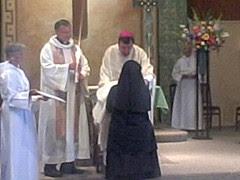

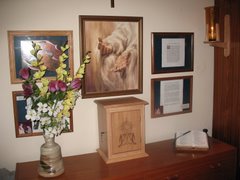


 Posts
Posts