[[Hi Sister Laurel, thank you for telling your story from the perspective of using gifts vs being the gift. Two things surprised me a little. The first was the idea that the hiddenness of the eremitical life has to do mainly with the work God is doing within the hermit. This really is the vocation of the hermit and where else can it happen but in hiddenness? The second was that in letting go of a concern to use the gifts God has given us and instead focusing on the gift God makes of us we are involved in what the Gospel calls "dying to self"! I had never thought about it that way but this is the sense it made to me. The motto, "Let go and let God" fits here doesn't it?]]
The Hiddenness of the Hermit Vocation:
Thanks for writing. You got it exactly right with regard to the hiddenness of the eremitical life! I especially liked your rhetorical question, ". . . where else can it happen but in hiddenness?" Most of the time when hermits speak about the hiddenness of their lives they speak about people not knowing they are hermits or doing things anonymously. Others speak of not wearing habits, not using titles or post-nomial initials and the like lest the hiddenness of the vocation be betrayed. I have written several times now about the tension between the hiddenness of the vocation and its public character --- its call to witness to the work of the Holy Spirit in the life of the Church in this way of life. All of these have some greater or lesser degree of validity but I think that when we recognize that eremitical life is about letting God do God's own silent and solitary work in the hiddenness of the human heart as we move more and more toward dwelling within his own heart in Christ, we have put our finger on the heart of the matter of eremitical hiddenness.
 It seems to me that in every person's life God works silently in incredible hiddenness. The hermit commits her entire life to allowing this and witnessing to it. The very fact that she retires to a hermitage witnesses to her commitment to and faith in this hidden work of God. The fact that she embraces a life of the silence of solitude is a commitment that witnesses to it. Those of us who wear habits, use titles and post-nomial initials that prompt people to ask about our lives are a commitment and (paradoxically) witness to this incredible hiddenness. It is always striking to me that when people learn I am a hermit they tend to be completely off-footed. I noted that recently I played violin for a funeral held in our parish and that this was well-received. People understood this use of gifts and they wondered what I did here at the parish; they expected that I taught, perhaps music, or that I was a liturgist or any number of other things but they looked a bit stunned when they heard I was a hermit and rarely played violin this way. No one actually said, "Oh what a waste," of course; surprise and maybe puzzlement was what was generally expressed. I am hoping folks realized that the violin expressed and reflected what happens to my own heart in the ordinary silence and solitude of my hermitage.
In any case, the gifts we occasionally use and those we relinquish in the name of our lives as hermits witness to the essential hiddenness of those lives and of the God powerfully at work there. We know that God works this way in every person's life but it seems to me that relatively few people actually commit to revealing this by embracing an essential hiddenness. Cloistered nuns and monks do so, hermits do so; it is a witness our world needs --- and one that throws folks off-balance when they meet it face to face. The Kingdom of God comes in this way. It grows silently in the darkness and night when we can do nothing but trust in the One who is its source. It bursts forth when we have reached the limits of our own patience, when we have finally relinquished any pretense of control or even understanding. It comes in victory at the same time we admit defeat and steals upon us -- gently silencing the prayer that storms heaven so that heaven can simply sing within us.
Prayer is certainly the hermit's main ministry but only if it is genuinely the work she allows God to do in, with, and through her, the work which allows her to set her own concerns, frailties, strengths, and even her talents and gifts aside so to speak so that the hidden work and presence of God may flourish within her. I have written before that it is the hermit's very vocation to become God's own prayer in our world; in fact, that is really the fundamental vocation of every person because it is the thing which characterizes authentic humanity. Hermits, it seems to me, undertake this with a special dedication in a way which is largely stripped of the activities and ministries which, while usually revelatory, may actually distract attention from that foundational presence at work in the solitary silence of every human heart. See also, Essential Hiddenness: A Call to extraordinary ordinariness for a post on the universality of this call.
God-given gifts and Dying to Self:
 Ordinarily we speak of dying to self in terms of using our gifts generously and selflessly. This is an entirely valid and critical piece of what dying to self really means. However, I think the idea of letting go of significant gifts God has given us so that who we are ourselves, that is, so that we are who God makes us to be most fundamentally, is the real witness of our lives; it is a special and even more radical kind of dying to self peculiar to the eremitical life --- though we find suggestions of it in old age, chronic illness, etc. This really is a new insight for me --- one, that is, I have only just begun thinking consciously about in connection with the idea that the hermit's life is an essentially hidden one. It is a paradox because at the same time we let go of those gifts we become freer to use them without pressure or self-consciousness should appropriate opportunities arise. Even so, we are not our gifts, not most fundamentally, nor is our life ultimately about a struggle to protect or even to use those gifts. And when we are deprived of those gifts or of the ability to use them by illness or other life circumstances the deepest or foundational meaning and mystery of our lives can become clear. This too is a form of dying to self --- perhaps the most radical form short of the physical death of red martyrdom.
I think hermits have known this right along. It is what allows them to use the term "white martyrdom" for their lives. I have written here that I once thought of contemplatives and hermits as selfish rather than selfless. Back then I was thinking of the multitude of wasted gifts and of some sort of failure to honor them but I was not thinking of a life which explicitly honored the giver of all gifts in a more transparent way or was a naked expression of (dependence on) that giver and the redemption he occasions in us. At the same time I was very young; I had not really faced a situation where my own God-given gifts were either unusable or where, in my brokenness, emptiness, and incapacity, I knew more fully and clearly my own need for radical redemption --- much less had I come to actually know that redemption.
Only as I came face to face with these and the immense question "WHY?!" that drove me did I begin to sense that eremitical life could "make sense of the whole of my life." My sense of this, however, was still inchoate; it was as unformed as my own eremitical identity for I was not, in any sense of the term, a hermit. In time, and especially in the silence of solitude, God did with my life what the Gospel promises and proclaims. He loved me into wholeness and continues to do so. That hidden, unceasing, and unconquerable redemptive Love-in-act is what my vocation witnesses to. Hermits have seen right along that their witness is more fundamental and radical than even the use of God-given gifts for the sake of others can make clear.
 One of the reasons the hermit life will always be rare is because we need people who use their God-given gifts in the multitude of ways which enrich our lives every day. In no way am I suggesting that such gifts are unimportant or, generally speaking, should not be used in assisting in the coming of the Kingdom of God. This is the usual way we cooperate with God and reveal God's life to others.
But at the same time there will always be a few of us who have come to a place where chronic illness (or whatever else!) made this impossible; and yet, through a Divine mercy and wisdom we can hardly believe, much less describe, we have been redeemed and become gifts more precious than any or all of the individual talents we once carefully developed and shepherded. Through a more radical and counter-cultural kenosis (self-emptying), in the hiddenness of a life more fundamentally about being made gift than about using our talents, hermits are called to witness to the inexhaustible, transcendent, and redemptive reality dwelling in the very core of our being -- the infinitely loving source and ground of our lives. Those redeemed and transfigured lives say, "God alone is enough!" With St Paul (who himself was stripped and emptied by life's circumstances and who spent time in the desert learning to see the new kind of sense his life held in light of the crucified Christ), we proclaim in the starkest way we can, "I, yet not I but Christ within me!"
28 July 2015
More on the Hiddenness of the Hermit Vocation


09 July 2015
From Silence to the Silence of Solitude: The Imperceptible Journey
 [[Dear Sister, I think of silence as a negative thing; it is something which is the absence of sound or noise. I do understand a little of what you mean when you say it is more than this but only a little. Maybe that's because I have a hard time being really quiet in prayer and when I am quiet I am afraid nothing is happening or that I am experiencing dryness or something. I mean I don't hear anything and I am supposed to be listening for God. I don't feel anything and God is supposed to be there loving me. What am I missing?]]
Thanks for a great question and especially for sharing what is a pretty intimate experience and concern. First of all I can't really say if you are missing anything, much less what that is, but I can say a little more about the nature of silence in prayer, and especially what I and others call "the silence of solitude". I also want to say something about dryness in prayer and what might be happening to you which would certainly not be dryness.
Our first and more superficial experience of silence is a "negative" thing --- not in the sense of it being without effect or constructiveness, but in the sense of taking or stripping away that which is unhelpful. It involves the quieting of noise, both external and internal, personal noise and the noise of our environment. We each experience this whenever we assure that our prayer space is conducive to prayer; it is part of clearing the space of any clutter, of journaling about the things that are really bothering us or are a matter of concern so that we can close the journal and hand it all over to God when we sit in prayer. It is a matter of stilling our breathing, relaxing our muscles, dropping our defenses and any façade we may hold because of work, etc, and simply bringing ourselves to the moment in an act of self gift and trust.
 Already I think it is becoming clear that in prayer we move imperceptibly into the realm of the "positive" dimension here. We move from the things we can more or less do ourselves, the setting of the scene, to the silence which is the work of the Holy Spirit within us ---- as much God's Silence as our own. The quiet act of trust we call faith is one of these. It is an empowered act, not something we can do of ourselves. That is why theologians like Paul Tillich speak about faith as the "state of being grasped. . ." and St Paul speaks of our knowing God but even more properly, of our being known by God. (Remember that Paul does not tease these two apart; he points to the first as a true description and then to the second as even more fundamentally true.) Profound silence is similar. While our descriptions of God often focus on creative speech or word, God is also and simultaneously a transcendent Silence out of which language and all the rest of reality springs; thus we often speak of God as "abyss," ground, or depth dimension --- all of which are most fundamentally matters of a deep but vital and dynamic silence.
In prayer what happens beyond the "negative" work of coming to relative silence we all recognize as our own work is that we are taken hold of by the profound Silence which is God. When this happens it is hard or even impossible to tease apart the silence we "achieve" and the silence that is "achieved" in us. It is at these times we know the communion with God and the whole of God's creation which is most clearly and profoundly what we call the silence of solitude . You may remember that I wrote, [[. . . the silence of solitude refers to what is created within the hermit, or better put perhaps, it refers to the person . . . who is created by the dialogue with God in the hermitage. This is what I referred to when I spoke of shalom, or the wholeness, peace, and joy that is the fruit of an eremitical life. Much of the "noisiness" of human yearning and exertion is silenced; so is the scream of self-centeredness and the inability to listen to or hear others. One is at peace with God and with oneself; one is at home with God wherever one goes.]] All of this happens in prayer and is carried through the rest of the pray-er's life.
 It is the Silence of God that stills our human yearnings and striving. It is the Silence of God that meets our own tentative and struggling attempts at quiet and completes them. It is the loving, embracing, silence of God that takes hold of us in prayer, soothes our stammerings and quiets our cries of anguish and emptiness. But it does so much more than this as well. God's own Silence is the silence that holds all things together in a way which makes sense of them; it is the all-embracing quies which makes music of the individual notes and rhythms of our lives and world. It is the deepest reality out of which all creation comes and all reconciliation is achieved, the hesychia in which everything truly belongs and is one. When and to the extent the Silence of God grasps us we become God's own prayers in our world, articulate words reflecting God's life and meaning, magnificats which are the transfigured stammerings of the journey from isolation and absurdity to genuine solitude and song. There is a reason Mary is sometimes called "a woman wrapped in silence"; only part of that has to do with her struggle and pain and inability to express what she knows and ponders in her own heart. The greater part has to do with the embrace of God which holds and makes sense of all things.
I think sometimes what people mistakenly call dryness is this incredible Silence. Maybe real dryness also means resisting this silence, fearing it and refusing to entrust ourselves to it, refusing to let it take hold of us or resisting resting in it even though we also yearn for it. Personally I know that I rarely feel dryness in prayer simply because I am not hearing or sensing anything. God is present and at work --- loving, calling, touching, healing, creating --- all the things God is and does in and as profound silence. I know and trust that. More, I know Silence as the Divine reality that can and does comprehend me even as it resides and sings within me. What I am encouraging you to do is to trust this Silence, this kind of no-thing, this abyss which is actually the fullness of God --- a fullness far too "big" (such an inadequate word!) to even perceive sometimes --- and don't label what happens in prayer as "dryness" quite so quickly or easily as you might otherwise do. From my experience I would say that what we are "listening for" is this transcendent and mysterious Silence. The love we are hoping to feel is actually an experience of this profound quies and sense of being encompassed and contextualized, the experience of being comprehended in every sense of that word by the Silence which is God.
As a kind of postscript, let me say that it is this Silence I think e. e. cummings knew when he wrote the wonderful poem I have had in the side bar of my blog since the day of my profession.
love is a place
& in this place of
love move
(with brightness of peace)
all places
yes is a world
& in this world of
yes live
(skillfully curled)
all worlds
25 June 2015
A Few Thoughts on Custody of the Eyes
 [[Hello Sister Laurel, Thank you for putting up the piece about the new movie. Custody of the eyes is not a phrase we hear much about today. When I looked it up I found a reference to "10 reasons men should always practice custody of the eyes" and some forum posts talking about avoiding lust, but why would cloistered nuns be practicing custody of the eyes so much to name a film about it? I mean is it really that central to life in a cloister? What am I missing?]]
Hi there and thanks for the questions. I agree that custody of the eyes is kind of an old-fashioned term and not one we use or, for that matter, practice much today, but in a congregation such as the Poor Clares or the Trappistines, for instance, it is a significant value which has a good deal less to do with avoiding lustful feelings and more with protecting the privacy, and more, the silence of solitude of one's Sisters and of the house more generally. Interestingly, custody of the eyes is meant to be combined with a genuine sensitivity to the needs of one's Sisters (or others more generally); for instance, one is expected to be aware if someone needs something at table and offer it, or to do something similar in work situations with tools and materials being used, so custody of the eyes does not mean closing oneself off to others, cultivating general unawareness, isolation, or anything similar. I think custody understood in this more balanced way is one of those values we ought all to cultivate as appropriate to our own states of life. It seems to me in some ways it is a vital practice our own technological and media-driven world really needs.
 In last Friday's Gospel lection we heard the Matthean observation that the eye is the lamp of the body. In Matthew a good eye is a generous one; a bad or evil eye is the opposite. Additionally, one of the meanings of Matt's observation is that what we look on changes us and can be a source of light or (increasing) darkness. This can occur in many ways. We read classic works of literature or contemporary books that enlighten and shape us. We do the same with art and media of all sorts. Unfortunately, this may involve "literature" which demeans the human person, or it may involve visual input that does not even pretend to be art --- and rightly so. More commonly for most of us, it involves commercials or TV programs which objectify us, make a parody of and trivialize our lives even as they presume to tell us who we are, what we desire, and need, what we ought to value, buy, otherwise spend resources on, and so forth. Custody of the eyes in this kind of thing means allowing God to shape us and show us who we are and what we really need. It means refusing to allow others to define us or our own hearts especially. Custody of the eyes is a necessary element in being our (and God's!) own persons.
 On the other hand, what we look on, that is, what we choose to look on and the way in which we do so speaks about our hearts; that is, it reflects either the light or the darknesses of our own hearts. Here is where generosity or its opposite become critical. We see this when we look on another person and judge them on the basis of appearances, or otherwise jump to conclusions on the basis of past hurts; but we also see it when we allow our compassion to perceive a person as God's own precious one who is really very like us, when we look with awe at the beauty which surrounds us or find beauty in the simplest thing rather than with the vision of someone who is bored and jaded and incapable of being truly surprised, and so forth. Custody of the eyes has as much to do with truly allowing the eyes to be the lamp of the whole person as with simply avoiding lust or lasciviousness.
Custody of the eyes allows a person to attend to their own hearts without constantly being distracted by the activity and sights around them. Especially, as it does this, it assists us in becoming people who see things truly, that is, who see things as God sees them. Moreover, it provides space and the gift of privacy for others with whom one lives; especially it provides for the communion we call "the silence of solitude" in which they too are seeking to dwell so that they too may be persons who see as God sees. Custody of the eyes intends our living with focus; it fosters the containment and denial of the incessant voice of curiosity and even prurience that has been intensified with the computer and social media environment and assists in following through on a project without getting distracted. (N.B., even the monastic cowl or cuculla ("hood") helps us maintain custody of the eyes and appropriate focus.) Thus, I think, the practice of custody of the eyes is rooted in a true reverence for others and for ourselves even as it helps create an environment where others may experience the same.

07 June 2015
Marking (the Feast of) Corpus Christi: Divine Power Perfected in Weakness
[[Dear Sister, if a person is chronically ill then isn't their illness a sign that "the world" of sin and death are still operating in [i.e., dominating] their lives? . . . I have always thought that to become a religious one needed to be in good health. Has that also changed with canon 603? I don't mean that someone has to be perfect to become a nun or hermit but shouldn't they at least be in good health? Wouldn't that say more about the "heavenliness" of their vocation than illness? ]] (Concatenation of queries posed in several emails)
 As I read these various questions one image kept recurring to me, namely, that of Thomas reaching out to touch the wounds of the risen Christ. I also kept thinking of a line from a homily my pastor (John Kasper, OSFS) gave about 7 years ago which focused on Carravagio's painting of this image; the line was, "There's Another World in There!" It was taken in part from the artist and writer Jan Richardson's reflections on this painting and on the nature of the Incarnation. Richardson wrote:
[[The gospel writers want to make sure we know that the risen Christ was no ghost, no ethereal spirit. He was flesh and blood. He ate. He still, as Thomas discovered, wore the wounds of crucifixion. That Christ’s flesh remained broken, even in his resurrection, serves as a powerful reminder that his intimate familiarity and solidarity with us, with our human condition, did not end with his death. . . Perhaps that’s what is so striking about Caravaggio’s painting: it stuns us with the awareness of how deeply Christ was, and is, joined with us. The wounds of the risen Christ are not a prison: they are a passage. Thomas’ hand in Christ’s side is not some bizarre, morbid probe: it is a union, and a reminder that in taking flesh, Christ wed himself to us.]] Living into the Resurrection
 |
| Into the Wound, Jan L Richardson |
Or not.
When I write about discerning an eremitical vocation and the importance of the critical transition that must be made from being a lone pious person living physical silence and solitude to essentially being a hermit living "the silence of solitude," I am speaking of a person who has moved from the prison of illness to illness as passage to another world through the redemptive grace of God. We cannot empower or accomplish such a transition ourselves. The transfiguration of our lives is the work of God. At the same time, the scars of our lives will remain precisely as an invitation to others to see the power of God at work in our weakness and in God's own kenosis (self-emptying). These scars become Sacraments of God's powerful presence in our lives, vivid witnesses to the One who loves us in our brokenness and yet works continuously to bring life, wholeness, and meaning out of death, brokenness, and absurdity.
 To become a hermit (especially to be publicly professed as a Catholic hermit) someone suffering from chronic illness has to have made this transition. Their lives may involve suffering but the suffering has become a sacrament which attests less to itself (and certainly not to an obsession with pain) but to the God who is a Creator-redeemer God. What you tend to see as an obstacle to living a meaningful profoundly prophetic religious or eremitical life seems to me to be a symbol of the heart of the Gospel of Jesus Christ. It also seems to me to remind us of the nature of "heavenliness" in light of the Ascension. Remember that one side of the salvation event we call the Christ is God's descent so that our world may be redeemed and entirely transformed into a new creation. But the other side of this Event is the Ascension where God takes scarred humanity and even death itself up into his own life --- thus changing the very nature of heaven (the sovereign life of God shared with others) in the process.
Far from being an inadequate witness to "heavenliness" our wounds can be the most perfect witness to God's sovereign life shared with us. Our God has embraced the wounds and scars of the world as his very own and not been demeaned, much less destroyed in the process. Conversely, for Christians, the marks of the crucifixion, as well therefore as our own illnesses, weaknesses and various forms of brokenness, are (or are meant to become) the quintessential symbols of a heaven which embraces our own lives and world to make them new. When this transformation occurs in the life of a chronically ill individual seeking to live eremitical life it is the difference between a life of one imprisoned in physical isolation, silence, and solitude, to that of one which breathes and sings "the silence of solitude." It is this song, this prayer, this magnificat that Canon 603 describes so well and consecrated life in all its forms itself represents.
 |
| Bowl patched with Gold |
07 April 2015
Are Older and Infirm Hermits Dispensed From their Vows?
 [[Dear Sister, Though I have not been impressed with a lot of posts on the blog you referred people to a while ago, I thought the author did raise some good questions about what happens to consecrated hermits when they get older and can no longer live silence or solitude to the degree they once did, or maybe to the degree their Rule calls for. Do these hermits then cease to be consecrated hermits? If it is true that a younger hermit who was not living the terms of the canon could not be validly professed, then what does happen to an aging hermit who needs assistance with everyday needs? Also, I was wondering what happens to you when you get too old or too infirm to live on your own?]]
Yes, there were a couple of good questions embedded in the blog you mentioned. First of all, a hermit revises her Rule with the assistance or input of her director and her Bishop whenever there are significant changes in her life situation or circumstances. However, she continues to be responsible for living the non-negotiable elements of the Canon --- even when this does not look like what it did when she was younger. In some ways an aging hermit's solitude may actually be greater despite the presence of caregivers because she will be dealing more full time with illness and, of course, with separation from others who 1) cannot accommodate the rhythm of illness when added to eremitical solitude, or 2) who themselves will be dealing with illness and aging and may no longer be able to visit or call occasionally as they once did. One lives what one can and, in whatever way is possible, one gives her life to Christ and his People in an eremitical life --- even when there is a greater degree of contact with caregivers, doctors, etc. What we are describing here is not a highly social life but instead, a more isolated one which may also be made more difficult or even more significantly penitential because of a lack of sufficient physical silence.
Understanding the Silence of Solitude is Critical Here
 What becomes critical here is that one understands the Canon calls for "the silence of solitude" and while this ordinarily requires significant physical silence and solitude, it remains the life's defining value even when one cannot secure for oneself the degree of physical silence or solitude one once could have and, indeed, needed daily. Here "the silence of solitude" especially means the quies or rest one finds in God alone, no matter the chaos that surrounds one or the pain one suffers daily. Here it is a matter of the quality of one's heart more than a matter of external conditions. A life given over to the silence of solitude in the midst of significant physical silence and solitude is essential to achieving this particular form of quies I think. It is the hermit's life of these realities along with assiduous prayer and penance which allows her to be a hermit even in the midst of a more populated and busy world --- including that more populated and busy world she may need to rejoin to a limited extent when she grows too old and infirm to care for herself in all the ways she is used to doing.
But let me be very clear. I am not speaking of pretense here or semantic sleight of hand. One cannot simply exchange a merely nominal "silence of solitude" for genuine and significant physical silence and solitude at the beginning (or at any other point) of one's eremitical life. One cannot, for instance, work full time outside the hermitage in a highly social job and then claim, "Well, the canon literally says, "the silence of solitude" NOT physical silence and solitude! I am living the canon just as it is written, Profess me!!" That would be a lie and destructive of the vocation. One is sufficiently formed in or comes to the silence of solitude as understood by hermits and monastics throughout the centuries only through diligent living of the other requirements of canon 603, namely, assiduous prayer and penance, stricter separation from the world (that is, from that which is resistant to Christ or which promises fulfillment apart from him or God), the evangelical counsels, and observation of a Rule all under the supervision of one's Bishop, one's delegate, and the direction of one's spiritual director. I have written before that the silence of solitude is not only the environment of the hermit's life, but that it is also the goal of her life and the unique gift or charism she brings to the Church and the world. For most solitary hermits there will come a time when in some ways at least, the silence of solitude is less clearly the environment of her daily life but perhaps all the more striking for that, more vividly the goal and gift of her life.
 No hermit who has given her life to Christ and his Church in eremitical solitude for 25 to 35 or more years of her life and who then becomes infirm and elderly to the point of needing caregivers or assisted living will cease being a consecrated hermit. There is no diocese, I sincerely believe, who would then dispense this hermit's vows or thus "secularize her" because "she is no longer living the terms of the canon." Should her mental faculties fail, she will continue to be what she lived --- a hermit consecrated by God through the Church's mediation, and she will die as that as well, as impaired as her human poverty may have left her in her final years. What will not leave her, what will not cease to be true and a vital part of her continuing identity is her covenant with God who loves her in her poverty and sustains her in this as he has done in all other things in which she has given herself to him. This covenant and the rest it leads to has shaped her life. So too will it shape her elder years and death.
What Happens to Me?
So, what happens to me when I get too old or infirm to live alone? I honestly don't know. This is one of the difficulties facing diocesan hermits who are not, therefore, part of a community, and who must be self-supporting with a vow of poverty. Here in the diocese of Oakland there is a large residence connected with the Sisters of Mercy. A lot of retired priests and religious needing assisted living go there. Perhaps I will be able to take advantage of that myself. I really don't know. Here you have put your finger on one of the more neuralgic questions facing diocesan hermits and at this point in time there is simply no real answer for many of us --- especially if we are very poor and need an environment where we can continue to live our solitude with God as best as we are able. I am afraid most nursing homes would simply not accommodate such needs.
03 September 2014
"Personal Noisiness" and the Silence of Solitude
 [[Dear Sister O'Neal, I thought your reference to forms of "personal noisiness" in your post on the destructiveness of physical solitude was intriguing. You said, [[ The personal "noisiness" (physical, emotional, and spiritual) of your isolation is NOT what canon 603 is talking about when it refers to the silence of solitude.]] Could you please say more about this? I am used to thinking of external and inner silence and solitude but I have never thought in terms of "personal noisiness" as being contrary to the solitude of a hermit. Makes sense though.]]
I have written here before about human beings as language events and I may once have referred to times in our lives when we are screams of anguish rather than articulate words. I have also written in the past about not only the Word becoming flesh, but flesh becoming word in Christ. (When this occurs a person becomes authentically human and a living embodiment of the Gospel of God.) When I wrote the comment you cited I was thinking about someone I experience or perceive as a scream of anguish and often, one of outright despair. A person who has reached such a place in their lives seems to me to be "noisy" rather in the way Pigpen carries a ubiquitous cloud of dust around himself. Their pain and whatever else is part of the anguished "scream" they are oozes out of them no matter what they do. Even sitting silently in prayer or other pious practices may be about or at least involve calling attention to themselves and their needs. The problem with a scream is that it cannot be tolerated by others for long; it calls attention to one's pain and anguish and people will initially try to assist the anguished person in some way but it also pushes people away --- not only because they cannot communicate with the one in pain to determine what is needed, but because it leaves them truly helpless to resolve this in any meaningful way.
 When I write, therefore, about "the silence of solitude" I am speaking first of all of the physical environment of the hermitage. The normal "air" a hermit breathes is first of all that of the physical silence of being alone. But it is far more than this as well. On another level it involves being silent with God, listening to and for God, learning to attune oneself to the voice of God both within one's heart and in the various other ways that voice comes to one in solitude.
Scripture, Eucharist, silent prayer, spiritual direction, friends and parishioners at Mass and those special times when the hermit socializes or recreates with these important people in her life --- all of these are ways God speaks to the hermit in her solitude; the silence of solitude here refers to the absence of distractions from this dialogue between oneself and God as well as to one's commitment to refrain from unnecessary distractions (some recreation is necessary to the vitality of the dialogue). On a final level then, the silence of solitude refers to what is created within the hermit, or better put perhaps, it refers to the person (hermit) who is created by the dialogue with God in the hermitage. This is what I referred to when I spoke of shalom, or the wholeness, peace, and joy that is the fruit of an eremitical life. Much of the "noisiness" of human yearning and striving is silenced; so is the scream of self-centeredness and the inability to listen to or hear others. One is at peace with God and with oneself; one is at home with God wherever one goes.
In the past I have also said that the silence of solitude is the environment, the goal, and the charism of eremitical life. What I have just described in the above paragraph is what I mean by environment and goal. When a person is made whole in solitude, when their life breathes (sings!) a resultant sense of peace and the security, joy, and rich meaning of communion with God, then that life is also a gift to the Church and world. This gift (charisma) is what canon 603 calls the silence of solitude; it contrasts radically with the personal noisiness that is linked to the alienation and brokenness of sin. It reminds us all of the completeness we are called to in God. But this is not achieved in the hermit's cell for one not called to eremitical solitude. Instead the personal disintegration which is already present is exacerbated and the scream of anguish one was (if in fact that was the case!) becomes either more explicit or more strident, more expressive of neediness and greater self-centeredness, as well as becoming even less edifying for others. In such a case flesh (sinful existence) remains scream and never rises to the level of Word (graced and articulate existence); that is, one never effectively proclaims the Gospel with one's very life nor reaches the goal of the silence of solitude (the silent dialogical reality we are in union with God) either. Instead the false self and one's own woundedness remain the center of one's life and the content of one's putative 'message'.
I hope this serves as a beginning to explaining my reference to "personal noisiness."
30 August 2014
Physical Solitude as Destructive
 [[Sister Laurel, how do what you have called the central or non-negotiable elements of canon 603 rule out people from living an eremitical life? Everyone is supposed to pray assiduously, live more or less penitential lives and I think everyone needs silence and solitude as a regular part of their spiritual lives. Wouldn't you agree? So what is it about canon 603 that helps a diocese determine someone is NOT called to be a hermit? Am I making sense? Also sometimes people say that solitude is dangerous for people. Have you ever seen a case where a person is harmed by living in physical solitude? What happened?]]
Yes, I think this is a sensible and very good question. While all the elements of the canon would suffer in one who was not really called to the life the one that comes to mind first and foremost for me is "the silence of solitude." I have treated it here as the environment, the goal, and the charism or gift of the eremitical life to the Church and world. I have also noted that it is the unique element of canon 603 which is not the same as silence AND solitude and also distinguishes this life from that of most Christians and most other religious as well. Just as I believe the silence of solitude is the environment, goal, and gift of eremitical life, I believe it is a key piece of discerning whether or not one is called to eremitical solitude. Perhaps you have watched the downward spiral of someone who is living a form of relative reclusion and who has become isolated from his/her family, friends, and from his/her local parish. Often such persons become depressed, angry, bitter, self-centered and anguish over the meaning of their lives; they may try to compensate in ways that are clearly self-destructive and/or lash out at others. Some turn to constant (or very significant) distraction (TV, shopping, etc) while others use religion to justify their isolation and wrap their efforts at self-justification as well as self-destruction, bitterness, and pain in pious language. One expression of this is to consider themselves (or actually attempt to become!) hermits.
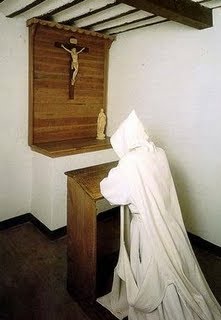 Whatever else is true about their situation it seems undeniable that such a person is NOT called to be a hermit, does not thrive in physical solitude and gives no evidence of living what canon 603 calls "the silence of solitude." In its own way it is terrifying and very sad to watch what isolation does to an individual who is not really called to eremitical solitude or actual reclusion. There is plenty of documentation on this including from prisons where such isolation is enforced and leads to serious mental and emotional consequences. At the very least we see it is ordinarily destructive of personhood and can be deeply damaging psychologically.
Regarding your questions about whether I have ever seen such a situation and what this looked like, the initial answer is yes. Over the past several years (about 7), but especially over the past 3 years, I have watched such a downward spiral occur in someone who wished and attempted to live as a hermit. Besides the signs and symptoms mentioned above, this person's image of God is appalling and has become more so in response to the difficulties of his/her now-even-stricter isolation; in trying to make sense of his/her experiences s/he has come to believe that God directly tests him/her with tragedies and persecution, causes him/her to suffer chronic, even unremitting pain, supposedly demands s/he cut him/herself off from friends, family, clergy, et al (which, at least as s/he reports it, always seems to happen in a way which is traumatic for all involved) and seems to encourage him/her to cultivate a judgmental attitude toward others whose souls s/he contends s/he can read. Tendencies to an unhealthy spirituality and self-centeredness in which this person considers herself to be directly inspired by God while everyone else is moved by the devil, where s/he is right and everyone else is wrong, where s/he is unhappy and feels persecuted when concern is expressed, etc, have hardened as s/he holds onto these "certainties" as the only things remaining to him/her to make any kind of sense of his/her life.
It is, for me at least, both saddening and incredibly frustrating. I want somehow to shake this person and say, "Wake up! When everyone else disagrees with you, when every parish finds certain regular occurrences disruptive and divisive while you contend these are of God, consider you may have gotten it wrong!! You would not be the first nor will you be the last! When the fruits of these occurrences are negative for everyone else and seem to lead to increased isolation and unhappiness for you, please at least consider they are are NOT of God!! When physical solitude is a source of misery and desperation rather than joy and profound hope, when it leads to a "me vs the world" perspective (and I am not referring to 'world' in the sense canon 603 or monastic life uses it in the phrase 'fuga Mundi'!!) rather than to finding oneself belonging profoundly (e.g., in Christ or in one's shared humanity which is grounded in God)--- even when apart from others, consider that what you are living is not right for you. God wants you to be complete and fulfilled in him; more, he wills it! He sent his Son so that you might have abundant life, that you might know his profound love and experience true peace and communion -- even and perhaps especially in your daily struggles! Eremitical solitude can be destructive; it is not the way for you! The personal "noisiness" (physical, emotional, and spiritual) of your isolation is NOT what canon 603 is talking about when it refers to the silence of solitude. Please, at least consider these points!" But of course, she will never hear any of that.
 One of the things this ongoing situation has under-scored for me is the wisdom of canon 603's choice of "the silence of solitude" rather than "silence and solitude" as a defining element of the life. It also underscores for me the fact that eremitical solitude is a relational or dialogical reality which has nothing to do with personal isolation or self-centeredness. (Obviously there is a significant degree of physical solitude but this is other-centered, first God and then other people and the whole of creation.) Especially too it says that "the silence of solitude" is about an inner wholeness and peace (shalom) that comes from resting in God so that one may be and give oneself in concrete ways for the love of others. One lives in this way because it is edifying both to oneself as authentically human, and to others who catch the scent of God that is linked to this gift of the Holy Spirit.
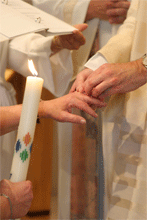 A hermit, as I have said many times here, is NOT simply a lone person living an isolated life; neither is eremitical solitude one long vacation nor an escape from personal problems or the demands of life in relationship. In Christianity a hermit lives alone with God in the heart of the Church for the sake of others and she tailors her physical solitude so that her needs (and obligations) for community and all that implies are met. Moreover, not everyone CAN or SHOULD become a hermit any more than anyone can or should become a Mother or a psychiatrist or parish priest or spiritual director. Most people do not come to human wholeness or holiness in extended solitude; further, since extended solitude always breaks down but builds up only in rare cases, embracing it as a vocation can be harmful for one not truly called to it. As I have also written before, the Church recognizes the truth of this by professing very few hermits under canon 603 and by canonically establishing only a handful of communities which allow for either eremitical life or actual reclusion. (Only the Camaldolese and the Carthusians may allow reclusion.) In all of these cases the hermits or recluses are closely supervised and made accountable to legitimate superiors. Medical and psychological evaluations are generally required for candidates and are certainly sought in the presence of unusual or questionable and concerning characteristics.
Please note that the situation I described is unusual in some ways and generally extreme. In every case however, whether extreme or not, a diocese will use the characteristics of canon 603, but particularly "the silence of solitude" understood as Carthusians and other hermits do to measure or discern the nature and quality of the vocation in front of them. They will not use the canon to baptize mere eccentricity or illness and they will look for deep peace, joy, and convincing senses of meaning and belonging which have grown in eremitical solitude over at least several years. Similarly they will look for personal maturity, spiritual authenticity and the ability to commit oneself, persevere in that commitment, and love deeply and concretely. Perhaps I can say something in another post about the other central characteristics of canon 603 and the way they are used to discern when someone does NOT have a vocation to diocesan eremitical life. Assiduous prayer and penance and a life lived for the salvation of others, for instance, can certainly assist the diocese in this way.
03 August 2014
A Contemplative Moment: The Silence of Solitude
"Solitude has nothing to do with existential neurosis, but is rather a creative search for the flame of love that burns in God's heart. . . .What occupies the center. . .is the existential solitude of God himself. This is what the human heart wants to absorb and this is where it wants to rest. The eremitic solitude is in no case a fruitless and spiritually empty isolation, a cold indifference toward people and the world, or a selfish passiveness. Just the opposite, it is a space of redemption, full of spiritual life and meant to accept and change any human distress, sorrow, or fear."
Fr Cornelius Wencel, Er Cam: The Eremitic Life
28 May 2014
A Contemplative Moment: The Silence of Solitude

11 March 2014
Naked Theology Blog and Modern Day Anchorites
 [[Hi Sister, I read a piece from a blog called Naked Theology. It was about "modern day anchoresses" and featured you. The author's conclusion about you and your life was, "I find Sister Laurel interesting, but also interesting is the fact while she believes that she lives a life of a hermit, she is on the internet. I guess things have changed." The link is Naked Theology and Modern Day Anchoresses. I think the author doubts you are a hermit. Could you comment?]]
It's an interesting piece from several years ago. Thanks for sending it on to me.
As noted, anchorites ordinarily had a window on the world which allowed them to interact in significant ways with folks in their village, etc. They also often had a window on the altar of their church which allowed them to participate in Mas in the same way as the rest of their community. They were significant, often honored persons in their towns and served their neighbors in important ways -- whether as spiritual guides, counselors, and sometimes too, preachers of the Gospel. Because of this there were were guidelines on managing one's time and activities at the window and in the anchorhold and the same is true in my own life. Today our human village is a bit more global than was once the case while our lives in suburbia or in cities are actually more isolated from our neighbors than is healthy. My computer is a window on the church and world around me and the church and world I live my life in God for. Times have changed, but the hermit life is not really that different --- even with computers. But of course real limits and care are required with this window --- as has always been the case.
Still, few hermits are actual recluses nor were they traditionally. Most of the Desert Fathers and Mothers seem not to have been. (It is a minority who went into the deep desert fleeing all contact. Most lived on the margins of inhabited areas and were sought out for various reasons.) Anchorites in the Middle ages were certainly not. Oftentimes religious figures (St Francis, St Peter Damian, et al) lived for a period in strict physical solitude and then spent time evangelizing (or in other ways of serving the church in a more active ministry), then returned again to strict solitude for a time, etc. We each find different ways to embody this basic spiritual rhythm of contemplation/ministry or prayer/fasting/almsgiving. This is part of the freedom and the flexibility of eremitical life so long as the essential element of "the silence of solitude" is lived with integrity.
Remember that physical solitude is only one dimension of eremitical life --- though it is certainly indispensable and a defining dimension. The same is true of physical silence. The "silence of solitude" which is richer than mere physical silence and solitude (and a central element in canon 603), has more to do with communion with God and the heart which is formed by that than with isolation; it is a complex reality, and for that reason, as simple as a hermit's life is, it is also more complex than stereotypes allow. While I don't think this is true of the author of the blog mentioned above, too often folks hold stereotypes of anchorites and hermits when in fact, the picture was (and still is) more diverse or nuanced than they realize.
30 November 2013
Questions on Solitude: Both a Universal and a Rare Vocation?
[[Dear Sister, you write about eremitical solitude being a rare vocation. yet you also said that it is the most universal of vocations. So which is it? How is it that human beings can be such social animals and yet you can talk about solitude as a universal call. It sounds confused to me.]]
Three Main Forms of Solitude:
 Thanks for your questions. The answer to your, "Which is it?" is not either/or but, as with so many things in Christianity, both/and. Part of what seems confusing is the use of the term solitude. It has a variety of meanings and these can especially differ if one is using it to speak of solitude in a world where the Christian God is real. Three main meanings in particular are important here. I therefore refer in a lot of posts here to physical solitude, existential solitude, and eremitical solitude. In the statement you are referring to I said that solitude itself was the most universal of vocations but it is the call to eremitical solitude which is very rare.
"Solitude" can first of all be used to speak of physical solitude, the state of being physically alone. I think this is often the meaning most folks attribute to the word. A hermit, who distances herself from so much sometimes called "the world" of people and events is certainly usually alone in this sense, but so are many others.
 Secondly, "solitude" can be used to speak of the individual' s relationship to the world and its creator in the more existential sense; that is, it can point to the fact that we are each and all of us ultimately alone in this life and isolated from all others despite there being many people in our lives. Theologians speak of one aspect of solitude in this sense as the result of human sinfulness and therefore, as a result of estrangement or alienation from our deepest selves, from God, and so too from others. However, another, more positive side of it is our call to grow as individuals; especially in community we are not spared this call to individuation, this call to stand as integral and independent human beings. Still this existential solitude can be painful for it highlights both our most fundamental potential and deficiency.
Each of us knows this kind of solitude which is most intense when, for instance, we have acted wrongly, we are misunderstood, have been betrayed, feel alone or separate in a crowd, or simply have something too deep, or wonderful, or simply too difficult to share with anyone else; we know it especially when we consider death and the inevitability of dying alone. Even those we love profoundly and by whom we are are loved in the same way cannot entirely relieve us of either the challenge or the burden of this kind of solitude. In fact, the paradox of this kind of solitude --- whether as a call to individuation or as the burden of separateness --- is that it is often set in most vivid relief when we are with and are loved by others. In other words, this form of solitude is both most challenging and most painful because we are made for communion with others but are ultimately separated from them.

Hermits especially, embrace a life of physical solitude which sharpens our existential solitude so that we may live a contemplative life in the eremitical solitude of conscious communion with our God; the hermit knows this form of solitude as one which encompasses, but also transcends, and finally makes an ultimate sense of the first two senses of the term solitude. Because the hermit knows union with the God who grounds the existence of all creation, she also exists in communion with all those others in some incomplete or proleptic sense. When I have written about this before I have spoken of it as a solitude which redeems isolation and which provides hope to others that their own isolation can be transformed and transfigured, and so forth.
Communion is always implied by solitude and vice versa in human relatedness:
 I would ask that you notice in each of these forms of solitude the reality of community exists at least implicitly --- even if it is present as an inescapable longing and potentialilty in loneliness. Similarly, in each experience of community that we know this side of death, there is also separateness we often call "solitude." Both poles are present in every experience of relatedness or unrelatedness we know. (Communion without solitude dissolves into a loss of identity; solitude without communion is isolation. Both are inhuman.) In physical solitude community exists as something from which we are separated for whatever reason. In existential solitude community is something we yearn for, something the memory or promise of which inspires and strengthens us in our aloneness, something to which we look forward to achieving or returning to, etc. The point is that in all human relatedness community exists even in its relative absence just as while in community we stand in a kind of solitude as individuals nonetheless.
Vocations accent either side of the paradox of human solitude/communion:
 The Church has a number of vocations each of which highlights a side of our call to community (as you say, our social nature) and our solitary nature as well. Marriage and most forms of Religious life point primarily to the importance of community in coming to human wholeness. Each, however also witness to the fact that ultimately it is the human relationship with God which is of deepest significance. In marriage it is the case that each person is meant to bring the other to union with God; each person mediates the Love of God to the other in ways which allow them to come to human fullness and fruitfulness together. (This is why sexual intercourse is the ultimate symbol of marital love and is open to procreation.) In religious life community exists only to the extent that each Sister or Brother is faithful to prayer and all of the other things required by a solitary relationship with God. Moreover, community empowers faithfulness to this solitary relationship. The Church herself is this kind of reality of course. She is not simply a group of people brought together in some sort of club because of similar interests. She is Church only to the extent each of her members fulfills his or her own vocation to life with God just as she is Church only to the extent she empowers and inspires this. In each of these realities community and solitude exist but the accent in each is on community.
In vocations to eremitical solitude the focus is different. It is on the solitary side of the equation. Most human beings are called to achieve human individuation and wholeness in communion with God through community with others. While hermits have already achieved an essential individuation before becoming (or even seeking to become) hermits (they could not embrace such a vocation otherwise) their growth in human wholeness and holiness occurs in eremitical solitude --- a solitude lived in communion with God for the sake of others. Very few human beings are called to achieve human wholeness and holiness in this way. Even so, they remind all persons of 1) their existential solitude, 2) the foundational communion with God which grounds and completes all human existence, 3) the place of community in even the most solitary of lives, and 4) the possibility of the redemption and reconciliation by and to God of even the most marked isolation or estrangement. At bottom then, this will always be a rare vocation and certainly always much rarer than vocations to marriage and community life.
While this answer may be longer than you expected, it is still quite a simplified presentation of the nature of solitude and especially of eremitical solitude. I hope you find it helpful in answering your question.
30 April 2013
Becoming a Hermit in the silence of solitude: Living the mystery of God's Good Time and God's own Purposes
 [[Dear Sister O'Neal, if a diocese is unwilling to form me as a hermit, then why should I try living in solitude on my own? I read your post about dioceses not forming hermits after I spoke with them but it seems pretty unreasonable of them to expect me to just go off on my own and live as a hermit if there is no insurance that they will profess me in a couple of years. I mean c'mon, when one enters a religious community one looks forward to becoming a novice and then to profession. That is just normal! It helps the person get through formation. No one expects someone to give up three or more years without some assurance that they will be professed. Why can't a diocese set up a similar program for those desiring to become diocesan hermits?]]
Thanks for your questions. You have managed to mention most of the troublesome issues with regard to a lack of understanding of canon 603 that I have spent time writing about here. Perhaps the only ones you didn't explicitly refer to are the ideas of having someone else write your Rule for you, the eremitical life as one of misanthropy and isolation, or planning on going off and establishing a community as soon as you are professed under c 603!!
To be very frank, let me say that it really simply does not make sense that you are contacting your diocese to ask them to form you as a hermit if you do not feel called to live in solitude on your own. You see, hermits are formed in solitude --- and ordinarily in a number of years of solitude rather than the time frame you have spoken of! If you are not already living this life, at least in some rudimentary way, and doing so in a way which attests to its place in making you whole and holy, one wonders how your diocese is supposed to discern a vocation to solitude in your life? Despite the fact that you have read what I have written on the diocese not forming hermits I think you may not have understood me. You still have the cart before the horse and even yet misunderstand the nature of eremitical formation.
The questions any diocese will ask you (or look for signs of the answers to in you) right from the beginning are "are you a hermit in any essential sense or are you just a dilettante or merely curious about it? Do you sincerely think God is calling you to live an eremitical life (and why is that) or is this really just a way to get professed because other avenues are not open to you, for instance?" (Remember that if other avenues are closed to you this can still occasionally mature into a true call to eremitical life, but rarely.) "Most importantly, can and will you follow this call whether or not your diocese decides to profess you in the future?" If your answers to all of these (or the answers your life embodies) are positive, then perhaps your diocese will (or at least should) be open to professing you one day. However, if you answered no to any of these questions (or your life suggests this was perhaps only a stopgap way of getting professed) the chances of your having a vocation to eremitical life drop quite significantly. Again, this is because hermits hear, respond to God's call, and are thus formed in solitude; this whole process is, more than anything else, a matter of the dialogue between the hermit and God in the silence of solitude. Nothing can substitute for this or replace it as primary. For this reason if you truly feel there is no reason to live in solitude unless there is some promise the diocese will profess you, then there is something really and seriously amiss here.
Since something about the vocation intrigued you enough to go to your diocese I can't say the chances of your having an eremitical vocation drops to zero but depending upon what intrigued you that still might be true. (For instance, if it was the garb, the title (Sister, Brother, etc), the potential right to reserve Eucharist in your own place, the idea of being a religious without the complexities, demands, and challenges of community life, or if you thought this was a cool way to watch TV (or paint or whatever) all day and not be thought a colossal layabout while people treated you with the deference given to Religious then the chances do hover at nil.)
On Stages in Religious Life and the Absence of Assurances:
Before I respond concerning the nature of eremitical life specifically, I guess I should also note that you are mistaken in your assumptions about those entering religious life. The majority of persons today do in fact live the life in initial formation for up to three years without ever being professed and without any assurance they will be professed, much less perpetually professed. Most leave before making first vows. Formation certainly does prepare a person for vows but it remains mainly a period of discernment as does the period of temporary profession (the period of up to six years in temporary vows). A congregation or an individual may well decide such a person does not have a call to religious life at any point along these nine years.
At each stage a person petitions the community to admit her to the next step: a postulant or candidate asks to be received into the community and begin a novitiate; a canonical or second year novice petitions to be admitted to first vows; these may be renewed in several different ways (for instance, yearly or every two or three years) and each renewal requires the Sister petition and receive the permission of the congregation; finally, after six years of temporary vows, this Sister petitions to be admitted to perpetual profession. Although as time goes on it becomes less likely a person will leave (or not be admitted to the next stage of commitment) I have known people to leave just before perpetual profession. Again, there are no assurances that if one puts in x time and jumps through y hoops one will be professed. A vocation is more than this. One risks the time and effort because one truly believes God is calling one to this. Meanwhile, in some ways formation is more akin to Michaelangelo's idea of freeing and bringing to clarity or articulateness the obscure form within the marble than it is about creating a vocation out of a shapeless lump of raw material.
The Eremitical Vocation is Truly Heard and Responded to in Solitude
 With hermits the situation is even more complicated or hard to reduce to a single program or time frame. Solitude itself can be temporary, transitional, maladaptive, or even dysfunctional and situations where any of these are the case do not equate to a call to live one's life as a hermit. Being a lone individual and somewhat pious, or even very pious, is also not the same as being a hermit or being called to be one. (cf. Notes From Stillsong Hermitage: Hermits as Desert Dwellers) Nor is merely needing some peace and quiet to do one's own intellectual or artistic work --- though true hermits tend to do both as part of their vocations. All of this takes varying amounts of time to discern. Presuming a true call to a life of solitude (what I qualify as "eremitical solitude"), even if a diocese sets up guidelines for all of its own diocesan hermits the individual hermit in this local church will live out her vocation with reasonable flexibility and creativity.
She responds to a call which is altogether individual and the Rule she writes, even when taking account of diocesan guidelines, will reflect this. Because the eremitical vocation is so truly individual I don't think any "program" of formation can be set up which specifies exact time frames or stages. Once a person has become a hermit in some essential or fundamental sense rather than being merely a lone or isolated individual (and, again, this happens in solitude), a diocese might well determine a general set of parameters for temporary profession prior to perpetual profession (3-5 years is not unusual, and this is often preceded by another period of at least five years without public vows), but otherwise, set periods really don't work too well.
The Eremitical Paradox: Only in God's Good Time and at God's Pleasure
 Additionally, the eremitical vocation, especially the solitary eremitical vocation lived under canon 603, requires the individual's ability to respond to God on a day by day basis. She really must have a strong sense of initiative and be able to act, grow, and mature in all the ways anyone must, but with much less supervision or ability to check in with folks for immediate feedback, etc. Beyond this she must have a sense of the gift-quality of her life whether or not the Church ever admits to canonical standing or not.
It is only in light of such a sense of the value of her life to God and a world that is largely oblivious to her that she will be able to persevere in solitude. (That the world is largely oblivious, and that the church too may be oblivious in this case or that, is part of the essential hiddenness of the eremitical vocation.) It is true that canonical standing affirms this value and that it is helpful in this task of persevering, but my own experience says that the proven capacity to persevere in the silence of solitude apart from and prior to admission to public vows is essential to the vocation. (And here an aspect of the silence of solitude is the absence of external verification or affirmation of value.) The somewhat difficult paradox operating here is that one must demonstrate to the diocese that one is committed and able to live this vocation without canonical standing and the relationships that come with this before one can show them one actually requires canonical standing and the relationships which are part of such standing.
This last piece of things is one of the more important reasons a diocese cannot set up a formation program for diocesan hermits. The competence, available time, resources, willingness, etc of the diocesan personnel notwithstanding, a diocese can only recognize a vocation that stands in front of them; such vocations are formed in solitude and will persevere in solitude even without canonical standing or they are likely not authentic eremitical vocations. Once the vocation is truly discerned --- and this means once a person has responded to God's call in and to the silence of solitude and established a life characterized by this same charisma (gift) --- she (and the church as a whole) may find there are good reasons for public profession and canonical standing (not least that this gift c 603 calls "the silence of solitude" needs to be brought more consciously and mutually into the heart of the church). However, in my opinion this direction cannot really be reversed. The Church (meaning here a diocese's chancery and formation personnel) does not form hermits. Only God in solitude does that and this only in God's good time and according to God's own purposes and pleasure. This is an essential part of the vocation and a central piece of what the hermit witnesses to with her life.
Looking at the Parable of the Laborers in the Vineyard from a new Perspective:
 This asks that we see the parable of the laborers in the vineyard from a different perspective than usual -- from the perspective of those who were only hired quite late in the day. We hermits usually come to this vocation late in life or at least in the latter half of life. Sometimes we come to this vocation via years of chronic illness and often we have to wait long years for the Church to admit us to public profession (if that happens at all). There can be a sense that time is being wasted, that a life is being lost and opportunities for formation and ministry are tragically being missed; it may even seem that we are hanging about town waiting for an opportunity to be put to good use and that in the end our lives will return void to the God who created and sent us into the world. But the truth is quite different and is symbolized by the fact that in the parable all laborers are given the same wage (are valued the same).
At the same time we find that the laborers who came late to work in the vineyards had learned to wait on the Lord. Their own sense of poverty was profoundly honed during this time of waiting and they are open to God calling them and gifting them in whatever way God proposes. They are a countercultural witness because they have become someone very different in all of this than they might have been otherwise. But one comes to find it has all been done according to God's own time and purposes, that God has brought great good out of all this seeming emptiness and waste and the result is God's own gift to Church and World. Those proposing they be admitted to public profession as diocesan hermits need to have acquired a sense of all of this apart from canonical profession. I think it is the way to the essential formation of the hermit heart and can only come in the silence of solitude where one learns to wait on the Lord in radical poverty and dependence.
(Also cf: Notes From Stillsong Hermitage: Hermits as Desert Wanderers and Dwellers)





 Posts
Posts