30 July 2025

On Hermits and the Genesis 2:18 Observation That it is not Good that One be Alone

[[Sister Laurel, I wondered if anyone has ever asked you about Genesis 2:18 and the statement that it is not good for human beings to be alone? It was for that very reason that God created a woman to complete a man. How can you live as a hermit and claim to be living God's will for you if God recognized that it is not good for people to be alone? My questions also refer to making a vow of celibacy or chastity instead of getting married. Isn't it, like being a hermit, unnatural?]]

Thanks for your questions. No, I haven't written about this before, though your first question, especially, is a very good question and points to the reason there are so few hermits. This is not because living as a hermit is unnatural (solitude is really the most universal of human conditions), but because eremitic life is a unique way of revealing the nature of the human being who is both essentially solitary and made by God for community. (As I will note below, I believe the Genesis passage you refer to reflects both of these aspects of human life.) The interesting thing about eremitical life is that it is lived as an expression of one's obligations and commitments: 1) to be oneself and 2) to allow God to be God (Emmanuel) as an essential part of that. The hermit chooses to live both of these sets of obligations and commitments 3) so that others might be made whole and holy in God as well.  In other words, eremitical life is lived in relation to and for the sake of others, and, when healthy, is profoundly embedded in community --- that of the Church, of the larger world, and the whole of God's creation. Aloneness or existential solitude is experienced by every person. It is part of the way we are made, and Genesis affirms that. In eremitical life, however, though this may surprise some, there is also a strong sense of community and relatedness to others.

There is certainly a tension between being a solitary hermit and being in communion with others, but what my own experience and the writing and teaching of other hermits, both ancient and modern, tells me is that we are each of us solitary;  hermits are meant to reveal the essential nature of the human being. That includes not just our solitude, but the paradoxical fact that this solitude is lived out in relationship, first, of course, with God, and then with everyone else and the whole of creation. This means the hermit does not give up on people or the Church, nor is she doing something heroic in living a life of solitude with God. She is simply living the way human beings are born, die, and, in fact, the way most people live their lives in between these moments. Her life knows and expresses the reality with which every person struggles whenever they let go of the illusions and distractions of this world. (The illusions and distractions are a symptom of trying to escape this underlying struggle.) We are each of us solitaries. This is true even when we are married sacramentally and made one flesh!! Some, a relative few of us, are called to live an eremitic vocation in order to reveal the true nature of the human being and God. The accent in what we hermits live and reveal is on the existential solitude of the human person and the will of God to be Emmanuel, God with us. Even so, this does not allow us to omit the relational or communal nature of human being; still, the accent is not there as it is in community or married life.

When we read Genesis 2, we must see that mankind is created as a solitary creature. This is the source of what we call existential solitude. That is never changed by God. God does not decide his creation is bad and then start over again. God sees that there is something about existential solitude that needs "the other" and really cries out for community, but the substrate of existential solitude remains and conditions the whole of the human being's existence. Hermits journey to the depths of that solitude for the sake of a revelation of both human nature and the Divine will. There is a starkness about this revelation, and yet, the hermit does not disparage the need for community or live her special brand of solitude as though it is about some higher form of spirituality, some superior form of humanity in need of no one else. No. She is alone and without God, and the intimacy of that relationship, as well as the ecclesial context and the place of rare friends and colleagues, her "vocation" would indeed be an unnatural one. 

But the authentic hermit says very clearly that existential solitude is about being made for communion with God first and foremost. Secondarily, and also significantly, it is about giving ourselves for and to others who are our equals and our helpers. Isolation and even a radical uniqueness that isolates one from the whole of God's creation is not good. Eremitical solitude witnesses to all of this as it accents the existential solitude we each know and fear whenever the illusions and delusions, distractions, and comforting busyness we grasp at are stripped away from us. It seems to me that hermits confront us with the need for others in our lives in a way different from other vocations --- say those to community or marriage. Eremitical solitude is always about being alone with God, and for the sake of (along with the assistance of) others. That is why I always speak of it as the redemption of isolation.

When Thomas Merton wrote about this, he said: [[For we must remember that the Church is at the same time community and solitude.. The dying Christian is one with the Church, but he also suffers the loneliness of Christ's agony in Gethsemani. Very few . . . are able to face this fact squarely. And very few are expected to do so. It is the special vocation of certain ones who dedicate their whole lives with wrestling with solitude. An "agony" is a "wrestling."  The dying man in agony wrestles with solitude. But the wrestling with one's solitude is also a life-work -- a life "agony" (Disputed Questions, "Notes on a Philosophy of Solitude")** Merton's comments on a dying person can apply to each one of us struggling to live (or learn to live) fully and to be our truest selves, not least because doing so without the benefit of distraction, illusion, and the delusions often fostered by culture, is a central dimension of dying to self and eremitical "stricter separation from the world".

Thanks for your patience. I consider these thoughts the beginning of reflecting on Genesis 2:18. I hope they are at least a bit helpful given their still-chaotic nature! I'll come back to the question on the naturalness of a vow/life of consecrated celibacy in the next few days.

** Agonia, or agony, is actually a warm-up period before a difficult athletic contest. Jesus' agony in the garden was a period of profound "wrestling" to prepare himself for the awful contest that stood in front of him. It may involve physical and emotional pain, but this is not its first meaning, nor does the story of Jesus' prayer in the Garden imply physical agony. It is about the struggle of faithfulness and integrity in service to the will of God and God's sovereignty.

25 July 2025

Reflections on a Retreat with Ilia Delio (reprise from 2018)

 I returned from a weekend of retreat on Sunday afternoon. I had ridden with another Sister to Santa Sabina Center, a ministry of the San Rafael Dominicans, to hear Ilia Delio, OSF who gave five sessions on the new cosmology and the coming to human wholeness which is both an evolutionary drive rooted in God Who is the depth dimension of all existence and the result of life in the risen and cosmic Christ.  I like Sister Ilia's work generally, but in the last number of years have spent more time on books like Franciscan Prayer, The Humility of God, Ten Evenings With God, Saint Claire, Compassion, and Simply Bonaventure than I have with books like A Hunger for Wholeness, or The Unbearable Wholeness of Being, etc. Well, it's time to catch up!


My systematic theological foundations are strong, and I was delighted to find the work of Paul Tillich pervading (though usually implicit in) the discussions this weekend. My own teacher introduced me to Paul Tillich as an undergraduate (my senior majors' project was his Systematic Theology vol 1-3), and I did more work on Tillich as a doctoral student (his theology of the cross).  And now, the theological insights of Tillich, especially his focus on ontology, his method of correlation, and his notion of God as Ground of Being and Meaning, will help carry theology into the future of an unfinished and evolutionary universe. At one point during the retreat, Ilia quipped that those with degrees in theology would need to go back for another degree -- the demands of the new cosmology would require it! That does not tempt me, nor is it necessary. My major professor saw clearly, I think, the place of Tillich in the future of theology and spirituality --- and the capacity of his theology to transcend the boundaries of older theological paradigms. I am feeling very grateful that John Dwyer assigned Paul Tillich to me all those years ago; it was providential and far-seeing of him.

So, this weekend was exciting for me in these ways, but even more exciting was seeing the importance of who I am and what I am about in a fresh context and in an even more intense way. All of the Sisters I know are committed to being a contemplative presence in our world as well as to providing ways to deepen the contemplative dimension of the lives of those they work with or otherwise touch. We know God not as A Being, but rather as being itself and as the source, ground, and/or depth dimension of all that exists. This is not a new theological idea, not even for Tillich (though he pretty much came to own it), but it conflicts with some traditional theology which treated God as A being --- though the most perfect and superior being. Unfortunately, as Tillich and others (including Ilia this weekend) point out, if God is A being, no matter how powerful or perfect, that God will come in conflict with other beings. It is inescapable. If, however, God is the ground and depth dimension of all that exists, one truth is that to the extent we are and become truly ourselves, God will be allowed to be truly God (and vice versa). The only conflict that will exist, to whatever degree it does exist, will be between authentic and inauthentic, loving and unloving, and that which is rooted in life vs that which is rooted in death.

Physicists representing the new cosmology have come to the conclusion that there is an underlying ground, dimension, or field to reality which can be described as consciousness. Theologians and contemplatives know this dimension, ground, or field as God; they know we participate in this ground, that, in fact, it is the deep dimension of ourselves which gives us ourselves as call and task at each moment of every day. They know that increasing consciousness, a growth in awareness and community in and through this ground we also know as love-in-act, is precisely the essence of the contemplative (and profoundly human) vocation. Traditionally, contemplatives describe this increasing awareness and growth in consciousness, this coming to oneness in and through the Love-in-act, which/Who is God as "union with God." Traditionally, we also know that growth in union with God will result and manifest itself in increasing union with others and all of creation. In the NT we hear this as the eschatological goal of everything -- it is described as "New Creation" and "God becoming all-in-all". But in all of this we may not hear as clearly as we need to that this New Creation is coming to be as we speak and that we are responsible for allowing it to occur in fullness.

I have often written here about heaven (God's own life/love shared with others) interpenetrating and transforming or transfiguring this world of space and time. I have written here about God as a constitutive part of our own being. Similarly I have written about hermits (and all persons, really) not merely being called to pray but to become God's own prayers --- the embodiment or incarnation of God's own life, love, will, dreams, breath and word --- in our world; related to this I have written often about eremitical solitude as essentially communal and to isolation or individualism as antithetical to genuine solitude. Especially, I have written about why it is eremitism is not essentially selfish but, in the traditional language of canon 603, lived "for the salvation of the world". What I found being stressed time and again during this last weekend's retreat, was a context supporting and calling for all of these ideas, but from a new perspective, the perspective of the new cosmology with a theological dependence on Paul Tillich's work in systematics and more explicitly upon the work of Pierre Teilhard de Chardin. It is one thing to understand one's life as a response to a personal call by God, but it is something much richer and more profoundly true to come to see that same Divine call and vocational response as having cosmic implications and cosmic import!

The Camaldolese write about the Sacred Hermitage (Sacra Eremo) in Tuscany as "a small place opening up to [universal or cosmic] space". What I came to know this weekend in a new way was that my own vocation, small, solitary, and relatively singular as it is, is part of the universe's movement toward an eschatological conclusion --- a critical part of the whole of existence coming to consciousness in God as God gradually comes to be All-in-all. We each have our own small but infinitely meaningful parts to play in this process; in us creation comes to consciousness and more, to articulateness as reality is made Word. It is at once humbling and energizing to begin to look freshly at one's vocation in these terms, to have one's eyes opened in the way my eyes were opened more fully this weekend, and to have before me a whole field of theology I now need to attend to more carefully, diligently, and explicitly --- not simply because it is new (in many ways it is not), but because it is part of the way the dialogue between faith and science and the movement of God to make all things one in and through the risen (and therefore, the cosmic) Christ is taking place --- not just generally, but at Stillsong Hermitage more specifically.

22 July 2025

Feast of Mary Magdalene (Reprise)

While I first published this piece in 2016, it remains appropriate and timely, not merely for today's Gospel, but because our Church is still struggling (or refusing to struggle) with the importance of allowing women's voices to be heard as those capable of proclaiming the Gospel with power and sensitivity to the needs of all. It was genuinely great that Pope Francis preached on the importance of hearing women's voices and allowing them positions of real authority in the church, and it looks like Pope Leo will continue in this same direction.

Jesus, however, went further still. He called Mary by name and "sent (her) out" (the root meaning of the word apostle) to proclaim his resurrection to the male apostles. I think we must never forget that the first proclamation of the Risen Christ was a woman's message, rooted in the intimacy of a friendship that spanned Jesus' entire adult life, and proclaimed at the very heart of the Church. This year (2025), that piece of the reason for our even having a Feast of Mary Magdalene resonates especially for me because of the (part of the) inner journey I have recently made into "the shadow of death and despair" to discover both God and myself newly alive and whole there. (cf., Why Does the Church Need Hermits?) Mary Magdalene met the Risen Christ face to face and, in the face of disbelief and even scorn, helped give birth to the Church. The inner journey hermits and other contemplatives make, little understood though it most often is, contributes to the life of the Church in the same way.

                                    * * * * *

(First published 22. July. 2016) Probably everyone is aware by now that today's commemoration of Saint Mary Magdalene is indeed a FEAST. I heard a great homily on this from my pastor last Sunday --- it was on both the raising of Mary Magdalene's liturgical celebration from a memorial to an actual feast and Pope Francis' move to create a commission to look into the historical facts regarding the ordination of women as deacons in the church. Change comes slowly in the Catholic Church --- though sometimes it swallows up the Gospel (or significant elements of the Gospel) pretty quickly, as it did with last Sunday's story, which was originally about Jesus' treating Mary of Bethany as a full disciple sitting at his feet just as males (and ONLY males) did. As we know, that story --- when read without sensitivity to historical context --- has been tamed to make it say instead that contemplative life was the greater good or vocation than active or ministerial life; still, once the stone has been rolled away as it is in today's Gospel, and we are able to hear the radicality of the good news and the call to apostleship, we may find the Spirit of God is irrepressible in bringing (or at least seeking to bring) about miracles.

One sign the stone is being rolled away by Pope Francis is the raising of Mary Magdalene's day to a Feast. For the entire history of the Church, Mary Magdalene has been known as "Apostle to the Apostles" but mainly this has been taken in an honorific but essentially toothless way with little bite and less power to influence theology or the role of women in the Church. But raising the Magdalene's day to the level of a Feast changes all that. This is because the Feast comes with new prayers -- powerful statements of who Mary was and is for the Church, theological statements with far-reaching implications about Jesus' choices and general practice regarding women (especially calling for a careful reading of other stories of his interactions with women), a critical look at the way the early church esteemed and ministered WITH women and not merely to them --- especially as indicated in the authentic writings of Paul, and the unique primacy of Mary Magdalene over the rest of the Apostles (including even Peter) as a source of faith, witness, and evangelism.

The Church's longstanding and cherished rule in all of this is Lex Orandi, lex credendi, literally, "the law (or norm) of prayer is the law (norm) of belief", but more adequately, "As we pray, so we believe." And what is true as we examine the new readings and prayers associated with today's Feast is that the way we pray with, with regard to, and to God through the presence of Mary Magdalene has indeed changed with wide-ranging implications as noted above. The Church Fathers have written well, and I wanted to look briefly at a couple of the texts they have given us for the day's Mass, namely the opening prayer and the Preface to the Eucharistic Prayer.

 The Opening Prayer reads: [[O God, whose Only Begotten Son entrusted Mary Magdalene before all others with announcing the great joy of the Resurrection, grant, we pray, that through her intercession and example we may proclaim the living Christ and come to see him reigning in your glory. Who lives and reigns with you in the unity of the Holy Spirit.
R. Amen.

What is striking to me here is the very clear affirmation that Mary was commissioned (entrusted) by Christ with the greatest act of evangelization anyone can undertake, namely, the proclamation of the Good News of Jesus' Resurrection from the dead. This is a matter of being summoned to and charged with a direct and undisputed act of preaching the one reality upon which is based everything else Christians say and do. It is the primal witness of faith and the ground of all of our teaching. It is what allows Paul to say quite bluntly, if this is false, if Jesus is not raised from the dead, then Christians are the greatest fools of all. It is this kerygma that Mary is given to proclaim. Moreover, there is a primacy here. Mary Magdalene is not simply first among equals --- though to be thought of in such a way among Apostles and the successors of Apostles in the Roman Catholic Church is a mighty thing by itself --- but she was entrusted (commissioned) with this charge "before all others". There is a primacy here, and the nature of that, it seems to me, especially when viewed in the context of Jesus' clearly counter-cultural treatment of women, is not merely temporal; it has the potential to change the way the Church has viewed the role of women in ministry, including ordained (diaconal) ministry. The Preface is as striking. It reads:

Preface of the Apostle of the Apostles

It is truly right and just,
our duty and our salvation, always and everywhere to give you thanks,
Lord, holy Father, almighty and eternal God,
whose mercy is no less than His power,
to preach the Gospel to everyone, through Christ, our Lord.
In the garden, He appeared to Mary Magdalene
who loved him in life, who witnessed his death on the cross,
who sought him as he lay in the tomb,

who was the first to adore him when he rose from the dead, and whose apostolic duty [office, charge, commission] was honored by the apostles, so that the good news of life might reach the ends of the earth.
And so Lord, with all the Angels and Saints,
we, too, give you thanks, as in exultation we acclaim: Holy, Holy, Holy Lord God of Hosts. . . (Working Translation by Thomas Rosica CSB)

Once again, we see two things especially in the Preface: 1) the use of the term Apostle (or apostolic duty [office or charge]) used in a strong sense rather than in some weak and merely honorific sense --- this is, after all, the Preface of the Apostle of the Apostles!!! (Note how this translation brings Mary right INTO the collegio of Apostles in a way "to" may not; here she is definitely first among equals) --- and 2) a priority or kind of primacy in evangelization which the apostles themselves honored. In the preface, there is a stronger sense of Mary being first among equals than in the prayer, I think. Still, the lines stress that Mary adored Jesus in life, witnessed his death on a cross --- something which was entirely unacceptable in ordinary society and from which the male disciples fled in terror --- and that she sought him in the dangerous and ritually unacceptable place. In contrast, the rest of his disciples huddled in a room still terrified and completely dispirited, these lines make the following reference to "apostolic duty" --- which Mary also carried out in the face of general disbelief --- and thus, to Mary's temporal (but not merely temporal) primacy over the other apostles all the stronger.

Do Not Cling to Me: Another Sign the Stone has been Rolled Away


Part of today's gospel is the enigmatic challenge to Mary's address of Jesus as "Rabbouni" or Rabbi -- teacher. In response Jesus says, "Do not cling to me!" He then reminds Mary he has yet to ascend to his Father and her Father, his God and her God. What is going on here? Mary honors Jesus with a title of respect and great love and Jesus rebuffs and reproves her! The answer I think is that Mary identifies Jesus very specifically with Judaism and even with a specific role within Judaism. But Jesus can no longer be identified with such a narrow context. He is the Risen Christ and will soon be the ascended One whose presence, whose universality (and even his cosmic quality), will be established and freshly mediated in all sorts of unexpected and new ways. To be ascended is not to be absent but to be present as God is present --- a kind of omnipresence or ever-presence we must learn to perceive and trustingly embrace. This too is a critical part of Mary's commission or officio; she is called to proclaim this as well --- the eschatological or cosmic reality in and through which the Gospel of God's presence is opened to all the world.

Jesus tells Mary Magdalene, who is already aware that he is difficult to recognize as the Risen Christ, not to cling to old images, old certainties, and narrow ways of perceiving and understanding him. He reminds her he will be present and known in new ways; he tells her not to cling to the ones she is relatively comfortable with. And he makes her, literally and truly, Apostle of and to the Apostles with a world-shattering kerygma or proclamation whose astonishing Catholicity goes beyond anything they could have imagined.

And so, it is with us and with the Church herself. On this new Feast Day, we must understand the stone has been rolled away and the Risen and Ascended Christ may be present in ways we never expected, ways which challenge our intellectual certainties and theologically comfortable ways of seeing and knowing. Lex Orandi, Lex Credendi, as we pray so we believe. What a potentially explosive and ultimately uncontrollable rule beating at the heart of the Church's life and tradition!! The stone has been rolled away and over time our new and normative liturgical prayer will be "unpacked" by teachers and theologians and pastoral ministers of all sorts while the truth contained there will be expressed, honored, and embodied in ever-new ways by the entire Body of Christ --- if only we take Jesus' admonition seriously and cease clinging to him in ways which actually limit the power and reach of the Gospel in our world.

Like the original Apostles, we are called to honor Mary Magdalene's apostleship so that the "good news of life [can] reach the ends of the earth." We pray on this Feast of St Mary Magdalene that that may really be so.

17 July 2025

Thomas Merton: Was his Electrocution God's Judgment?

[[Dear Sister Laurel, have you ever heard the idea that Thomas Merton was "plucked out of life" by electrocution, because he was interested in non-Christian religions, or because he had an affair? Does this make sense to you? I have heard from a number of people that Merton was not the real deal, but you seem to believe he was a real hermit and monk despite his affair or the limited time he lived as a hermit. Do you still believe that?]]

Wow, now that first question is one I had never expected to hear!  Merton's death was a tragic accident. I don't believe he was murdered (as some have opined), nor that God "plucked him" out of this life, particularly for any sinfulness, faults, or failures he may have been responsible for. God's relationship with death is much different from what this notion provides for, and the way God deals with sin is also radically different. Remember that in 1 Corinthians 15, death is described as the final enemy to be put under God's feet. In other words, death is not the will of God, nor a tool that he wields, or even a punishment he doles out, but a consequential power or principality turned loose in our world through human sin. Likewise, it is a power or principality which the God of life and love seeks to overcome and, eventually, destroy through his Son. to summarize this position, death intervenes in human life, and the God who is the source of Jesus' resurrection and ascension, intervenes in death to bring life, hope, and a new creation out of it.

I have written a brief defense of Thomas Merton years ago (cf Thomas Merton, a Brief Defense). I have not changed my mind on this. I understand his work and his monastic and eremitical life to be the "real deal," even though I also recognize that Merton was significantly flawed in some ways. His intellect was significant, and his later interests in contemplative life spanned different religious traditions -- something contemplatives and monastics today also tend to embrace and contribute to in interreligious dialogues on contemplative life. The Camaldolese with whom I am associated as an Oblate participate in such an ongoing dialogue with other contemplatives from Eastern traditions; it does not detract from the Christ-centered nature of their lives.

Although Thomas Merton only lived as a hermit for a few years, his exposure to solitude within the Cistercian monastic context was significant in preparing him for the greater silence and solitude of eremitical life. Moreover, Merton's hunger for these things was present throughout most of his monastic life and various Abbots made accommodations to allow Merton to get more solitude than the usual Trappist schedule allowed for. He writes about the inner journey hermits make with real insight and wisdom. I believe much of this was rooted in his own experience, both of his hunger for eremitical life on the "negative" side of things (as in a photographic negative) and, on the more "positive" side of things (again, in a photographic sense), because of his experience of living as a hermit when he was finally able to do that. 

Thomas Merton's affair was a serious mistake. His attempts to justify it were sophomoric, selfish, and badly reasoned. Even so, I believe he was generally faithful to his vocation and that he was able to get back on track after the affair ended. Thomas Merton lived his adult life and died as a Trappist monk and hermit, nothing less and nothing other. Again, it was a tragic accident that cut his life short when it did. Just for my own curiosity's sake, where did you get the idea that God "plucked Merton out" of this world in punishment for his sin and faults? I started a book a few years ago contending Merton's death was orchestrated, but as noted above, I never heard this notion!! Even as a misunderstanding of the nature of the relationship between God and death, it doesn't sound particularly Catholic to me. Let me know if you can.

13 July 2025

Another Look at Eremitical Silence and Solitude in Light of "Ponam in Deserto Viam"

[[Hi Sister Laurel, I don't want to start a fight, but when c 603 talks about the silence of solitude, isn't it talking about being quiet, not speaking or listening to music, or watching TV and worldly things like that? [One online hermit] says that the idea of solitude means being alone, and like that, the word silence is simple and is about being silent and living in silence. . . .What's hard about that? But when you write about these things, you make them way more complicated than that!. . . I think you are trying to talk around the simple meaning of the words and [the online hermit] does too -- though I am not trying to speak for her! . . . My question is, where do you get the idea that silence means more than being silent and living without sound? Why doesn't "the silence of solitude" mean the silence that happens when there is no one else there?]] (Questions redacted by Sister Laurel)

Thanks for your questions.  Over the years, I have written a lot about "the silence of solitude," and I indeed understand both the term silence and the term solitude to mean more than the absence of sound or the absence of company, even though it may begin with some form of these. (Note well that sometimes we will have a deep insight that then calls us to external or physical silence and solitude to truly hear this insight, but in the main, our ability to truly listen to our own hearts requires external silence and solitude.) Moreover, I understand the silence of solitude as the state of inner quies (rest or peace) or hesychia (stillness) that obtains when one is not merely living alone, but, more primarily, is living with and in (or at least toward!) union with God. It is about the journey to become who we are made by God to be. This state of solitude is not simply about being by oneself with and in God, but necessarily implies the community of the Church and of the world of God's creation as well. The relationships implied are the result of our being in and with God as ground and source of all being and meaning, and therefore, with all of creation that is also related to God in some degree of communion. It is in exploring what it means to be in communion with God that I have come to understand the fundamental terms of c 603, but especially terms like silence, solitude, and the silence of solitude.

What you are asking about is what seems to you to be an idiosyncratic usage of such terms, no? I know that some have taken exception to the way I understand such terms and they have continued to object to this through the years. Thus, the question of where I get the ideas I write about is also a question about how I justify my literally eccentric (out of the center) usage and the way I live my eremitical life itself. I want to spend a bit of time then, trying to respond to that specific question.

There are three pieces to my answer. I depend upon, 1) personal experience in prayer and the silence of solitude, which especially leads me to a sense that silence, solitude, and the silence of solitude are richer and more complex realities than your friend (and many non-contemplatives) seems to allow for, 2) the insights and experiences of other hermits (both canonical and non-canonical) who have also explored these terms and found them to be similarly rich and multivalent, especially from contemplatives and monks and hermits like Cornelius Wencel whose book, The Eremitic Life is so well-done, or like Thomas Merton who speaks of solitude herself, "opening the door" to the hermit; and 3)  the Church's thought on eremitic life itself, particularly in what it writes of the c 603 vocation in its recent (2022), Ponam in Deserto Viam, (The Hermit's Way of Life in the Local Church), CICLSAL or DICLSAL (Congregation (now Dicastery) of Institutes of Consecrated Life and Societies of Apostolic Life).

Let me focus here on a couple of passages from Ponam to give you a taste of the rich sense in which the Church understands eremitical silence and solitude, and more specifically, maybe, the silence of solitude.  The first passage is from paragraph 14. Ponam explicitly identifies silence in a way very far removed from those who would like it to refer to a single, narrow meaning. It denies outright that it can be identified with external silence associated with physical or psychological isolation:

The term silence of solitude cherished by the Carthusian tradition, emphasizes that the hermit's silence does not consist in the absence of voices or noises due to physical isolation. Nor can silence be an outwardly imposed condition. Rather,  it is a fundamental attitude that expresses a radical availability to listen to God. Silence is a total focus on the search for union with Christ and open to the attraction of the Paschel dynamic of his death and resurrection. Silence is the experience of the mysterious fruitfulness of a life totally surrendered. Paradoxically it is also an eloquent witness when inhabited by Love. (Emphasis added)

(By the way, I would argue a bit with this last sentence and assert that the silence of solitude referred to in the canon only exists when inhabited by Love -- at least in the life of someone the Church would recognize as living an eremitic life; when Love is absent, Silence or the silence of solitude cease to be all the things this passage affirms.) It seems to me that this passage supports the contention that the silence of solitude is not only the environment in which the hermit lives her life, but even more importantly, that it is both the goal and charism of the solitary eremitical life. This underscores the idea that silence, especially the silence of solitude in c 603, does not merely refer to an external state of silence, but an inner state of relatedness and journeying with, to, and in God, which one undertakes not only for one's own sake, but for God's sake and the salvation of others. The emphasis on witness is very welcome here.

 The second passage is from paragraph 15, where Ponam is speaking of Peter Damian's observations on radical solitude, a reality that defines the ecclesial role of the hermits' way of life. In exploring this idea, Ponam says, Hermits are like a microcosm of the world and the Church in miniature (an ecclesiola). Therefore, they cannot forget the Church and world they represent in their totality. The more one is alone before God, the more one discovers within oneself the deeper dimension of the world.  While this quoted passage doesn't speak to the idea of eremitical silence, solitude, and the silence of solitude directly, it does imply a journey into a multivalent reality with various depths the hermit is called to explore and represent. When we think of the Church and world in their totality, we also must think of the way God's realm interpenetrates our historical reality, and that means looking at the hermit as a symbol of this interpenetration.

What paragraph 15 thus says here is that the hermit as a historical reality living in communion and towards union with God, stands at the heart of the Church and world, and reveals that same deepest reality to both the Church and the world itself. In this way, the passage begins to introduce us to the idea that the journey into the silence of solitude reveals the hungers of the human heart for communion with God (and all that is of God) and resting in the fullness of being and meaning which that communion entails. This is so even when this is experienced mainly in terms of hunger or yearning. (Cf. articles on existential solitude in the past several months.)  In another place, Ponam calls the hermit an ambassador of hope for both the Church and the world. She reminds the Church and world that one's true identity (and all authentic hope) are found only in God; for those hermits who choose to reject the larger world or who really just use the term hermit as a synonym for misanthropy, Ponam affirms, [[True identity is rooted in a vital tradition that neither excludes nor rejects, but includes, integrates, and reconstructs.]] (par 16).

All of this implies that silence, solitude, and the silence of solitude, canon 603 sees as fundamental to the eremitical life, are most significantly not external states of the absence of noise or companionship, but rather, are rich, multivalent inner realities. Because, in part, they help form the context for one's journey to God, they include the external silence and physical aloneness you refer to, but they are also the goal of one's journey with, to, and in God. This is what Ponam is talking about when it reflects on Peter Damian's letter, Dominus Vobiscum, and speaks of achieving what is one's truest identity in God, or refers to the hermit being a microcosm of both Church and world, and revealing the nature of this journey into God to both. Finally, as I have written here over the years (and observed in my own Rule in 2006), the silence of solitude is the gift or charism that this vocation offers both the Church and the world so they might see themselves clearly, worship God appropriately, and glorify (reveal) him and the hope that is rooted in him in all they are and do.  

10 July 2025

Bishop Rojas Dispenses Catholics From Mass Attendance in Light of Potential ICE Raids

Notification from Bishop Rojas, Bishop of San Bernardino via Rev. James Martin, sj: [[in an extraordinary move, the bishop of San Bernardino has "dispensed" (freed a person) from the obligation to attend Masses on Sundays and Holy Days of Obligation if the person fears ICE. Bishop Rojas (wisely) says that he is guided by the desire to extend pastoral care to all people in his diocese, particularly those who "face fear and hardship." It is a vivid reminder that not even Catholic churches are considered safe places any longer. Where are the voices for "religious freedom" now?]]

It has been a while since I posted on the current administration and its tendency to violate the supremacy of Christ's Lordship and freedom of religion in this country, but the above notice is an important piece of loss of that freedom that must be commented on. A second piece has to do with attempts to overturn the Johnson Amendment by this administration, notably the IRS. I have not said a lot about the aberration known as "Christian Nationalism" in this blog, but perhaps it is time to raise that issue as well, since all of this is tied together and finds its central symbol in the administration's new "Office of Religion" as well as in the religious sensibilities of the MAGA crowd. A couple of weeks ago, someone in my hearing said, "I would just like to go off and be a hermit with all this terrible news!" Fortunately, a friend standing there laughed, nodded in my direction, and said, "Oh, I don't think being a hermit means being out of touch with what is happening in the world!" And I agreed. After all, it is hard to be a person of prayer or to engage with the Kingdom of God if you are out of touch with that "anti-kingdom" which opposes God and Christian Freedom and Charity at every turn.

I have always been grateful for the Johnson Amendment and what it makes possible in this country. I go to church to hear the Gospel of God in Christ, and to pray with my  Catholic family;  I leave the service commissioned to witness to that Gospel and the faith community it creates in our broken and often misguided world. One of the things that has been precious to me is the right to come around the altar with brothers and sisters who differ politically from one another, and share from the same loaf and cup. We say the creed together and pray the Lord's Prayer as members of a unique and global family, and are very clear that how ever we feel about various social and political issues, it is this creed and the identity celebrated in this prayer that supercedes all of that and allows us to disagree in love and mutual respect. It has also allowed us to go forth to minister the Gospel freely in good conscience, and to respect the rights of other Catholics to choose whom they will vote for, even when we heartily disagree with the wisdom of that choice! 

Yes, it has obligated us to discuss and debate with others as well, but it has made clear that we remain members of a larger and global family with our hearts and minds set on a larger picture and goal we know as the Kingdom or Reign of God. Whatever political choices we make will be made for the sake of that vision, that KINdom. It is a great gift to have a Church that is at once sophisticated in terms of social justice and political action, while at the same time, refusing to allow its worship and proclamation to be sullied by partisan politics and the taint of worldly power.  At least it has been a great gift to have such a Church in the US, in part because of the Johnson Amendment.

But now the IRS has indicated that pastors may speak about and even support political candidates from the pulpit. I experience this as a violation of the "hands off" nature of freedom of religion in our churches, and know that it will be divisive, especially as less wise or discreet pastors seek to influence their congregations, not with the Gospel, but with specific political stances. We all know that what is said from the pulpit or ambo by a pastor will carry weight and influence in this regard, especially with those who are less knowledgeable or confident in their own consciences. One reason we proclaim the Gospel clearly without speaking of political candidates is because this puts the onus of making intelligent and conscientiously informed choices on the hearer --- and after all, this is a central part of the Church's very task in forming the faithful as adult Christians. But allowing pastors, et al., to support specific candidates from the pulpit will short-circuit all of that. And yes, the bias it introduces can cut in two directions depending on whether one respects one's pastor in this matter or not. Whatever direction it pulls or pushes one, it can unnecessarily and tragically short-circuit the process of forming and informing a good conscience in light of the Gospel. Ironically, the Johnson Amendment helped protect freedom** of religion; it did not constrain it.

So-called "Christian" Nationalism does not respect a separation of Church and state. For that reason, Christian Nationalism respects neither the Church nor the state, and where it gains power, both Church and State will be damaged or destroyed. Christian Nationalism desires a theocracy and is actively working towards that form of government as I write. A democratic republic will no longer do. Neither will freedom of religion --- including the freedom to be Christian if that means something other than being a "Christian Nationalist". The incursions of the state into our worship services is simply one natural outworking of a nationalistic form of "Christianity". As horrific as it is to have Bishop Rojas needing to dispense the Sunday obligation for those threatened by ICE, it is more horrific to realize Religious Freedom itself is in jeopardy because of the present administration. Indeed, it has already been violated by the government. If ICE can enter any church looking for "illegal aliens" (apparently meaning those who are not white and appear to have been born elsewhere), then the sanctity of the global family we represent has been violated, and all of us have been harmed and our faith demeaned.

** Remember that for the Christian, freedom does not mean the power to do anything we like, but the power to be the persons God calls us to be. What looks like constraints on other forms of freedom (like vows of poverty, chastity, and obedience, for instance) for the Christian help open the way to truly be the person God calls one to be. In this case, the Johnson Amendment helps Christians to form, inform, and follow their consciences as they personally feel called by God to do. It allows for disagreement and independence, and a greater maturity in one's political choices. After all, the Church's job is not to determine what is right or wrong in terms of such choices, but to proclaim the Gospel in season and out in a way that empowers members to make the choice they feel best supports the Kingdom of God at any given point in their Christian (human) development.

06 July 2025

On Hermits, Parish Participation, Mass Attendance, and Ecclesial Vocations

[[ Also, what I really wanted to ask you, if a hermit didn't want to be part of a parish or diocese, could they still be a consecrated Catholic hermit? How about if they never attended Mass? I know the Church teaches that there is something called the mystical Body of Christ and that the New Testment (sic) says we are to become spiritual beings. Can a hermit become a spiritual being and not be able to attend Mass? I thought that Catholics were obligated to attend Mass every Sunday so I wondered how someone could be a Catholic hermit and not go to Mass except once in a while? Too, when you speak about an "ecclesial vocation" doesn't everyone have this kind of vocation? we all live our calling from inside the Church, don't we?]]

These are questions I never got to in an earlier post. Sorry it has taken me time to return to them, though I am hoping some of the footnotes I added to that post may help with these. To answer you more directly, though, I would argue that it depends on what one means by being part of a parish as to whether I answer your first question yes or no. There is the rare situation where a diocesan hermit lives on the premises of a monastery and attends liturgy, and sometimes liturgy of the hours, etc., with the monastic community. Those rare instances aside, most diocesan hermits depend upon the parish for their sacramental life and are a part of the parish in at least that sense. When you ask about not participating in a diocese, the answer is definitely no, because, by definition, a c 603 hermit is consecrated as part of a local (diocesan) Church. She is part of the life of that local Church as well as of the universal Church. This will ordinarily imply being an active member of a parish within that diocese, at least as the source of her sacramental life.

However, some diocesan hermits are involved in the life of the parish in other ways. For instance, I used to do a liturgy of the Word with Communion for the daily Mass group on my pastor's days off. Later, I did that only once or twice a month, and another Sister and lay person took the 2 alternate days, during the month. Once a week, during the school year, I also teach a Scripture class by ZOOM. This is for the parish, but we also have a few people joining us from outside the parish as well. Finally, I do spiritual direction, and while that is open to parishioners, I mainly have clients from outside the parish. So long as a hermit depends on the parish for her sacramental life and contributes even in very limited ways to the life of the parish, especially by being a resource for prayer and for the occasional conversation with parishioners who might want to talk, s/he is an active participant in the parish. I can't see any consecrated Catholic Hermit not participating in parish life at least to the extent of her sacramental life and being a resource for prayer and occasional conversations with those in need. For my comments on Hermits and Eucharistic attendance, please see, Eucharistic Spirituality.

Remember that to call oneself a Catholic Hermit is something only the Church herself may permit one to do. After all, to say one is a Catholic Hermit is to say far more than that one is a Catholic and a hermit. It means to live eremitical life as the Church understands it, and to do so in her Name. To be a Catholic means to be baptized and thus commissioned to live the Christian faith in the name of the Catholic Church and in the way she understands and strives to understand and express that faith. Thus, the Catholic laity is given permission at baptism to call themselves Catholic and to strive to live this vocation ever more fully. With other vocations within the Church, priesthood, religious life, consecrated virginity, eremitical life, etc., the Church herself admits candidates to candidacy and a process of mutual discernment. If, through the mediation of the Church, the person is ordained, professed, and/or consecrated by God, they begin to live this specific vocation in the name of the Church and become a Catholic priest, Catholic Sister or Brother, Catholic hermit, and so forth.

The Mystical Body of Christ (or of the Church) refers to the entire Church, on earth and beyond it. What is mystical about it is the way it is composed and held together by God, especially in the Risen Christ and the Holy Spirit. Mystical ordinarily refers to the absolute Mystery of God and to whatever is empowered by that Mystery. It does not refer to one part of the Church, say a "mystical" or "spiritual" part, to the exclusion of the rest of the Church (say, the embodied and very human part). As I noted in my earlier post to you, just as Paul speaks of spiritual people and fleshly people, meaning, respectively, the whole person either under the power of the Spirit or the whole person under the power of Sin, the Mystical Body refers to the whole Church, both on earth and beyond it, under the power of God in the Holy Spirit. The phrase is meant to indicate that what holds the Church together and is the source of its ongoing life is God; it is not simply a large earthly or human organization or institution, nor simply a good idea put forward by human beings who needed a way to worship once a week. It is a privileged way we participate in, experience, and are empowered to help others to experience God's life and sovereignty (God's reign or Kingdom) in our world today. (It is not the Kingdom, but it participates in that Reign of God and helps mediate it to our world.)

An ecclesial vocation is similarly distinct from merely being a member of the Church (if one can ever be said to be merely a member of the Church), though it presupposes one is an active member of the Church, yes. Most Catholics live their lives for the sake of the Gospel and do so outside the visible boundaries of the Church. They support the Church with their time, talent, and treasure, as the saying goes; however, their vocations are lived for the sake of their families, and society (school systems, businesses, country, state, county, etc.), and not for the sake of the Church itself. Some vocations, however, don't simply support the Church, and are not merely lived for the sake of the Gospel, as critically important as these things are. These vocations are lived for the sake of the Church in a way that directly helps the Church be the Church of Christ, and thus, Catholic. In everything the person with such a vocation does, they directly represent the Church. (Sometimes they will do so publicly and even officially, other times more privately, but in everything the person is and does, they directly represent the Church.) Moreover, they do so for the sake of the Church; they call directly to other persons within the Church with ecclesial vocations to live their vocations as well and as fully as they can. This is their identity in Christ (another reason we tend to use titles like Sister, Brother, Father, etc., for such persons), and they cannot be this person only some of the time.

This responsibility is about not merely being a Catholic Christian for others, though it includes this, but about representing the Church to herself in ways that allow her to grow to be the Church God calls her to be. Religious are called to witness to and challenge both the laity and clerics in a way that caused John Paul II to comment in Vita Consecrata, that he could not conceive of a Church with only priests and laity (cf Ecclesial Vocations) but without religious. The Church herself recognizes that while religious are not part of the hierarchical nature of the Church (they are not a hierarchical position between clerics and laity), vocationally speaking, they are part of her very holiness. All hermits represent eremitical life in some way, shape, or form. Some of us do this better than others, and some of us do it less well. But canonical hermits are specifically called, and respond in their profession, to both live and explore the vocation in a normative way, aware at every moment that they do so for the sake of God, God's Church, this vocation, and all of those whom this vocation might touch. They are not free to live the life of a hermit in whatever way they want or even in whatever way is comfortable. Canon 603 (for solitary consecrated hermits) and canon and proper law (for those in orders or congregations like the Camaldolese, Carthusians, Carmelites, et al) will dictate and shape the way they live eremitical life. Especially, such hermits will live this life for others' sake -- a phrase that includes all those just noted above.

I sincerely hope this answers your questions. You can always get back to me with more questions and comments. Thanks for your patience in awaiting this reply!

01 July 2025

On Becoming the Hermit I am Called to Be

[[Sister Laurel, is it really possible for you to make the inner journey you speak of in terms of existential solitude while part of a parish, writing this blog, and doing spiritual direction? I wondered if the solitude lived by hermits can allow for such activity. Are you familiar with the idea that hermits should exist apart from the temporal world and the Church, and still be a model for them? I wondered what you thought of that idea.]]

Your questions at first struck me as difficult to respond to. That is because I am doing those things you are questioning and I am sharing about it here. So, why wouldn't I believe that these are all possible? What I write here is rooted in my own experience and my own reflection on and analysis of that experience, even when I don't share the details of all of that. Not every hermit will write about this journey, or analyze and reflect on it in the same way, but every authentic hermit will make this inner journey with and into God, different as it may look from one of us to the next. I came to eremitical life with a theological background, what had grown to be an interest in "chronic illness as vocation", and a personal background that made the exploration of existential solitude particularly meaningful, especially if it witnesses to the richness of eremitical life beyond the common and narrow stereotypes that still plague the vocation through the agency of antisocial loners and misanthropes. 

Guided by Stereotypes:

While a lot may have changed since the publication of Canon 603, I have the sense that most folks today are still guided by stereotypes in their understanding of this vocation. (I am not referring to you here, I don't know you at all!) Some have a knee-jerk reaction to anything that does not comport with those stereotypes, and reject such hermits out of hand without even giving c 603 life a hearing. But eremitical life has never been so univocal as that, and in every age and culture, eremites have been pioneers witnessing to the significance of the inner journey with, to, and for God's own sake in ways reflecting the diversity of these cultures and ages and the infinite potential and richness of a life lived in and from God. Sometimes, instead of stereotypes, people judge the eremitical life from external characteristics alone: Does the person live strictly alone or in a colony of hermits (or even in a house with one other person)? If in a colony or in a house with anyone else, then some say they can't really be considered hermits. Do they wear habits or not? If so, then they can't be considered hermits because they are not living lives "hidden from the eyes of men". Do they remain anonymous? If not, then again, they are not really hermits. How about their dwelling and church activity? If they live in a quiet apartment or are an integral part of their parish community of faith, and do not reside in a lonely place in the desert apart from a parish community, then they can't really be hermits, etc. Both solitude and an eremitical life of the "silence of solitude" are much richer, more diverse, and much more significant for every person than most narrow stereotypical understandings or those measured merely in terms of externals allow for.

Of course, all eremitical lives reveal commonalities and some elements are sine qua non if one wants to live an eremitical life authentically. I once described these as the ridges and whorls making up any fingerprint, despite the meaningful differences from one print to the next. Canon 603 lists these constitutive ridges and whorls as follows: stricter separation from the world, the silence of solitude, assiduous prayer and penance, profession of the evangelical counsels, a personal Rule of Life written by the hermit herself, all lived for the sake of the salvation of others and under the supervision of the diocesan Bishop. Each of us diocesan hermits lives ever more deeply into these elements, and we come to know by paying attention to the Holy Spirit that each one provides a doorway into a world wider and richer than anything we could have imagined.

Surprised by the Real Vocation:

For instance, when I was first reading about eremitical solitude, I could not have guessed that in its aloneness with God, it was a unique and rare form of community, nor could I have guessed it had to do with the redemption of isolation and alienation rather than their glorification or canonization! Similarly, I could not have imagined that the term "the world" refers not simply to the larger world outside the hermitage door, but instead,  to that which is resistant to Christ, though especially and primarily, that reality within one's own heart that represents the most pernicious and overlooked instance of this "world". Neither could I have suspected that parish life would present me with innumerable instances of instruction in learning to love and be loved by others as Christ loved --- all critical to someone presuming to live a genuinely solitary contemplative life! Finally, I could not have even begun to suspect that my own brokenness would provide the fertile ground for a flowering of God's love in a way that allowed me to journey into the shadow of death and despair and find there the source of all hope, wholeness, and holiness. It was in this journey that hiddenness, stricter separation from the world, and the silence of solitude all came together as c 603, I believe, well understands. Underlying all of this, I could not have seen that the theology I did (both undergraduate, graduate, and post graduate), prepared me incredibly well for the paradox, not only of the Christ Event that stands at the heart of my faith, but of the eremitical life itself, where solitude means a profound engagement with God on behalf of others and entails a careful engagement with others on God's behalf. 

Learning to be the Hermit I am Called to be:

When I began living this life, I had certain ideas about what being a hermit meant, just as you have. There were tensions between those beliefs and the ways I felt called by God to be true to myself and to God. What was ironic was that moving more deeply into eremitical life was made possible within and through those tensions. For instance, I thought solitude meant living apart from a parish community. Over time, however, I discovered that the time I spent engaging with others as part of and on behalf of parish life, also drew me more deeply into my solitary life with God. I chose to teach Scripture to a parish community (and to some who join us from outside it), and in the process found that my time in solitude was more and more fruitfully centered in Scripture. My prayer was richer, the inner work I undertook in spiritual direction was even better supported, and my life with others was both appropriately limited and more intimate and loving. 

Also important was the reading I did, and the people I had conversations with on eremitical life. Beyond this, I continued working with my director, and in all of this, the question of whether I was still called to be a hermit was at least implicit. We explored the tensions I experienced, discerned how I could be true to myself and faithful to God and this vocation, and time and again, what became freshly clear was that I was following my path to and with God and could trust that. As my inner journey became deeper, sometimes more demanding, and ever more fruitful, the truth of my call was reaffirmed many times over, and this inner journey became clearly identified with the vocation's hiddenness. (Because my vocation is also a public one (one of those tensions I mentioned), I rejected superficial definitions of hiddenness associated with anonymity.) Discernment was ongoing; nothing about the way I live this vocation went unexamined, and was examined again whenever circumstances changed, or tensions occurred or increased. Eventually, what became entirely clear to me was something I had glimpsed early on, namely, I am a hermit embodying a life defined by c 603; so long as I live my life with integrity and faithfulness to God, I will remain a hermit.

Same Ridges and Whorls, Unique Fingerprints: 

This does not mean anything goes, of course, nor does it mean that I myself am the measure of the meaning of the constitutive elements of c 603. It means I must continue discerning what is right for me and, along with the Church, my sense of this ecclesial vocation according to the way God calls me to wholeness and holiness. I have done that since 1983 and will continue to do so in all of the ways that are helpful and necessary. Absolutely, I will need to let go of preconceived and possibly anachronistic notions of what constitutes eremitical life, and I will continue to revise the way I live the normative elements as circumstances and maturation in my inner life necessitates. Again, the constitutive elements of c 603 are not words with a single, fairly superficial meaning, but instead are doorways into rich, multi-layered realms the hermit explores as part of her commitment to God and to God's Church, and, in fact, to God's entire creation in eremitical life.
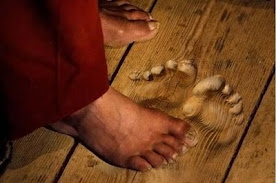
Every hermit I know lives this life at least somewhat differently from every other hermit. Yes, there are the same ridges and whorls, the same constitutive elements as those made normative in c 603, but the way each of us embodies these ridges and whorls, our unique eremitical fingerprints themselves, will differ one from another. The activities you ask about help empower and give shape to my solitary exploration of C 603 in God. Should any one of them begin to detract or distract me from this journey, then I will let go of it.

Living in the World Without Being of the World:

I have to say your question about living apart from the temporal world does not make sense to me. I am temporal, that is, I live in space and time. I am an embodied, historical being. That is what it means to be human. Yes, I am also empowered by the Holy Spirit to transcend space and time in some ways, but I am neither atemporal nor ahistorical, nor can I be. One dimension of my vocation is to allow God's will to be Emmanuel (God With us) to be realized ever more fully in and through my life. Another overlapping dimension of my vocation is to allow God to make me into someone who is prepared to be wholly united with God in a "new heaven and a new earth". A third dimension of my vocation is to assist others in committing to and living from and with that same God, His Gospel, and the New Creation, of which Jesus is the firstfruits (1Cor 15:23). Hermits embody the truth of Jesus' charge to every Christian to be in the world but not of it. I am committed to that goal, but I cannot do it by abandoning my own historical (spatio-temporal) nature. Indeed, given the importance of the Incarnation in revealing both God's unconditional, inexhaustible love and the fullest truth of humanity, and given my own place as a sharer in that mission of Jesus, how would I even begin to do that? 

Matter or materiality is not contrary to life in God. We believe in bodily resurrection and bodily assumption. We believe that in ways known only to God, embodied reality (whatever that looks like!) has a place in the very life of God because of Jesus' death, resurrection, and ascension. We recognize that when Paul speaks of being a spiritual being or a fleshly being, he is speaking of the dimension of reality that defines us so that being spiritual means the whole person under the power of the Holy Spirit, while being fleshly means the whole person under the power of sin. In either case, we are speaking of being an embodied person. One of the miraculous witnesses of the Eucharist is to the way Jesus, as risen Christ, is wholly and gloriously present in, and at the same time, wholly transcends mere bread and wine. Sometimes I wonder if this is a foretaste not just of heaven, but of the way a glorified reality will ultimately be comprised. After all, when we speak of our ultimate goal, it is of life in and with God, which will also be embodied. The Scriptures remind us that we look forward to a new heaven and earth in which this exhaustive union involves the whole of creation, where the entirety is glorified. (cf, Isaiah 66:22; 65:17, Rev 21:1, 2 Peter 3:13)

27 June 2025

Returning the Tabernacle to its Pre-Vatican II Placement: A Failure to Honor the Real Presence Revealed During Mass

Dear Sister, not sure how to ask this so I'll just go ahead and give it a try. Last weekend we celebrated the Feast of Corpus Christi and our pastor moved the tabernacle back behind the altar from where it had been located in the main part of the Church. He had been planning this for a while but said the feast was the perfect time to do this. He said it was about putting Jesus right back at the center of things where he should be! Someone sitting near me explained that this was not what Vatican II called for. They said this was against what Vatican II called for but I didn't really understand his explanation. Was it really against Vatican II and didn't Vatican II want Jesus in the center of things?did they move the tabernacle because people no longer believe in the Real Presence?

Also, what I really wanted to ask you, if a hermit didn't want to be part of a parish or diocese, could they still be a consecrated Catholic hermit? How about if they never attended Mass? I know the Church teaches that there is something called the mystical Body of Christ and that the New Testment says we are to become spiritual beings. Can a hermit become a spiritual being and not be able to attend Mass? I thought that Catholics were obligated to attend Mass every Sunday so I wondered how someone could be a Catholic hermit and not go to Mass except once in a while? Too, when you speak about an "ecclesial vocation" doesn't everyone have this kind of vocation? we all live our calling from inside the Church, don't we?]]

These are great questions, all of them! Thanks for asking, not only about the hermit vocation, but about last weekend's Feast (Solemnity) of Corpus Christi and the reasons the Church moved the tabernacle (in most cases) from behind the altar to another part of the Church where the reserved Eucharist could still be honored, but not during Mass itself! The shift in placement did not occur because Vatican II did not believe in the Real Presence any longer, but because having the tabernacle present right behind the altar in most churches was distracting from what was actually occurring then and there during the Eucharistic liturgy itself. If the church was or is a really large one and the location of the tabernacle was or is far enough behind the altar so as not to call immediate attention to itself during Mass, no post-conciliar movement was or is necessary, but in most parish churches, this location focused the assembly's attention on the already-consecrated and reserved Eucharist which was accessed only at the end of Mass when EEM's were given what they needed to accommodate the sick who could not attend Mass itself. Let me explain (I will answer your questions on the hermit vocation in a separate post, I think.).

When we come into church and move to our seats, we either genuflect or (for those of us with old knees!) bow to the altar before sitting down in the pew. We do this in part because of the presence of the Body of Christ reserved in the tabernacle, but also because of what takes place at the altar during every Mass, and because of the presence of the Book of the Gospels which is usually present and symbolizes the proclaimed Word until the entrance procession when it is relocated to be carried aloft during that part of Mass.* Vatican II looked freshly and very seriously at what is happening during every Mass and all the ways Christ is and becomes present during the celebration. Especially, Vatican II recognized that what was important is not what had happened at other Masses (and therefore, what was present already in the reserved Eucharist, but on something we had often not paid sufficient, if any, attention to when our focus was on the tabernacle and the reserved Sacrament, and perhaps on the ordained minister of that Sacrament.

Most everyone would be able to tell you, if they were asked, that what happens at Mass is the transformation of Bread and Wine into the Body and Blood of Christ. But, relatively speaking, many fewer would point to what happens to the assembly during Mass, or what happens when the Word of God is proclaimed, or who is involved in the transformation** of the Bread and Wine during the consecration besides the ordained minister who is presiding. After all, for whom is the priest presiding, and what does this say about the presence and activity of the Holy Spirit amongst the Assembly?  Among the Lectors? In the Prayers of the Faithful and the reception of Communion? And why is it at Mass that the Church prefers the faithful all receive Communion with hosts that were consecrated at that Mass rather than from that reserved in the tabernacle? It is not meant to detract from the reality of the reserved Eucharist, after all. What I have just written here is suggestive rather than explicit, so let me make it more explicit.

These questions all point to the Sacramental or Mysterious presence (Sacramentum mysterium) of the Risen and glorified Christ during Mass and other liturgical celebrations. They call us to look out for and to be aware of, appreciate, and participate fully in what actually occurs at Mass, which includes and, without diminishing our reverence for the consecrated Body and Blood of Christ, is also a good deal more than the transubstantiation of Bread and Wine into the Body and Blood of the Risen Christ. Vatican II asked us to be aware of four related forms of Presence during the Eucharist: 1) in the Eucharist broken and shared (the glorified Christ made present in the species of bread and wine), 2) in the person of the minister who presides on behalf of the assembly, 3) in the proclaimed Word of God (which includes the homily or reflection), and 4) in the assembly, the People of God who have come together in Jesus' name. (CSL#7) 

What I want to call your attention to here are the verbs involved in each of these Mysterious forms and occasions of Christ's becoming present. The assembly gathers in God's name. They listen, pray, support one another, read, make significant gestures indicating faith at work, and so forth. The presider presides on behalf of the entire assembly (of which he is a part; he has been ordained so that God's grace makes him capable of presiding with and for us). He unites his prayer with that of the rest of us, and thus, allows us to be constituted and worship as a single holy People (laos), so that "where two or three are gathered in (God's name), there the Risen Christ is present in and with us. (Mt 18:20). The Word of God is proclaimed and Christ is revealed (both made known and made real in space and time) in the proclamation of the Word of God. During Mass, this disparate group of persons (even when mainly composed of Catholics) is made capable of being and is made into God's own worshipping People in this world. In this worship, the Church comes to be the Church or Body of Christ as God calls it to be.

This consecration, this several-fold revelatory event, this performative act of God exercised through his Word, and God's priestly People (including but not limited to the role of his ordained minister) is what happens at Mass each and every time we come together in the name of the Lord. Vatican II saw this clearly and reformed the liturgy in numerous ways in order to allow people to see and understand this. It is not just the bread and wine that are brought to the table of the Lord as gifts to be transformed. We, too, are brought to the altar to be broken open, transformed, and shared with others. As in the story on the road to Emmaus after Jesus' crucifixion and the destruction of all the disciples' hopes ("We thought he was the One!"), we come to know the risen One in the breaking of the bread and the sharing of the Word of God ("How our hearts burned within us when we heard. . . !"). What the Second Vatican Council wanted us to truly see and fully participate*** in was this Mass, this series of presences being made real in the contemporary Church's liturgy and worship. It is important to recognize the central presence of Christ in all of these ways, even when the tabernacle stands off to the side of the sanctuary, for instance.

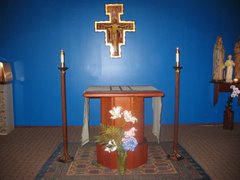
In order to symbolize all of this and to draw our attention away from the reserved Eucharist, the Church moved the tabernacle from directly behind (or even on) the altar to another still-honored place away from the altar itself. She wanted us to pay attention to the coming of Christ in the center of reality in all of the ways he comes to be present there. She wanted our liturgy to have an event at the center of its celebration, a mysterious and hard to perceive event of giving, receiving, and sharing with the world what comes to be on this altar, not something that occurred yesterday or last weekend, but something happening here and now, with, through, and in our very midst!! Thus, one of the pieces of the Church's teaching on Communion during Eucharist obligated the local church to consecrate enough hosts for everyone attending to Communicate without drawing from the tabernacle's store of reserved hosts whenever that was possible. (There is nothing wrong with drawing from reserved stores as needed, but the preference for freshly consecrated Eucharist calls our attention to what is happening here and now, including the fact that we as a People of God are being constituted as the very Body of Christ in both the breaking open of the Word, the breaking of Bread, the sharing of the cup, and our pouring out our own lives to God and one another in this liturgy. It is the altar of God standing beneath the image of the crucified Christ, along with the book of the Gospels enthroned nearby, NOT the tabernacle, that is the central symbol of all of this!!!

The GIRM (General Instruction on the Roman Missal) allows for the placement of the tabernacle behind the altar only when the space is large enough there so that our attention is not drawn away from the altar and onto the tabernacle itself. Most churches do not have adequate space for this so the tabernacle is moved a bit off to the side to another place of honor where it is accessible (to reserve the remaining unconsumed Eucharist after the Communion rite, or to reserve enough consecrated hosts to bring to the sick as an extension of the Mass itself.) If you are in a normal-sized parish church, the fact that your pastor decided to use the Feast of Corpus Christi to celebrate moving the tabernacle back behind the altar, particularly with the idea that Jesus was missing from the center of the events of the Mass, suggests he either does not understand Vatican II's teaching in this matter, or even that he dismisses it.  After all, this movement undercuts VII's Eucharistic theology of multiple forms of presence, 

It is also likely to contribute to clericalism (a focus on the importance of the priest alone, to the denigration of the importance of the Sacrament of Baptism and the whole priestly People of God) at the same time. (More about this later if you desire it; the picture to the right should assist in seeing my point!) Moving the tabernacle back behind the altar in most churches does NOT move Christ back to the center "where he belongs". Instead, it assures that most people will not perceive him in the center of things where the Church wishes for us to also look for, listen to, and celebrate his very real Presence, that is, in the proclaimed Word, and among the baptized, the People of God gathered together in Jesus' name as "the called ones" (ecclesia).  I see this as a terribly ironic failure to worship the dynamic and real presence of Christ in the Eucharist, not an honoring of it. The irony seems to me to be especially great when the move is made and celebrated on the Feast of Corpus Christi.

I sincerely hope this is helpful. I'll get to the second part of the question ASAP!!


* A story I have told here before: A few years ago, I was participating in a Mass at Saint Mary's College of CA, where Bishops Remi de Roo and John Cummins were saying Mass for a group attending a presentation de Roo was giving on Vatican II. (Remember, de Roo was the Bishop who made the intervention at the Council to recognize the eremitical life as a state of perfection.) I was carrying the Book of Gospels in the entrance procession. Before Mass, there was a quick rehearsal with everyone involved in the procession to work out who came first, where, when, and with whom to bow, etc, to be sure we were all on the same page and Mass proceeded smoothly and reverently. Bishop Remi de Roo turned to me and said, "You carry the Book of the Gospels. You bow to no one!!" I think that one statement made more of an impression on me and my appreciation of what it means to regard the Word of God appropriately during Mass than anything else I ever learned in school, no matter the level.

** The precise form of transformation involved here is called transubstantiation because the substance of bread and wine is changed into the glorified body and blood of Jesus.

*** When we speak of our full participation in the Eucharist, we are not merely speaking of not praying the Rosary or doing other devotional activities during Mass. Neither is it mainly referring to sitting or standing when asked, or singing along, listening when appropriate, or saying the appropriate responses. All of that is involved, of course. However, our full participation is about praying the entire Mass so that we too are brought to the altar and broken open with the Word,  broken and shared or poured out with the Bread and Cup, made to be intimate members or sharers of the Body of Christ we call Church, and being commissioned to go forth to bring Christ to others as we proclaim the Gospel with our lives.