Hi good questions, and important. Yes, I was aware of the problems that occurred with Bp De Roo over a land deal. He wrote a book about this (I think it was his account I read, but it was a while ago) and there was at least one other book I read about it all by Patrick Jamieson. There were two sides to the story (at least and of course!). In the book I read by Jamieson, a Catholic journalist, there were five major claims about Bp De Roo being made regarding financial mismanagement, questionable investments, etc. Most of these focused on a land deal the bishop was involved in that would have made money for the Diocese of Victoria". The Church, after de Roo's retirement, stopped making mortgage payments, and the debt soared due to penalties, etc. What was discovered by Jamieson was that the really concerted attempts to vilify Bishop began in 2000, immediately after he had retired in 1999.

What Jamieson also noted was that the accusations of fiscal mismanagement always seemed to come from the same small group of people who resented de Roo's attempts to implement the conclusions of, or drawn from, Vatican II. Whether or not this was true or accurate, there is no doubt that de Roo was a "reformist" or progressive Bishop and theologian, and a small traditionalist faction formed that attempted first to block changes and then, to vilify de Roo. The idea of discrediting progressive bishops was not novel, though it was unusual in the Canadian Church. Still, it was real, and it seems to me that Bp de Roo was pulled into this after he had retired with allegations of fiscal mismanagement during his tenure as Bishop of Victoria.
In another area of concern, while I don't know details regarding the extent to which Remi de Roo was involved in the clergy abuse scandal, I do know the book he wrote about it and the quality of his response. The book is called Cries of Victims and Voice of God. There is no doubt Bp Remi dealt with this profound problem and scandal as has every bishop in the Roman Catholic Church, and better than many. What comes through in the book is de Roo's deep compassion and grief as a prominent Church leader who loves God, the People of God, and his own priestly vocation. The title of this book alone tells one what he valued primarily, and what guided whatever he did in this area. He wanted (the Church) to hear the victims, and he wanted the voice of God to be heard and acted on by all. From what I know of the man and Bishop, this reflected his character; this was who he was.

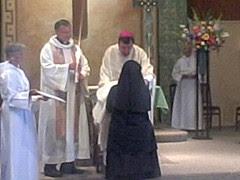
I have told this story before, but perhaps it is a good time to tell it again. Before a celebratory dinner on the day I met Bishop de Roo, we had a Mass. Bp John Cummins was there (another attendee of Vatican II and good friend of de Roo from the days of the Council), Bp de Roo, some other clergy, and religious who were participating in some way in the liturgy. I was to carry the book of the Gospels in the entrance procession. We did a brief practice to see who went where in the procession line, who bowed when, and who went where next. It was a quick, matter-of-fact, and quiet kind of strategic "scramble" before we settled in to truly pray the liturgy. As the presiders were talking about these logistics, Bishop de Roo turned to me and said, "You carry the book of the Gospels. You bow to no one!!" Was Bp de Roo throwing his weight around as a bishop here? Was this about pride or prestige? No, it was about priorities, and I believe Bishop de Roo's were revealed very clearly in that moment.
[[ Hi Sister, When you wrote of Bishop Remi de Roo, you said the hermits he helped had to leave their Benedictine monasteries because they couldn't be hermits there. A large Abbey near me allows monks to become hermits. Are you sure you weren't mistaken about your story? Joyful Christian Hermit says what you claimed was untrue.]]
Ah, a quick question. Excellent! I will add it to this post! The fact is that Benedictine monasteries are autonomous. This is true even when the monastery is part of a confederation. While everyone lives under the Rule of St Benedict, each house has its own proper law, and some allow hermits while others do not. The men who eventually came together in a laura under the protection of de Roo came from various Benedictine (and possibly other) houses that did not allow monks to live as hermits in proper law, and at least some of these men had to be secularized as they attempted to live hermit life on their own. Only eventually did these men come together under Bishop Remi de Roo in a laura. Your vlogger cynically assumes a great deal about the motivations and vocations of these men ( cf Bishop de Roo and Hermits of JnBap from this location onward). Such assumptions are rarely generous and equally rarely accurate.





 Posts
Posts