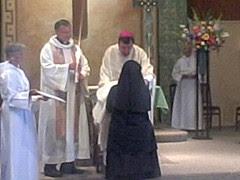
Hmmm, nope, I don't think I have heard that before. Any Catholic knows that God acts through his ministers, and in some instances, through his entire People to consecrate. That includes the consecration of baptism, but also it involves the transubstantiation of Bread and Wine in the Eucharist. God does the consecrating in these cases, and in cases of Religious consecration as well. However, this occurs in the latter instances, in the hands of legitimate superiors, and, in the case of diocesan hermits, through the ministry of the local Bishop. In all of these cases, the Church makes as sure as possible, that the person is ready to receive the consecration involved. Yes, of course, the person will be in the state of grace. Still, I have never heard of personal holiness or some kind of "purification" used as a criterion of whether God actually works through the Church's consecration, or whether God withholds himself because someone is not "pure enough".
Consider the problems this could cause if some sort of "lack of purification" made God withhold himself when the Church -- God's Church, the Church God promised that what she held would be held by God and what she loosed, would be loosed by God -- that Church --- consecrated someone prepared for this. Admission to consecration doesn't ordinarily happen carelessly, and so long as the candidate is honest in all of their preparation for this moment, and opens themselves to God's action, God will, of course, act to consecrate the person. And think what this position means when the hermit reaches those times and places in her inner journey that cause her to wonder if she discerned this vocation rightly or was ever consecrated at all!! How does the Church deal with such circumstances if it is true God might withhold himself as described? Remembering that consecration is a source of graces, I think we have to agree that whenever someone submits themselves to God's consecration in good faith, and a licit Rite of profession and consecration is carried out by the Church, God acts effectively to consecrate the person.





 Posts
Posts